That Dusty Blue Plate Could Be a Masterpiece—Decode Maker Marks Like a Pro

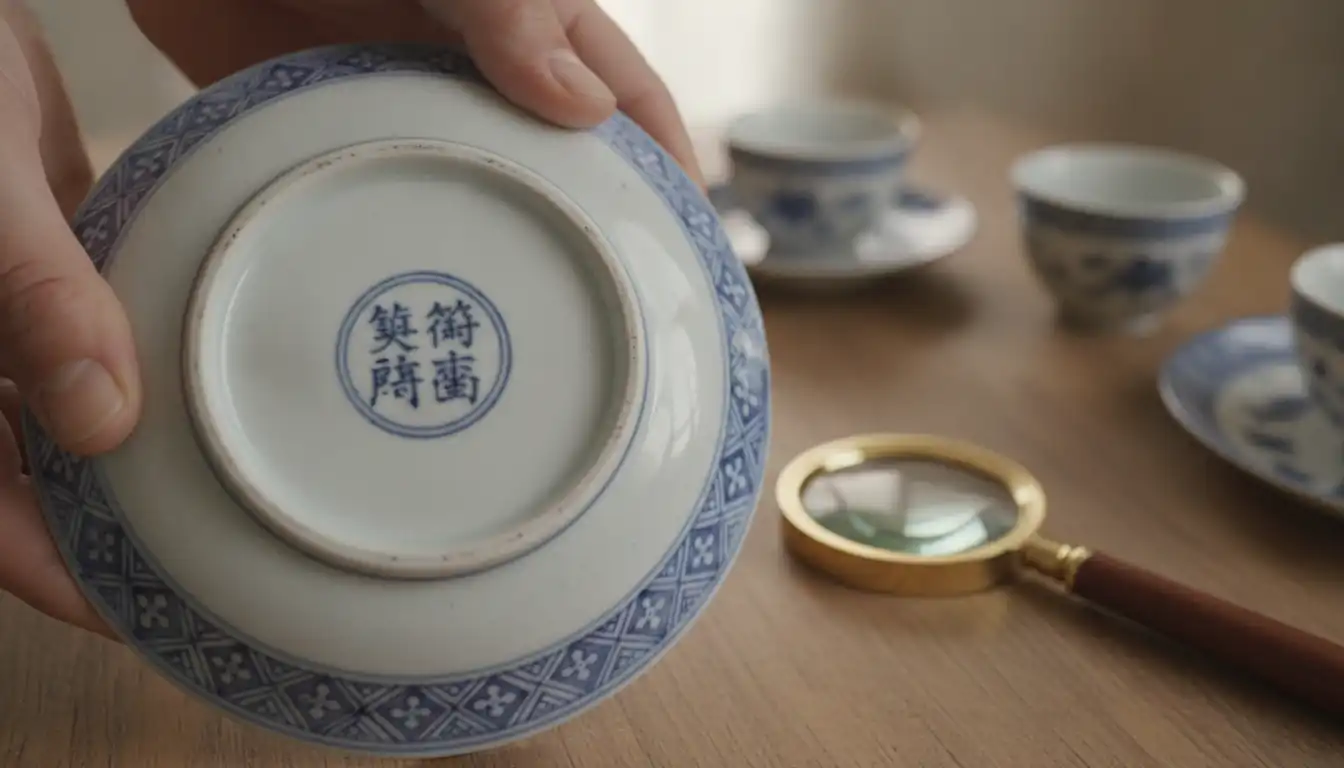
You are standing in a crowded thrift store, your eyes scanning rows of mismatched mugs and chipped cereal bowls. Suddenly, a flash of deep, electric blue catches your eye. You pull a heavy plate from the stack, its surface covered in an intricate scene of pagodas, weeping willows, and tiny fishermen. You flip it over, hoping for a name, but all you see is a faded blue crown and a few cryptic letters.
Is this a mass-produced souvenir from the 1990s or a 200-year-old treasure from a master English pottery? The difference could be hundreds, even thousands, of dollars. Most people see a dusty dish; a seasoned collector sees a story waiting to be decoded.
Learning to read the language of ceramics transforms every estate sale and antique mall into a potential discovery zone. By understanding the symbols, the manufacturing techniques, and the historical clues hidden in the clay, you can identify masterpieces that others overlook. This guide will give you the "decoder ring" you need to identify blue and white china like a professional appraiser.
Cracking the Code of the Ceramic Backstamp
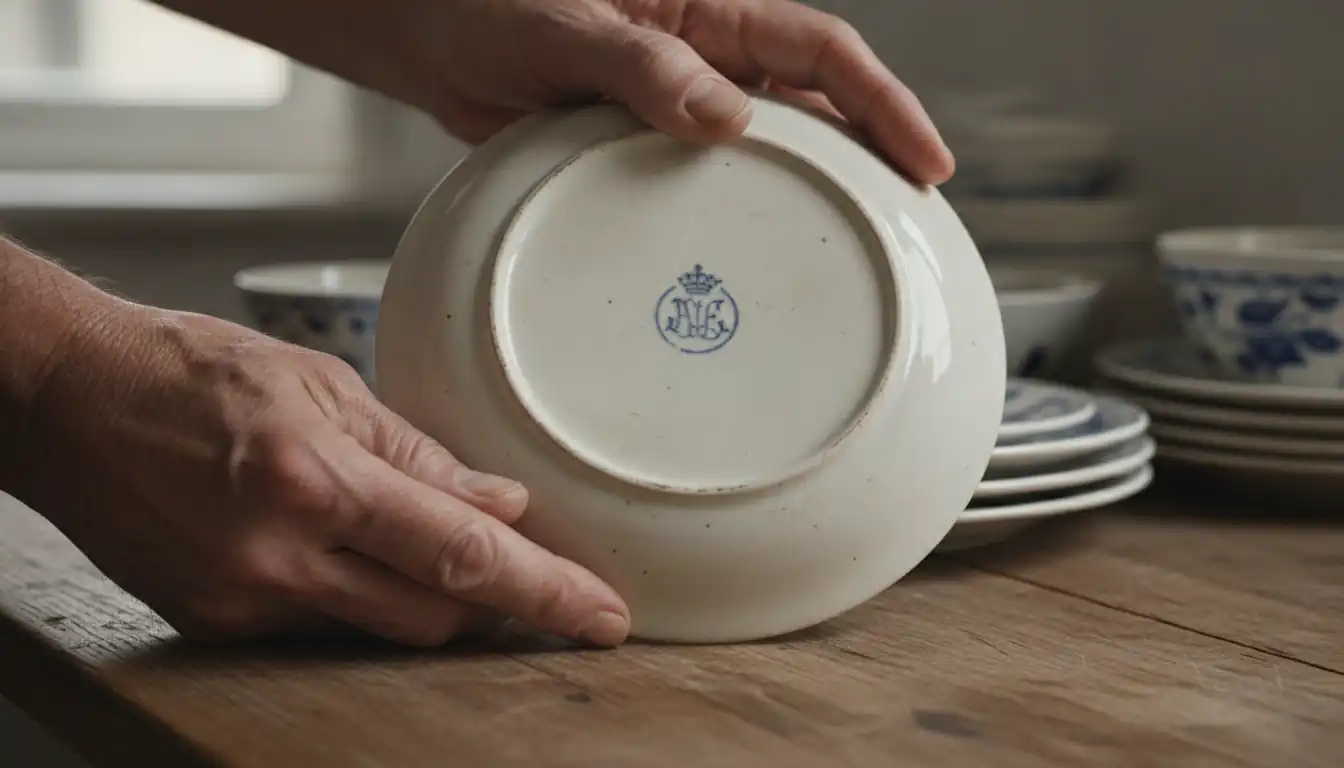
The mark on the bottom of a piece of pottery—often called a backstamp—is more than just a brand name. It is a signature that carries the weight of history, regional pride, and legal status. For the major potteries of the 18th and 19th centuries, these marks were a way to protect their reputation and signal quality to the buyer.
When you look at a backstamp, you aren't just looking for words. You are looking for a visual language of heraldry and symbols. These icons were often chosen to convey a specific message about the pottery’s origins or its relationship with the ruling class.
Interpreting Symbols, Cyphers, and Heraldry
Symbols are the most immediate clues to a piece's origin. Many British potteries, for instance, used specific icons to denote their location or their prestige. If you see a crown, you are looking at a pottery that claimed a "Royal Warrant." This meant they supplied goods to the King or Queen, a massive marketing win in the 1800s.
- The Crown: Indicates royal patronage. While many potteries used it, the style of the crown can change depending on which monarch was on the throne.
- The Anchor: Frequently associated with the Chelsea Porcelain Factory or Davenport. It suggests a maritime connection or a specific regional tradition.
- The Lion: Often used by British makers to signify strength and national identity. A "Lion Passant" (a lion walking with one paw raised) is a classic heraldic symbol found on high-end earthenware and porcelain.
- The Knot: Specifically the "Staffordshire Knot," which looks like a simple looped rope. This identifies the piece as coming from the heart of English pottery production in Staffordshire.
These symbols act as a shorthand. Even if the maker's name has faded or was never printed, the presence of a specific heraldic beast or a regional knot can narrow your search from thousands of possibilities down to a handful of factories.
The Difference Between Impressed and Printed Marks
Before you even read what the mark says, you should feel it with your fingertip. How the mark was applied to the clay tells you a great deal about the era in which the piece was made. There are two primary types of marks: impressed and printed.
Impressed marks are stamped directly into the moist clay before the piece is fired in the kiln. These marks are physical indentations. Because they required an extra step in the molding process, they are often found on earlier pieces or on high-quality stoneware and earthenware. An impressed mark is a sign of "old school" craftsmanship. It’s harder to fake and usually indicates a piece from the late 18th to mid-19th century.
Printed marks are applied using ink, either under the glaze or over it. Underglaze marks are protected by the clear glass-like coating of the piece and are very durable. Overglaze marks feel slightly raised or "scratchy" to the touch and can wear off over time. Printed marks became the industry standard as technology improved, allowing for much more intricate designs, including the elaborate floral borders and scenic logos we associate with Victorian china.
| Mark Type | Physical Characteristic | Common Era |
|---|---|---|
| Impressed | Indented, felt with a fingernail | 1780–1850 |
| Printed (Underglaze) | Smooth, appears "inside" the ceramic | 1830–Present |
| Printed (Overglaze) | Slightly raised, can be scratched off | 1850–1920 |
Pro Tip: If you see both an impressed mark and a printed mark on the same piece, you’ve likely found a high-quality item. Makers often used an impressed mark for internal factory tracking and a printed mark for branding.
Visual Forensics When the Mark Is Missing
What happens when you flip a plate over and find absolutely nothing? Don't set it back on the shelf just yet. Many of the earliest and most valuable pieces of blue and white china were never marked at all. In these cases, you have to become a forensic investigator, looking for "fingerprints" left behind by the artisans and the machines they used.
The way the blue pigment sits on the surface and the way the pattern is applied can tell you just as much as a backstamp. You just need to know what to look for.
Distinguishing Transferware from Hand-Painted Details
Most blue and white china you encounter will be "transferware." This was a revolutionary process where a pattern was engraved onto a copper plate, printed onto thin paper, and then "transferred" onto the ceramic. However, the very best pieces often feature hand-painted elements, or are entirely hand-painted.
- The Seam Test: Look closely at the edges of the pattern, especially where the border meets the central scene. In transferware, you will often see a "seam" or a slight overlap where the paper didn't perfectly line up. This is a hallmark of the transfer process.
- The Dot Matrix: Use a magnifying glass. If the pattern is made of tiny, uniform dots, it is likely a modern reproduction using 20th-century printing methods. True antique transferware is made of fine, continuous lines or hand-stippled dots.
- Brushstroke Variation: On hand-painted pieces, the blue will have varying thickness. You might see "pools" of darker blue where the artist's brush first touched the clay, and lighter areas where the paint ran thin. No two hand-painted pieces are identical.
The Depth and Bleed of Cobalt Blue Glazes
The "blue" in blue and white china comes from cobalt oxide. This mineral is incredibly stable and can withstand the intense heat of a kiln, but different eras used different concentrations and techniques.
One of the most famous styles is Flow Blue. In this technique, a chemical (usually lime or ammonia) was added to the kiln during firing. This caused the blue glaze to "bleed" or "flow" outside the lines of the pattern, creating a hazy, ethereal blue halo around the design. If your plate looks like the ink ran in the rain, you are likely looking at a piece of Flow Blue from the mid-to-late 1800s.
The shade of blue also matters. Early 19th-century pieces often have a softer, slightly greyish-blue tone. As the Victorian era progressed, the blues became deeper, darker, and more "cobalt." By the late 1800s, you see "Electric Blue," which is incredibly vivid and sharp. Understanding the "mood" of the blue can help you place a piece in the right decade even without a mark.
- Soft Blue/Grey: Often 1790–1820.
- Deep Navy/Flow Blue: Often 1840–1880.
- Vivid/Electric Blue: Often 1890–1920.
Dating Your Find Using Historical Milestones
Once you have identified the maker or the style, the next step is to pin down a date. History is written in the clay, often because of international trade laws and government regulations. These "legislative fingerprints" are some of the most reliable ways to date a piece of pottery.
The 1891 Shift and Country of Origin Requirements
The year 1891 is the most important date in the history of antique collecting. This was the year the McKinley Tariff Act went into effect in the United States. This law required all imported goods to be clearly marked with their country of origin.
If you are looking at a piece of English pottery, the wording on the back is a dead giveaway for its age:
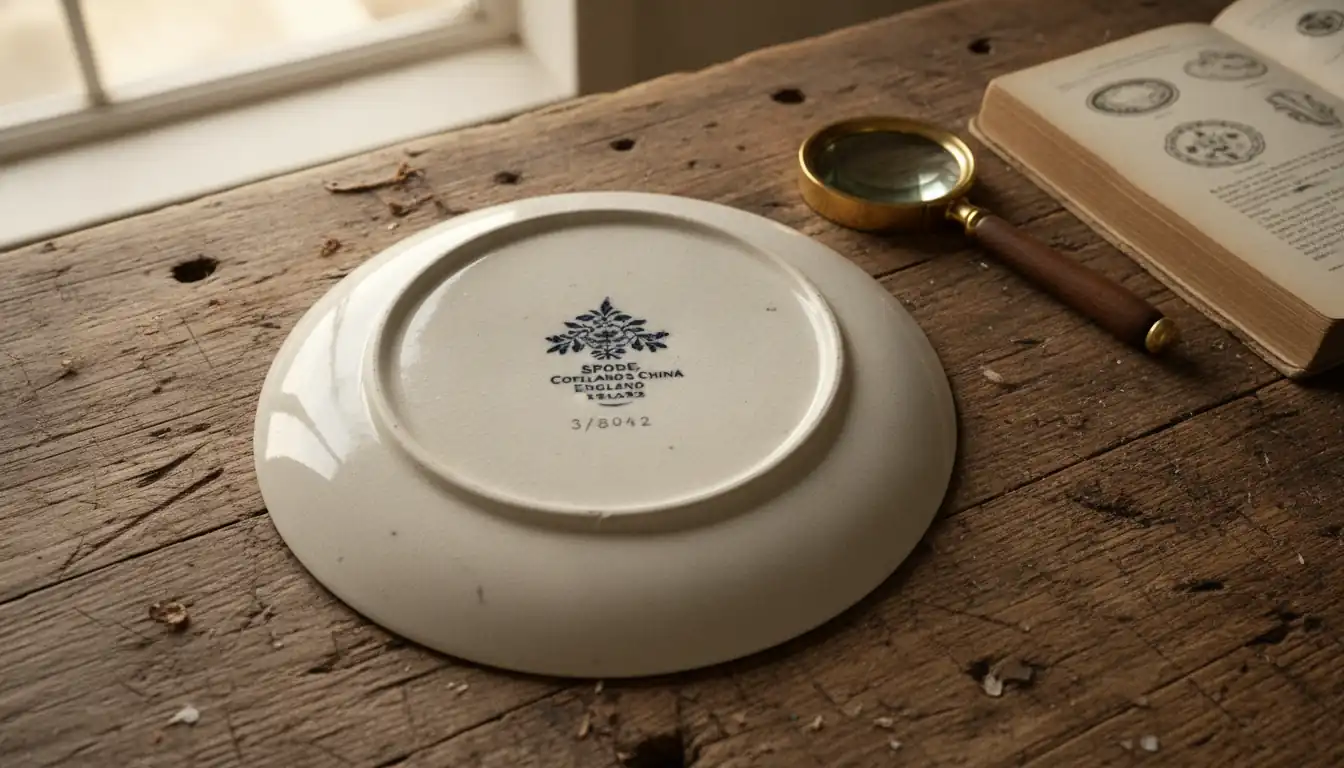
- No Country Name: If the mark only has the maker's name (e.g., "Wedgwood" or "Spode") and no country, it was likely made before 1891.
- "England": If the word "England" appears alone, the piece was likely made between 1891 and 1921.
- "Made in England": This phrasing generally indicates a piece made after 1921, as trade laws became even more specific.
This simple rule allows you to instantly categorize a piece as a true 19th-century antique or a more modern vintage item.
Reading Victorian Registry Diamonds and Patent Marks
If you find a piece with a strange diamond-shaped mark on the bottom, you’ve hit the jackpot for dating. This is the British Registration Mark, used between 1842 and 1883. It was a way for makers to protect their designs from being copied by competitors.
The diamond contains a series of letters and numbers in its corners. By decoding these, you can find the exact day the design was registered.
- The Top Circle: Indicates the "Class" of material (IV is for ceramics).
- The Corners: These contain codes for the Year, Month, and Day.
- 1842–1867: The Year code is at the top.
- 1868–1883: The Year code is on the right.
| Position | 1842-1867 Meaning | 1868-1883 Meaning |
|---|---|---|
| Top | Year | Day of Month |
| Right | Month | Year |
| Bottom | Day of Month | Month |
| Left | Bundle Number | Bundle Number |
After 1883, the diamond was replaced by a simple "Rd. No." (Registered Number). These numbers are sequential, so a lower number always means an earlier date. For example, Rd. No. 1 would be from 1884, while Rd. No. 500,000 would be from the early 1900s.
Separating Authentic Antiques from Modern Reproductions
As blue and white china grew in popularity, so did the market for reproductions. In the 1970s and 80s, many companies produced "vintage-style" plates that look remarkably like the real thing at first glance. To avoid being fooled, you need to look past the pattern and examine the physical "body" of the piece.
Identifying Honest Wear and Foot Rim Characteristics
An antique that has survived 150 years will show its age in specific, "honest" ways. Modern fakes often try to mimic this, but they usually get the details wrong.
The Foot Rim: Turn the plate over and look at the circular rim it sits on. On an authentic antique, this rim is usually unglazed. Over decades of being slid across wooden tables and stacked in cupboards, this rim will develop "shelf wear." This looks like a smooth, darkened, or slightly greyed surface. If the foot rim is perfectly white and pristine, or if it feels unnaturally rough like it was sanded down, be suspicious.
Cutlery Marks: Hold the plate at an angle to a bright light. A piece that was actually used in a Victorian household will have tiny, random scratches from forks and knives. These scratches should be inconsistent and shallow. If the surface is perfectly glassy and smooth, it hasn't seen much action—or it was made yesterday.
Stilt Marks: On older earthenware, you might see three small, rough spots on the bottom (or sometimes the top). These are "stilt marks," left behind by the tripod-like supports used to keep pieces from sticking together in the kiln. While not every antique has them, their presence is a very strong indicator of older manufacturing methods.
The Red Flags of Mass-Produced Replicas
Modern reproductions are often made of heavy, thick stoneware rather than the delicate bone china or refined earthenware of the past.
- The "Ring" Test: Gently tap the edge of the plate with your fingernail or a wooden pencil. High-quality bone china will produce a clear, bell-like ring that resonates for a second or two. Cheap modern earthenware or thick reproductions will produce a dull "thud."
- Translucency: Hold the piece up to a light source and place your hand behind it. If it is true bone china, you should be able to see the shadow of your fingers through the ceramic. Most modern mass-produced "blue and white" items are opaque.
- Weight: Antique porcelain is surprisingly light for its strength. If a small plate feels like a heavy brick, it is likely a modern decorative item designed for a "country kitchen" look rather than a functional piece of historical dinnerware.
"Authenticity isn't just about the mark; it's about the soul of the object. A real antique feels like it has lived a life."
Using AI Technology for Instant Identification
Even with all the knowledge in the world, some marks remain stubborn. There are thousands of obscure potteries that operated for only a few years, and their marks aren't always in the standard reference books. This is where the manual process of identification can become a frustrating scavenger hunt.
In the past, you would have to carry a heavy "Encyclopedia of Pottery Marks" to every flea market. Today, technology has bridged that gap, allowing you to access professional-grade expertise through your phone.
How Relic Identifies Obscure Pottery Patterns
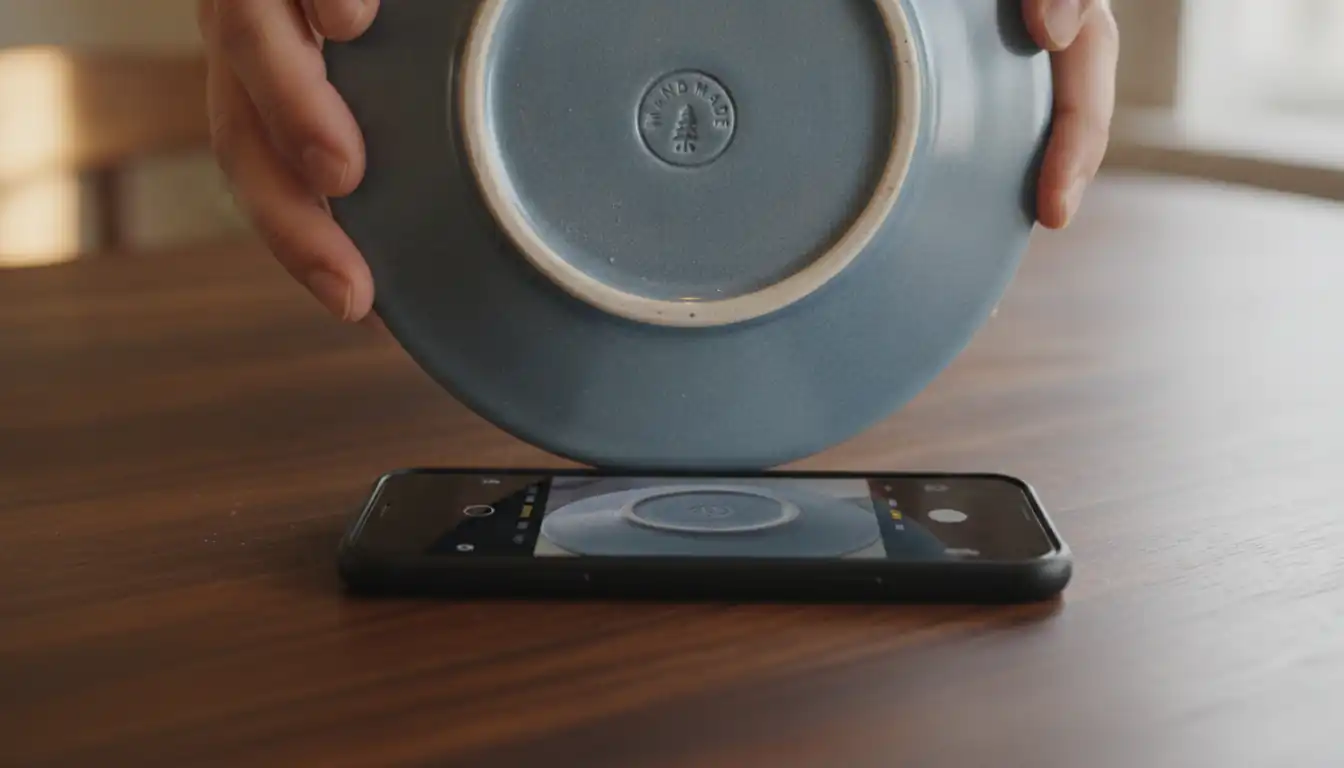
The Relic app is designed to handle the heavy lifting of identification for you. Instead of squinting at a faded lion or trying to remember if a specific "Rd. No." belongs to 1895 or 1905, you can simply take a photo.
Relic uses advanced AI to analyze the visual components of the piece—not just the backstamp, but the pattern itself. It can recognize the specific floral border of a rare Spode pattern or the unique "flow" of a specific cobalt glaze. By cross-referencing your photo with a massive database of historical ceramics, the app provides an instant identification that would take an amateur hours to find manually.
Bridging the Gap Between a Photo and a Professional Appraisal
What makes an app like Relic particularly useful is that it doesn't just give you a name; it provides context. Once the AI identifies the piece, it can offer a real appraisal and history of the item. This includes:
- Origin: Where and when it was made.
- History: The story of the pottery house and the significance of the pattern.
- Market Value: What similar pieces are currently selling for in the antique market.
This automates the "forensics" we’ve discussed. While it’s empowering to know how to read a Victorian Diamond Mark yourself, having a tool that can verify your findings in seconds ensures you never overpay for a reproduction or leave a masterpiece behind. It’s like having a professional appraiser standing next to you at the thrift store, ready to whisper the truth about that dusty blue plate.
Conclusion
Identifying blue and white china is a blend of art and science. It requires an eye for detail, a basic understanding of history, and the right tools. By looking for the physical signs of age—the impressed marks, the "flow" of the cobalt, and the honest wear on the foot rim—you can begin to separate the treasures from the trinkets.
Remember the key milestones: 1891 for the McKinley Tariff, the 1842-1883 window for Victorian Diamond Marks, and the "ring" of true bone china. These are your foundations.
The next time you find yourself at a garage sale or an estate auction, don't just look at the pattern. Flip the piece over. Feel the clay. Look for the seam. And if you find a mark that defies your memory, use a tool like Relic to get an instant answer. That dusty blue plate might just be the masterpiece you’ve been looking for. Happy hunting!
Identify antiques instantly
Point your camera at any antique, collectible, or vintage item. Get valuations, history, and market insights in seconds.
Download for iPhone