That Dusty Plate Could Be Worth Thousands: Cracking the Ceramic Mark Code

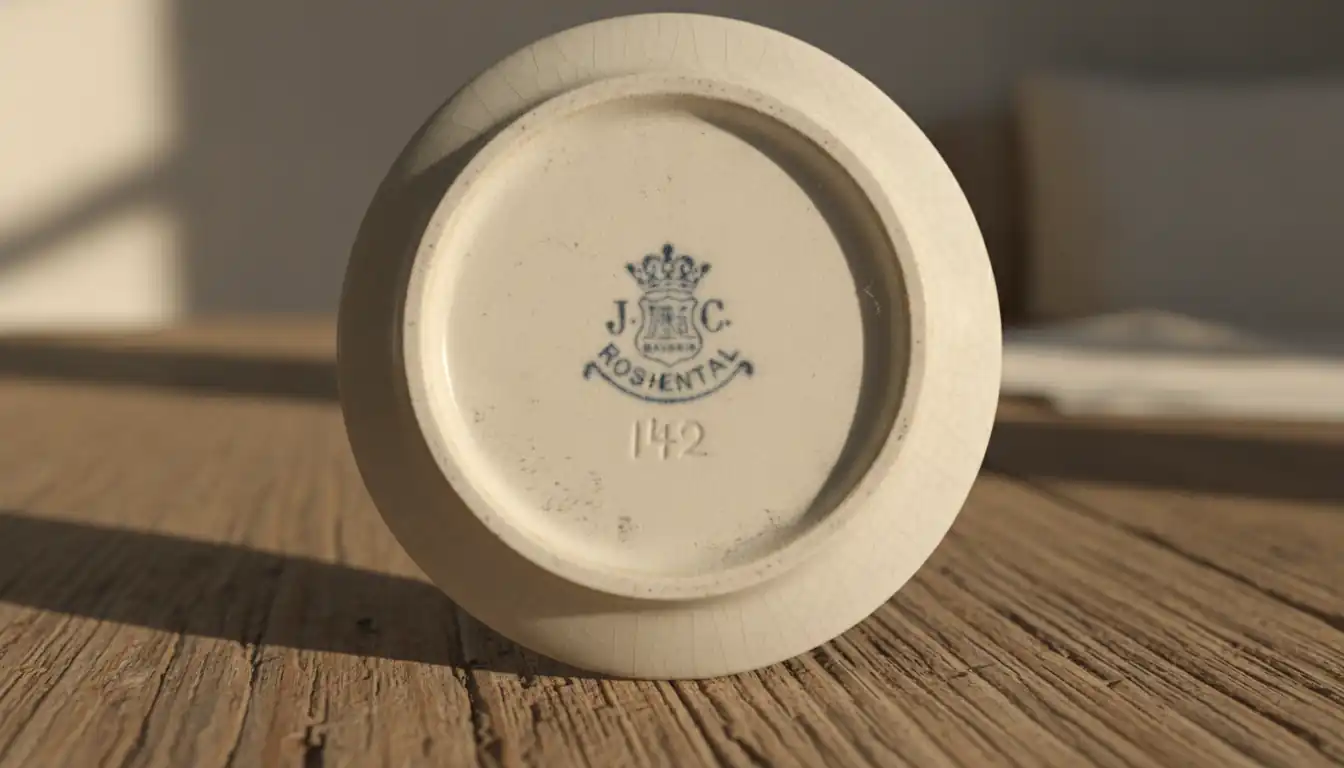
You are standing in a crowded thrift store or perhaps kneeling in a dusty attic, holding a ceramic plate that feels heavier and more substantial than the mass-produced stoneware in your kitchen cabinet. You flip it over, and there it is: a faded blue crown, a set of crossed swords, or perhaps a cryptic jumble of letters and numbers. That small mark is more than just a logo; it is a fingerprint that connects the object in your hands to a specific kiln, a specific artist, and a specific moment in history.
Understanding these marks is the difference between donating a masterpiece to a charity shop and realizing you are holding a four-figure investment. For centuries, potters have used backstamps to claim their work, protect their reputation, and comply with international trade laws. While these symbols might look like a secret code, they follow a logical evolution that anyone can learn to read with a bit of patience and the right tools.
This guide will walk you through the technical landscape of ceramic identification. You will learn how the physical method of marking evolved, how to decode the complex symbols of European royalty, and how to spot the subtle red flags that distinguish a genuine antique from a clever modern reproduction. By the time you reach the end, you will have the foundation of a professional appraiser.
The Evolution of Ceramic Signatures
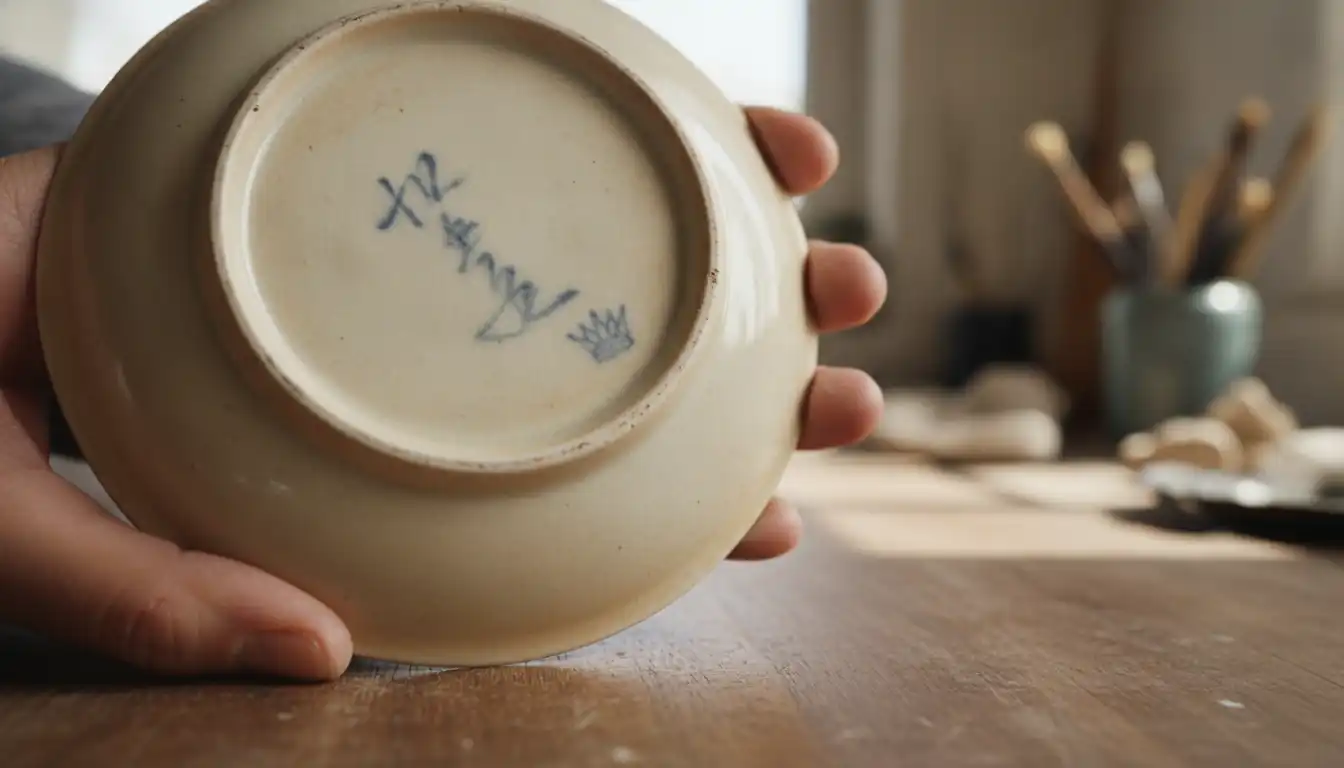
Before the industrial age, a potter’s mark was a deeply personal signature. In the 17th and early 18th centuries, marking a piece of pottery was not a requirement of the state or a marketing tactic; it was a matter of pride and accountability. These early marks were almost always "incised," meaning they were scratched directly into the damp clay before the piece was fired.
If you find a piece with a rough, hand-carved set of initials or a simple geometric shape on the bottom, you are likely looking at a very old or very artisanal piece. These marks are often found on earthenware—porous pottery fired at lower temperatures—because the material was soft enough to take a signature without cracking. Because these marks were made by hand, no two are exactly alike, which adds a layer of difficulty to identification but a wealth of character to the piece.
Early Incised Symbols
The earliest marks were often "potter’s marks" rather than "factory marks." A single artisan in a small village might use a specific tally mark or a simplified version of their initials. As the trade grew, these evolved into "workman’s marks," which were used in larger shops to track which employee produced which piece for payment purposes.
- Physical Depth: An incised mark will have a physical "trough" in the clay that you can feel with your fingernail.
- Glaze Interaction: Look at how the glaze pools inside the mark; if the glaze is thicker and darker inside the scratches, the mark was definitely made before the first firing.
- Placement: Early marks are often off-center or haphazardly placed, reflecting the manual nature of the production line.
As porcelain began to dominate the high-end market in the mid-18th century, the method of marking had to change. Porcelain is fired at incredibly high temperatures, making it brittle and difficult to scratch after it has dried. This led to the rise of "underglaze" painted marks, where an artist would paint a symbol in cobalt blue or manganese purple onto the "biscuit" (the once-fired clay) before dipping it in clear glaze and firing it again.
The Rise of Printed Backstamps
The Victorian era brought the Industrial Revolution to the pottery wheel. With the invention of transfer printing, factories could suddenly produce thousands of identical pieces every week. They needed a way to apply marks just as quickly. This led to the "transfer-printed backstamp," where a copper plate was engraved with the company’s logo, inked, and then transferred to the ceramic surface using a thin piece of tissue paper.
This transition changed everything for the collector. Suddenly, marks became uniform, detailed, and filled with information. A Victorian backstamp might include the name of the pattern, the name of the manufacturer, and even a registration number. This was the birth of the modern brand.
The presence of a printed mark is a primary indicator that a piece was produced after 1750, as the technology for transfer printing did not exist in a commercial capacity before this time.
Understanding the difference between an underglaze mark and an overglaze mark is your first major clue to age. Underglaze marks are protected by the glass-like surface of the glaze and will never wear off. Overglaze marks, often applied in gold or enamel after the final firing, sit on top of the glaze. If you see a mark that looks "rubbed" or faded where the plate has sat on a table, it is an overglaze mark, which often points to a piece made in the 19th century or later.
Decoding the Cryptic Language of Symbols
Once you move past the physical method of the mark, you are faced with the symbols themselves. For the uninitiated, a backstamp looks like a chaotic jumble of heraldry. However, these symbols were chosen with great care to convey status and origin.
Royal Warrants and Crests
The most common symbols you will encounter on British and European ceramics are crowns, lions, and unicorns. These are not just decorative; they often signify a Royal Warrant. A Royal Warrant was a mark of honor given to companies that supplied goods to a royal household.
- The Crown: If a mark features a crown, it usually indicates the company was a "Potter to Her Majesty." However, the shape of the crown matters. A "St. Edward’s Crown" (with two arches) often points to a different era than a "Tudor Crown" (with a single arch).
- The Lion Passant: A lion walking with one paw raised is a classic symbol of British quality.
- The Royal Arms: If you see a full crest with a lion and a unicorn, the piece was likely made during or after the reign of Queen Victoria (1837–1901).
How can I identify antique and vintage ceramics? One of the most reliable ways is to look for the word "Royal" in the name. Before 1850, very few companies used the word "Royal" unless they had explicit permission. If you see "Royal Staffordshire" or "Royal Worcester," you are looking at a piece that was likely produced in the mid-to-late 19th century or later.
Year Cyphers and Date Codes
Some manufacturers were incredibly precise, embedding the exact year of production into the mark using a "cypher" or code. This is the "holy grail" for collectors because it removes all guesswork.
The two most famous systems are those used by Minton and Wedgwood. Minton used a series of small, abstract symbols—a triangle, a circle with a cross, a bracket—to represent specific years. Wedgwood used a three-letter code.
| Letter Position | Meaning | Example (A-L-M) |
|---|---|---|
| First Letter | The Month | A = January |
| Second Letter | The Potter | L = Individual Artisan Code |
| Third Letter | The Year | M = 1884 |
Learning these codes is like learning a second language. For example, if you see a Wedgwood piece with the letter "O," it could mean 1860. If you see "P," it's 1861. This level of detail allows you to track the evolution of a factory's style almost month by month.
Regional Dialects of Pottery Marks
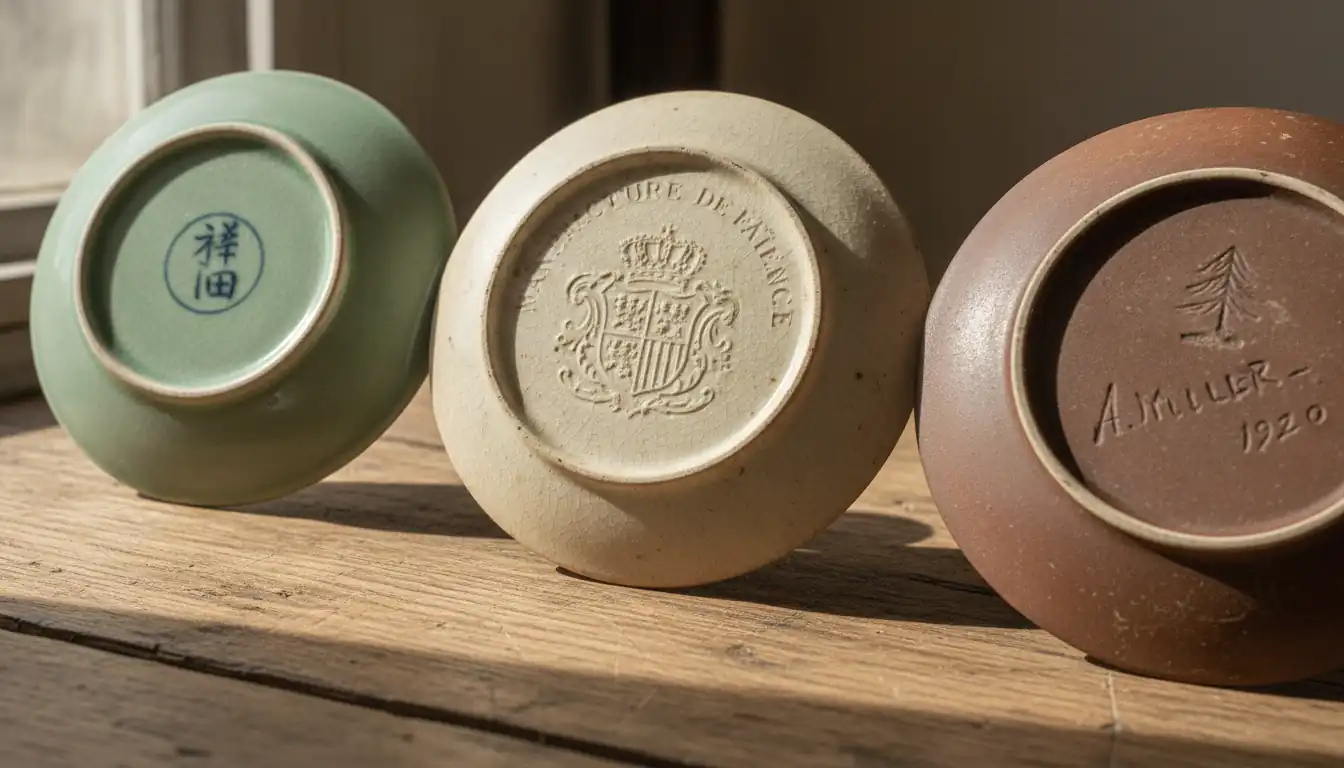
Just as spoken languages have accents, pottery marks have regional characteristics. A mark from a German factory looks and "feels" different from a mark from an English one. Understanding these regional dialects helps you narrow down the origin of a piece even if the mark is partially obscured.
Staffordshire and English Traditions
The heart of English pottery is Staffordshire, a region often referred to as "The Potteries." English marks tend to be very literal. They often include the name of the town (like Burslem or Hanley) and the name of the pattern.
A major turning point for English marks was the McKinley Tariff Act of 1890 in the United States. This law required all imported goods to be marked with their country of origin.
- "England": If a piece is simply marked "England," it was likely made between 1891 and 1921.
- "Made in England": This phrase generally indicates a piece made after 1921.
- No Country Name: If the mark only has the manufacturer's name and no country, it is almost certainly made before 1891.
This simple rule of thumb is one of the most powerful tools in a collector's arsenal. It allows you to date a piece to a specific 30-year window just by reading three words.
Continental European Hallmarks
Continental marks, particularly those from Germany and France, are often more stylized and "artistic" than their English counterparts. They frequently use symbols that have been used for centuries, which unfortunately makes them prime targets for forgers.
The Meissen "Crossed Swords" is perhaps the most famous mark in the world. Since 1722, this factory in Germany has used two blue swords to identify its porcelain. However, because Meissen was so valuable, hundreds of other factories copied the swords. To tell a real Meissen mark from a fake, you have to look at the quality of the painting. Real Meissen swords are painted with a fluid, confident stroke under the glaze. Fakes often look stiff, shaky, or are applied over the glaze.
Similarly, the Sevres factory in France used interlaced "Ls." Inside the Ls, there is often a letter that indicates the year. "A" stands for 1753, "B" for 1754, and so on. If you find a piece of Sevres with a double letter like "AA," it dates to the late 18th century.
Regional marks act as a map. An anchor often points to Chelsea (London) or Davenport, while a wheel often points to Doughty or certain German regions.
Modern Shortcuts for Instant Identification
For decades, identifying a ceramic mark meant carrying a heavy library of reference books or spending hours scrolling through grainy forum photos. If you found a mark that didn't match the "big names" like Spode or Meissen, you were often out of luck. The sheer volume of marks—estimated to be in the hundreds of thousands—makes manual identification a daunting task for anyone who isn't a full-time scholar.
This is where technology has finally caught up with the antique world. The traditional "manual lookup" is being replaced by sophisticated digital tools that can do in seconds what used to take hours of research.
AI Image Recognition Technology
The most significant advancement in this field is the use of artificial intelligence to "read" the bottom of a plate. Apps like Relic have changed the workflow for collectors and professionals alike. Instead of trying to describe a "blue bird looking left over a fence" into a search engine, you simply point your iPhone camera at the mark.
The Relic app uses advanced AI to analyze the geometry, color, and typography of a backstamp. It compares your photo against a massive database of verified historical marks. Because the AI can recognize patterns that the human eye might miss—such as the specific weight of a line in a 19th-century stamp—it provides a level of accuracy that was previously only available to high-end auction house experts.
Digital Appraisal Workflows
Using a digital tool like Relic doesn't just give you a name; it provides a comprehensive digital dossier. When you upload a photo of a ceramic mark, the app doesn't just say "This is Wedgwood." It provides:
- Historical Context: When the specific mark was in use.
- Origin: The specific factory or region.
- Real Appraisal: A valuation based on current market data.
For a "picker" at a garage sale or a dealer at a trade show, this speed is vital. You can scan a dozen items in the time it would take to look up one in a book. This allows you to make informed buying decisions on the fly, ensuring you never overpay for a reproduction or walk away from a hidden gem. With over 20,000 reviews and a 4.9-star rating, it’s clear that the collecting community has embraced this shift toward digital precision.
Red Flags and Forgery Detection
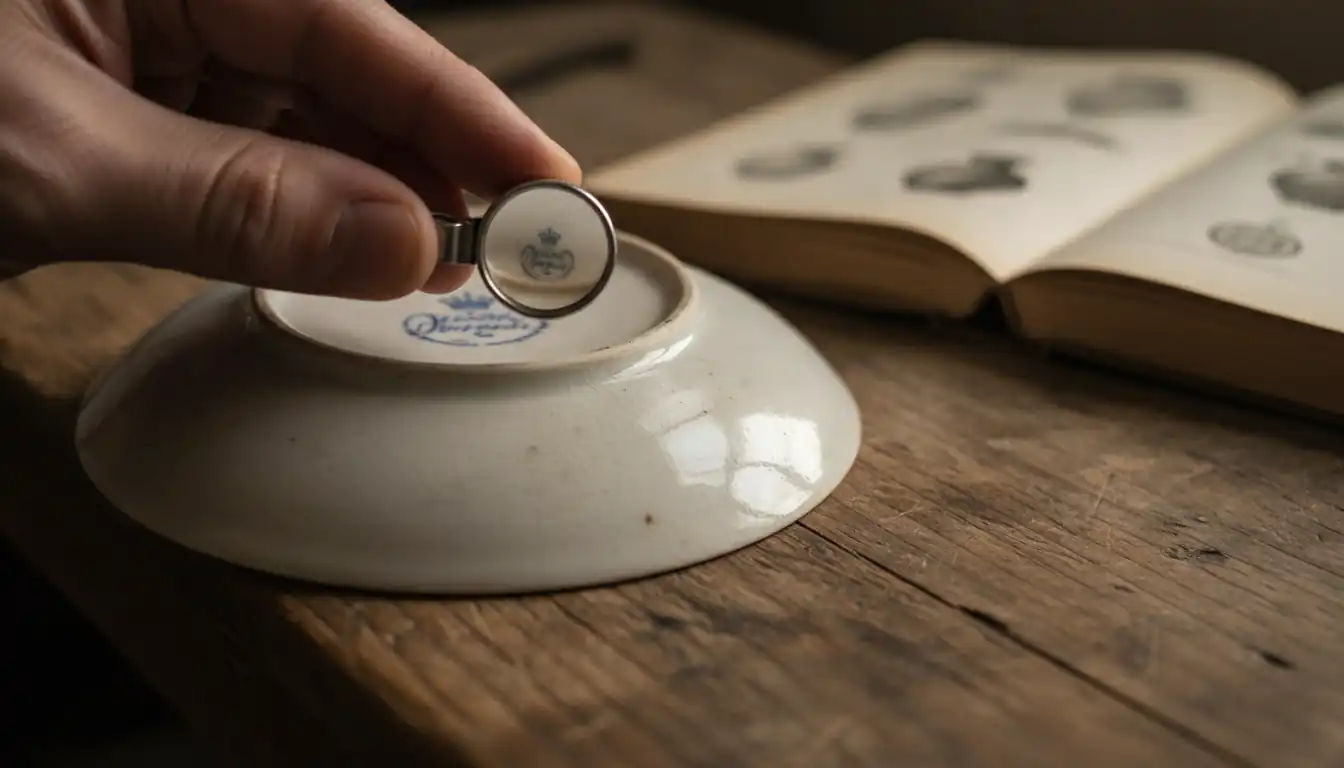
As long as there has been valuable pottery, there have been people trying to fake it. Some "fakes" are actually honest reproductions made by companies decades later, while others are "fantasy marks" designed specifically to deceive. To protect yourself, you must look past the symbol and examine the physical integrity of the mark.
Underglaze vs Overglaze Discrepancies
As we discussed earlier, the relationship between the mark and the glaze is a primary indicator of authenticity. A common trick for forgers is to take a plain, old, but inexpensive piece of white porcelain and "add" a famous mark to the bottom.
- The "Cold Stamp": This is a mark applied after the piece has already been glazed and fired. If you hold the piece at an angle to the light, a fake overglaze mark will often look "dull" compared to the shiny glaze around it.
- The Scratch Test: A genuine underglaze mark is part of the piece; it cannot be removed without grinding away the ceramic itself. A fake mark applied with enamel can sometimes be nicked with a very sharp blade (though you should always ask permission before testing a piece this way).
Historical Anachronisms in Stamps
Forgeries often fail because the forger doesn't understand the history of the technology they are mimicking. If you see a mark that claims to be from 1750 but it is perfectly symmetrical and has the crisp, "pixelated" edges of a modern laser printer, you know immediately it is a fake.
- Pixelation: Use a 10x magnifying glass (a jeweler’s loupe) to look at the edges of the ink. Modern printers create images using tiny dots. 18th-century copper-plate transfers use solid lines of ink. If you see dots, put the piece back.
- Inconsistent Style: Sometimes a forger will put a "Meissen" mark on a piece of pottery that Meissen never actually made—like a chunky, heavy earthenware jug. Meissen is famous for delicate, translucent bone china. If the material doesn't match the mark, the mark is a lie.
Another red flag is the "too perfect" mark. Real antique marks were often applied in a hurry. They might be slightly smudged, tilted, or partially faded. A mark that looks like it was printed yesterday usually was.
Tools like the Relic app are particularly helpful here. Because the AI is trained on thousands of genuine examples, it can often spot the subtle "wrongness" in a forged mark's proportions or typography that a human might overlook. It acts as a second pair of eyes, verifying that the mark on your plate matches the known historical record.
Conclusion
Cracking the code of ceramic marks is a journey that combines history, art, and detective work. From the early days of hand-incised initials to the complex heraldry of the Victorian era, these marks serve as a permanent record of human craftsmanship. By understanding the evolution of marking techniques—moving from incised to underglaze to transfer-printed—you gain the ability to date a piece of pottery almost instantly.
Remember the key milestones: the 1891 McKinley Tariff Act that added "England" to backstamps, the specific shapes of Royal Warrants, and the tell-tale signs of overglaze forgeries. While the sheer volume of information can feel overwhelming, you don't have to memorize every symbol. By combining traditional knowledge with modern tools like the Relic app, you can navigate any antique shop or estate sale with confidence.
The next time you see a dusty plate at a yard sale, don't just look at the pattern on the front. Flip it over. Look for the story told in the ink and clay on the back. Whether it’s a common piece of 1920s dinnerware or a rare 18th-century masterpiece, that mark is your key to unlocking its value. Happy hunting, and may your next find be the one that makes your collection legendary.
Identify antiques instantly
Point your camera at any antique, collectible, or vintage item. Get valuations, history, and market insights in seconds.
Download for iPhone