That Dusty Plate Could Be Worth Thousands—Decode European Porcelain Marks Like a Pro

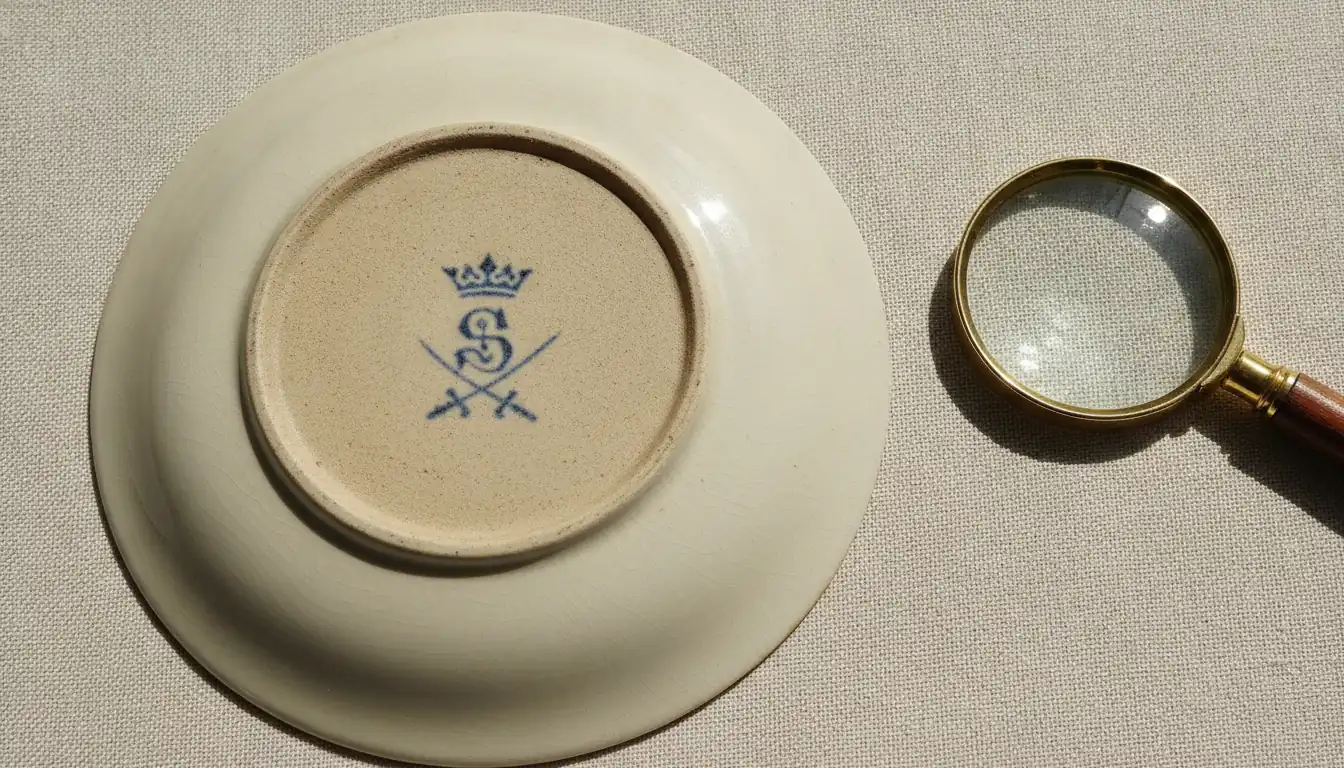
You are standing in a dusty antique shop or perhaps clearing out a relative’s china cabinet when you spot it. A delicate, translucent plate with hand-painted floral sprays and a peculiar blue mark on the underside. Your instinct tells you it might be special, but your logic reminds you that thrift stores are full of cheap reproductions. How do you tell the difference between a priceless relic of the Enlightenment and a mass-produced souvenir from the 1970s?
The answer lies in a secret language developed over three centuries ago. European porcelain marks are more than just logos; they are a complex system of royal branding, legal protection, and artistic pride. For the untrained eye, these squiggles and symbols are a maze of confusion. For the expert, they tell a story of industrial espionage, royal patronage, and the frantic race to discover "white gold."
By the time you finish reading this, you will understand how to look past the surface of a ceramic piece. You will learn to read the subtle cues left by master craftsmen and recognize why a single dot or a slightly curved sword can mean the difference between a fifty-dollar find and a five-figure investment.
Decoding the Language of Royal Kilns
In the early 18th century, porcelain was the ultimate status symbol. It was so rare and expensive that it was referred to as "white gold." European monarchs were obsessed with it, but for decades, they couldn't figure out how the Chinese made it. When the secret was finally cracked in Meissen, Germany, around 1708, it became a state secret of the highest order. The workers were essentially prisoners, and the formula—the "Arcanum"—was guarded more closely than crown jewels.
Because this knowledge was so valuable, the factories needed a way to protect their brand. They weren't just selling plates; they were selling the prestige of the king who owned the factory. This led to the birth of the marking system. These marks were designed to be difficult to replicate and served as a royal seal of approval. If a piece didn't have the mark, it wasn't authentic, and if someone forged the mark, it was considered a crime against the crown.
From Crossed Swords to Imperial Eagles
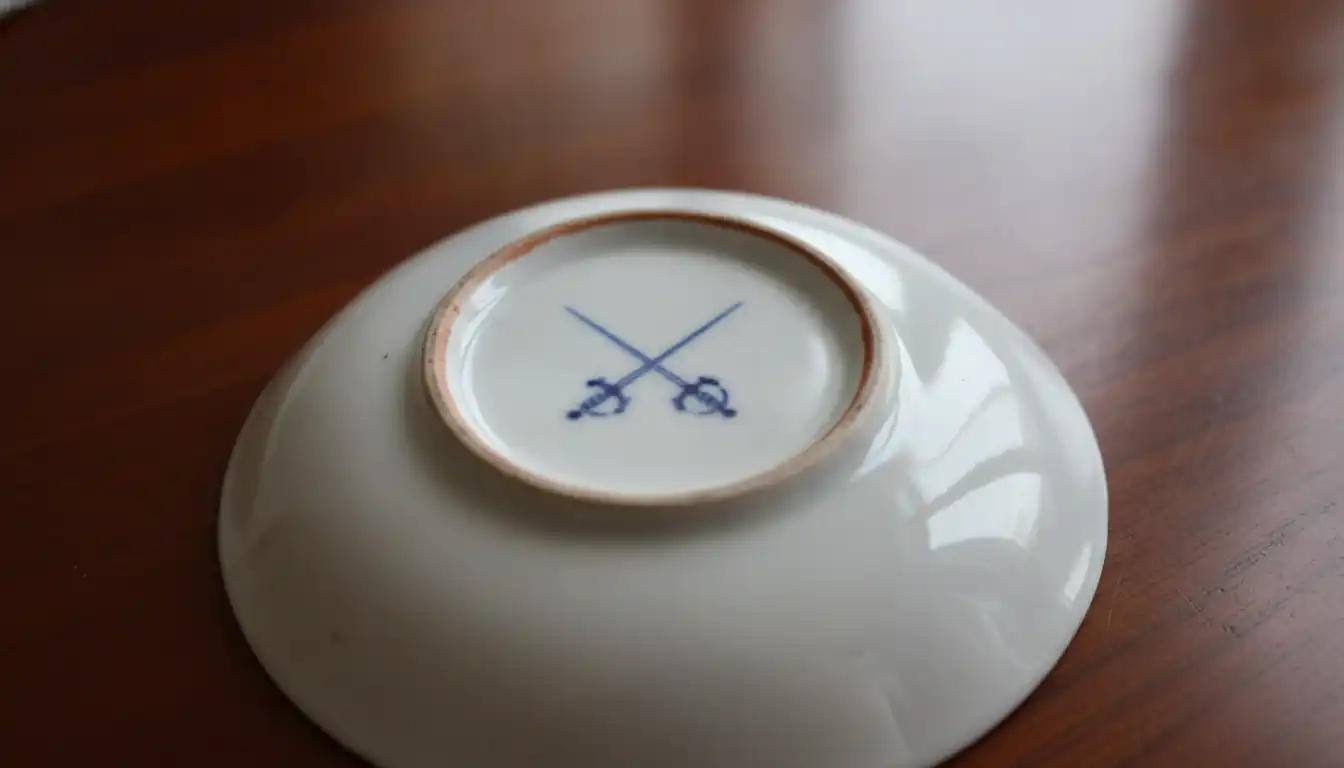
The most famous of these symbols is undoubtedly the Meissen crossed swords. Introduced around 1722, this mark was inspired by the arms of the Elector of Saxony. It wasn't just a pretty design; it was a warning. The swords signified that the piece met the rigorous standards of the Royal Saxon Porcelain Manufactory. Over the decades, these swords changed shape, reflecting the political and artistic shifts of the era.
Other royal houses quickly followed suit. The Sèvres factory in France adopted the interlaced "L"s, the royal cipher of King Louis XV. In Austria, the Imperial Factory in Vienna used a "beehive" mark, which was actually a simplified version of the shield from the Austrian coat of arms. These symbols were chosen specifically because they were associated with power. When you see an eagle, a crown, or a royal monogram on the bottom of a dish, you are looking at a piece of propaganda as much as a piece of art.
Why Manual Catalogs Often Fail Beginners
If you go to a library and pick up a physical catalog of porcelain marks, you might feel overwhelmed. These books are often hundreds of pages long, filled with thousands of tiny, similar-looking drawings. The problem for a beginner is that a hand-drawn mark on a 250-year-old plate rarely looks exactly like the clean, printed version in a book.
- Human Error: Marks were painted by hand. A painter on a Monday morning might draw a sword slightly differently than a painter on a Friday afternoon.
- Glaze Interference: Sometimes the glaze was applied too thickly, causing the mark to blur or "pool," making a crown look like a blob.
- Evolution of Style: Factories updated their marks every few decades. If you don't know the specific timeline, you might dismiss a genuine early piece because it doesn't match the more common later version.
- Size Variations: A mark on a tiny snuff box will be much smaller and less detailed than a mark on a large soup tureen.
Relying solely on a manual catalog requires years of study to recognize the "spirit" of a mark rather than just the literal shape. You have to understand the methodology of the factory to know what is a "permissible variation" and what is a red flag. This complexity is exactly why many people give up on porcelain collecting before they even start, yet it is this very complexity that makes the hunt so rewarding.
The mark is the starting point of the conversation, not the final word. It tells you where the piece was born, but the "paste" and the glaze tell you how it lived.
Hidden Signs of Authentic Craftsmanship
Once you understand the history, you have to look at the physical reality of the mark. A mark isn't just a shape; it’s a chemical and physical addition to the ceramic body. One of the biggest mistakes amateur collectors make is assuming that any mark that looks like a "crossed sword" is Meissen. In reality, the way the mark was applied is often more important than the mark itself.
To truly decode porcelain, you have to look at the relationship between the mark and the glaze. Porcelain goes through multiple firings in a kiln at incredibly high temperatures. Depending on when the mark was applied during this process, it will exhibit different physical characteristics.
Spotting the Difference Between Marks and Overglaze
The most reliable marks on early European porcelain are "underglaze." This means the mark was painted directly onto the porous, unglazed "biscuit" body of the piece before it was dipped in clear glaze and fired.
- Underglaze Marks: These are usually blue, made from cobalt oxide. Because they were fired at extreme temperatures under the glaze, the mark becomes part of the piece. It cannot be scratched off. If you look closely, you might see a slight "bleeding" or "halo" effect where the blue pigment has reacted with the glaze.
- Overglaze Marks: These were applied on top of the already fired glaze and then fired again at a lower temperature. These are often red, gold, or green. Because they sit on the surface, they are susceptible to wear. If you see a mark that looks perfectly pristine while the rest of the plate shows heavy scratches, be suspicious.
- Incised Marks: Some factories, like Sèvres or early Meissen, also used marks scratched into the wet clay. These are often "workman's marks" or size indicators. Finding an incised mark alongside a painted mark is often a very good sign of authenticity.
| Mark Type | Application Method | Common Colors | Durability |
|---|---|---|---|
| Underglaze | Applied before glazing | Cobalt Blue | Permanent, cannot be removed |
| Overglaze | Applied after glazing | Red, Gold, Green | Can wear off or be scratched |
| Incised | Scratched into wet clay | N/A (Texture) | Permanent part of the body |
The Rise of Nineteenth Century Imitation Marks
As the 19th century progressed, the middle class grew, and everyone wanted a piece of royal-style porcelain. This created a massive market for "revival" pieces. Companies like Samson of Paris became famous for creating high-quality copies of 18th-century Meissen, Sèvres, and Chelsea porcelain.
The Samson factory wasn't necessarily trying to commit fraud; they often added their own tiny mark alongside the forged royal mark. However, over the last century, many of those identifying Samson marks have been ground off by unscrupulous dealers. To spot these, you have to look at the quality of the "paste." 18th-century porcelain has a certain "softness" or a specific "whiteness" that 19th-century industrial kilns couldn't perfectly replicate.
Watch for marks that look too perfect. A 1740s Meissen mark should look like it was painted with a quick, confident hand. If the mark looks stiff, labored, or like it was stamped with a rubber stamp, it is likely a later imitation. Authentic marks from the golden age of porcelain have a certain "calligraphic" flow to them that is very hard to fake.
Major European Powerhouses and Their Signatures
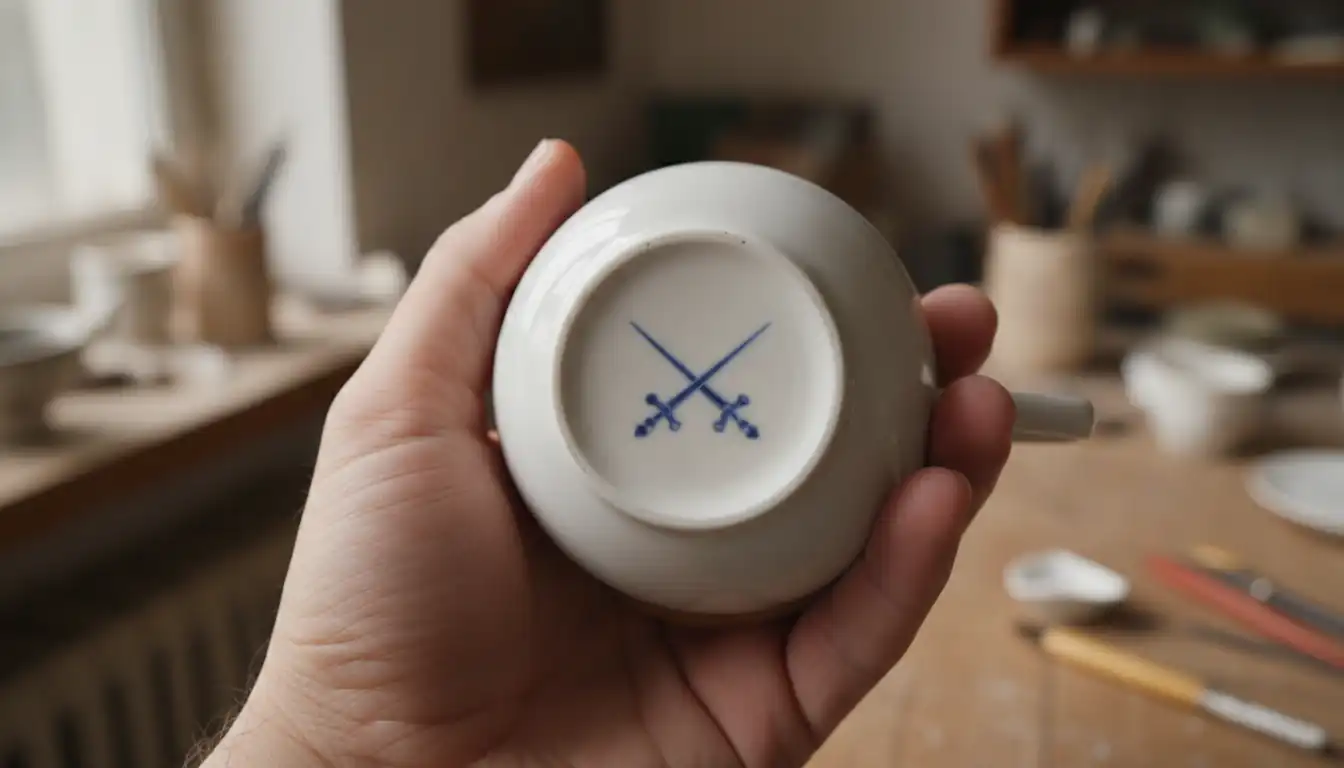
While hundreds of factories operated across Europe, two names stand above the rest in terms of value and historical significance: Meissen and Sèvres. If you find a piece from either of these factories, you are looking at a potential windfall. However, because they are so valuable, their marks are the most frequently imitated.
Meissen and the Evolution of the Crossed Swords
The Meissen "Crossed Swords" mark is perhaps the most recognized symbol in the world of antiques. But "crossed swords" isn't just one mark; it’s a timeline. By looking at the style of the swords, you can often date a piece to within a twenty-year window.
- The Early Years (1722–1763): The swords are often quite large and spindly. They may look more like two intersecting lines than actual weapons. This was the era of the great modeler Kändler, and pieces from this time are the "Holy Grail" for many collectors.
- The Academic/Dot Period (1763–1774): A small dot was placed between the hilts of the swords. This signifies a shift toward a more neoclassical, restrained style.
- The Marcolini Period (1774–1814): A star or an asterisk was placed between the hilts. While Marcolini pieces are beautiful, the quality of the porcelain body sometimes declined during this era due to the stresses of the Napoleonic Wars.
- The 19th Century and Beyond: The swords became more standardized, often with curved blades and clearly defined hilts. If the swords look very "neat" and are accompanied by a series of impressed numbers, the piece is likely from the late 1800s or early 1900s.
One crucial detail to look for is the "cancelation mark." If you see one or more incised lines cut through the blue swords, it means the piece was sold as a "second." This happened if there was a firing flaw or a mistake in the painting. While still valuable, a piece with cancelation marks is worth significantly less than a "first quality" piece.
Sèvres Date Letters and Royal Cyphers
If Meissen is about the evolution of a symbol, Sèvres is about the precision of a code. The Sèvres factory, located just outside Paris, was the personal playground of Louis XV and later Louis XVI. Their marking system is a dream for historians because it allows for exact dating.
The primary mark is the interlaced "L"s. Inside or around those "L"s, you will often find a letter. This is the date letter. The system began in 1753 with the letter 'A'. Each year, they moved to the next letter of the alphabet.
- Single Letters (1753–1776): 'A' is 1753, 'B' is 1754, and so on. They skipped 'J' because it looked too much like 'I'.
- Double Letters (1777–1793): After reaching 'Z', they started over with 'AA' (1777), 'BB' (1778), ending with 'PP' in 1793, the year the monarchy fell.
Alongside the date letter, you might find a small symbol—a leaf, a flower, a crescent moon, or even a tiny pair of spectacles. These are "painter's marks." Sèvres kept meticulous records of which artist painted which piece. If you find a piece with the mark of a famous gilder or flower painter, the value can skyrocket. This level of documentation is rare in the antique world and makes Sèvres one of the most secure investments for high-end collectors.
Instant Identification with Modern Technology
For decades, identifying these marks required a massive library, a magnifying glass, and a lot of guesswork. Even seasoned dealers would sometimes spend hours debating whether a mark was a genuine 18th-century original or a clever 19th-century "style of" piece. The subtle differences in the curve of a sword or the shade of cobalt blue are often too minute for the human eye to categorize reliably without a reference point.
This is where the landscape of collecting has changed. We no longer have to rely on memory or grainy photos in a reference book. Modern technology has caught up to the "secret language" of the royal kilns, allowing anyone with a smartphone to access the kind of expertise that used to take a lifetime to acquire.
How AI Recognizes Faded and Partial Marks
One of the biggest challenges in porcelain identification is the "rubbed" mark. Over centuries of being cleaned, moved, or used, marks can become partially erased. A "beehive" might look like a smudge; a "crossed sword" might look like two faint scratches. Human eyes struggle with this because our brains try to "fill in the blanks," often leading us to see what we want to see rather than what is actually there.
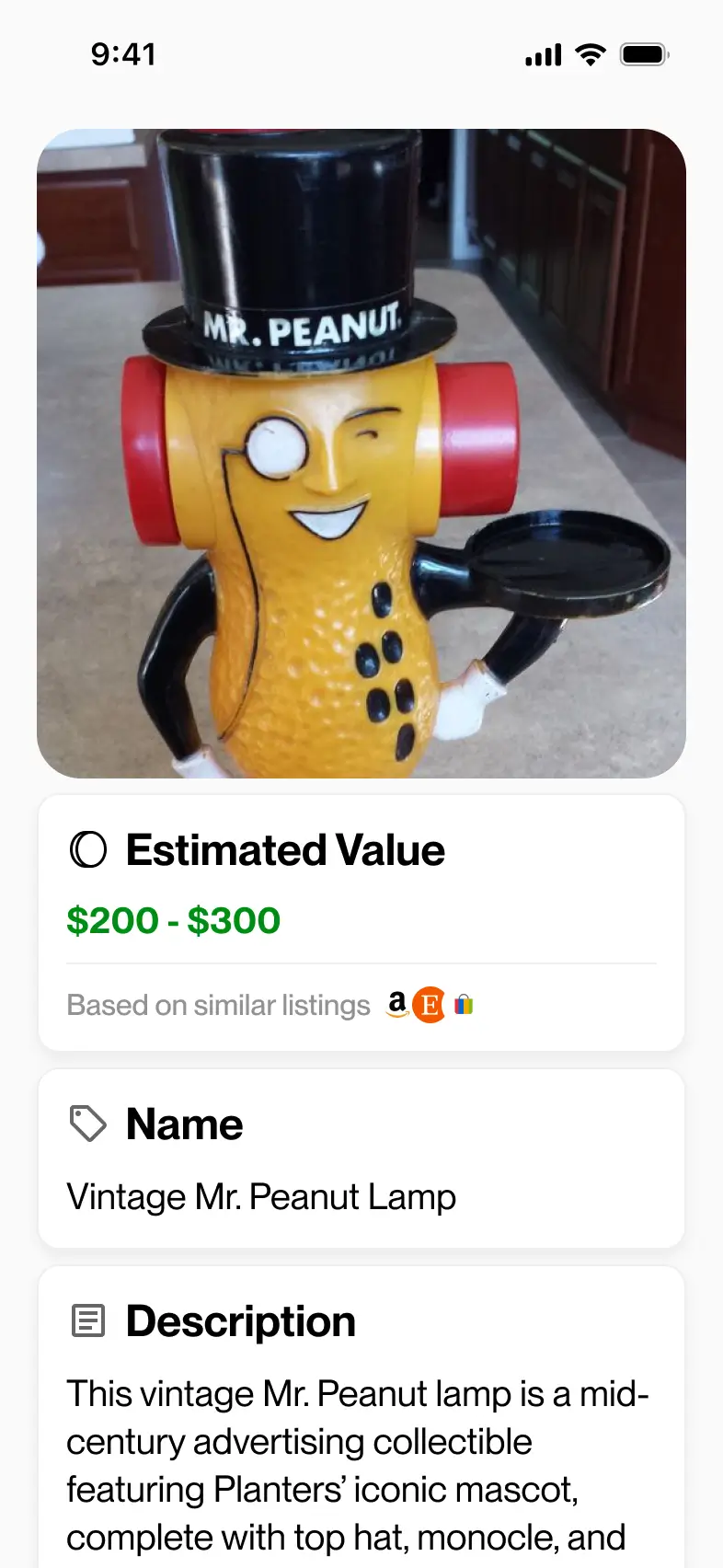
The Relic app uses advanced AI to solve this problem. When you take a photo of a mark through the app, the AI doesn't just look for a perfect match. It analyzes the geometry of the remaining strokes, the pigment density, and the way the mark sits under the glaze. By comparing your photo against a massive database of thousands of verified authentic marks—including those that are worn or damaged—Relic can identify the origin with a level of precision that feels like magic. It can distinguish between a genuine hand-painted Meissen mark and a printed imitation in seconds.
Moving Beyond Marks to Material Analysis
But as we’ve discussed, the mark is only half the story. A clever forger can paint a convincing mark, but they can rarely replicate the exact chemical composition of 18th-century porcelain. The "paste" (the clay body) and the glaze have specific characteristics based on the minerals available to the factory at that time.
Relic goes beyond just "reading" the mark. The app’s AI is trained to look at the texture of the porcelain, the way light interacts with the glaze, and the specific color palette used in the hand-painting.
- The "Paste" Analysis: The app can detect the difference between "hard-paste" porcelain (common in Germany) and "soft-paste" porcelain (common in early French pieces).
- Painting Style: Every factory had a specific way of painting rosebuds or gold borders. Relic analyzes these stylistic "fingerprints" to verify that the decoration matches the mark on the bottom.
- Holistic Appraisal: Once the app identifies the piece, it provides a real appraisal and history. You aren't just getting a name; you're getting the context of what the item is, where it came from, and what it’s worth in today’s market.
Having this tool in your pocket changes the way you shop. Instead of walking away from a "maybe," you can verify it on the spot. It turns a trip to an estate sale from a gamble into a calculated search for treasure.
Turning an Identified Mark into a Real Appraisal
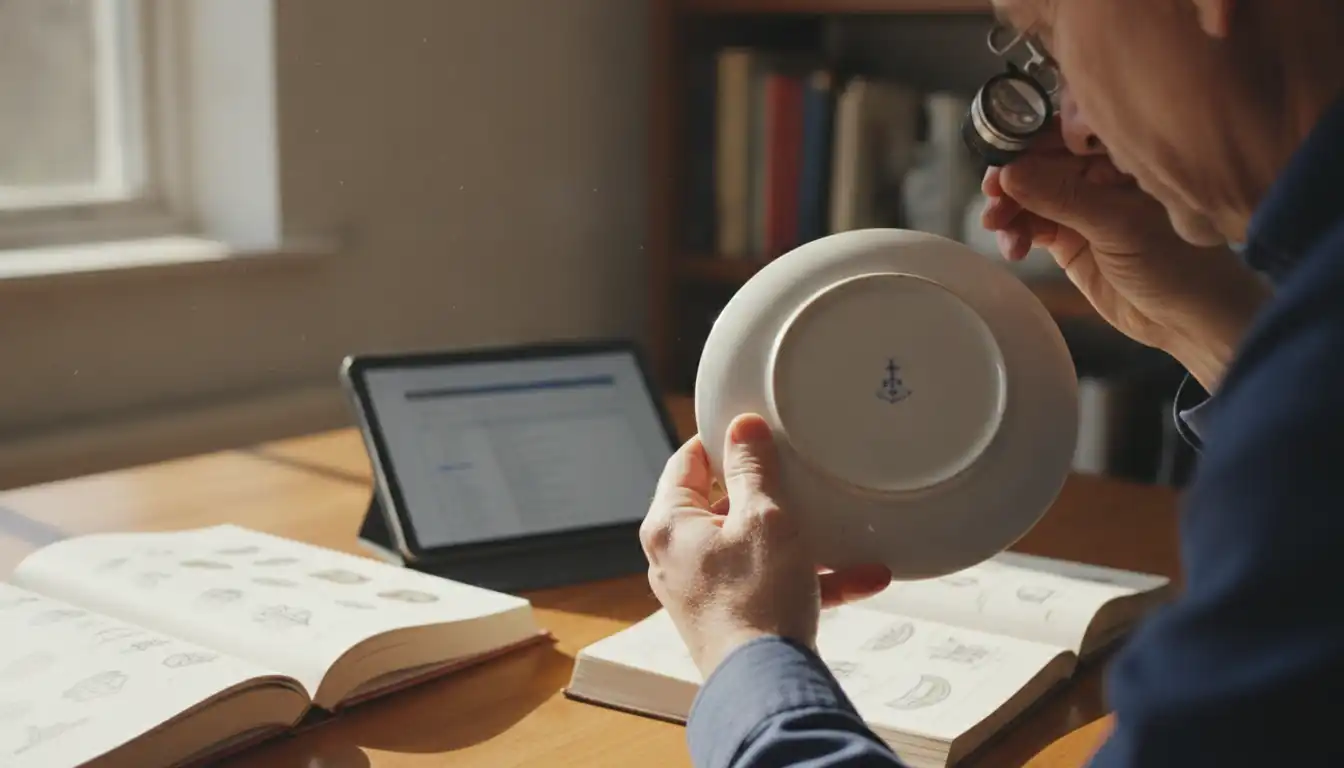
Identifying the mark is a massive victory, but it is the first step in a longer journey. Once you know you have a genuine piece of Meissen or Sèvres, the next question is always: "What is it worth?" The gap between a "genuine" piece and a "valuable" piece can be enormous. A chipped Meissen saucer might be worth $50, while a pristine one from the same set could be worth $500.
To turn your identification into a documented asset, you need to look at the piece through the eyes of a professional appraiser. You have to be brutally honest about its flaws and realistic about its rarity.
Factors That Influence Value Beyond the Mark
Value in the porcelain world is a tripod: it stands on authenticity, condition, and rarity. If one leg is missing, the value collapses.
- Condition: This is the most significant factor. In the world of high-end ceramics, "mint condition" is the gold standard. Look for "hairline cracks"—tiny, vein-like cracks that don't go all the way through but weaken the piece. Check for "flea bites" (tiny chips) along the rim. Use a UV light if you have one; modern repairs and "over-painting" will often glow a different color than the original 18th-century glaze.
- Rarity of Pattern: Some patterns were produced for decades, while others were limited runs for a specific royal wedding or event. A "Blue Onion" Meissen plate is classic and valuable, but a "Swan Service" plate—originally made for Count Brühl—is a museum-grade masterpiece.
- Provenance: Does the piece have a history? If you can prove a piece was once part of a famous collection or owned by a historical figure, the value can double or triple. Even an old auction sticker from a reputable house like Christie’s or Sotheby’s adds a layer of "vetted" value.
- Translucency: Hold the piece up to a light. True hard-paste porcelain should be translucent. If you can see the shadow of your fingers through the plate, it’s a sign of high quality. If it’s opaque like a brick, it’s likely earthenware or a lower-quality ceramic.
Documenting Your Find for Resale or Insurance
If you discover that your "dusty plate" is indeed worth thousands, you need to protect that value. An appraisal isn't just a number; it’s a document that proves the item's worth for insurance or potential buyers.
How to Document Your Porcelain:
- The "Base" Shot: Take a clear, high-resolution photo of the mark. Use natural light but avoid direct sunlight, which can cause glare on the glaze.
- The "Profile" Shot: Photograph the shape of the piece. The "form" of a teapot or vase can often date it as accurately as the mark.
- The "Damage" Report: Be transparent. Photograph any chips, cracks, or wear to the gilding. Buyers respect a seller who points out flaws.
- The "Translucency" Test: Take a photo with a light source behind the piece to show its porcelain quality.
- Digital Cataloging: Use an app like Relic to keep a digital record of your scans and appraisals. This is invaluable for insurance purposes if your collection is ever damaged or stolen.
A well-documented piece with a verified history is always easier to sell than a "mystery" item. The more data you have, the more leverage you have in a sale.
Conclusion
The world of European porcelain is a fascinating blend of art, chemistry, and royal history. Those tiny blue marks on the bottom of your dishes are the keys to a kingdom of "white gold" that once drove monarchs to the brink of madness. By learning to distinguish between underglaze and overglaze, understanding the evolution of the Meissen swords, and decoding the Sèvres date letters, you are no longer just a casual observer—you are a detective.
While the "secret language" of kilns can take a lifetime to master, you don't have to do it alone. Tools like the Relic app bridge the gap between amateur curiosity and professional expertise, giving you the power to identify and appraise finds in the palm of your hand. Whether you are looking to flip a thrift store find for a profit or simply want to know the history of a family heirloom, the information is now at your fingertips.
The next time you see a dusty plate with a strange blue squiggle, don't just set it back on the shelf. Turn it over, take a closer look, and remember that you might be holding a piece of history. Your next great discovery is waiting to be decoded.
Identify antiques instantly
Point your camera at any antique, collectible, or vintage item. Get valuations, history, and market insights in seconds.
Download for iPhone