That Dusty Plate Could Be Worth Thousands—Decode Porcelain Marks Instantly Without a Database

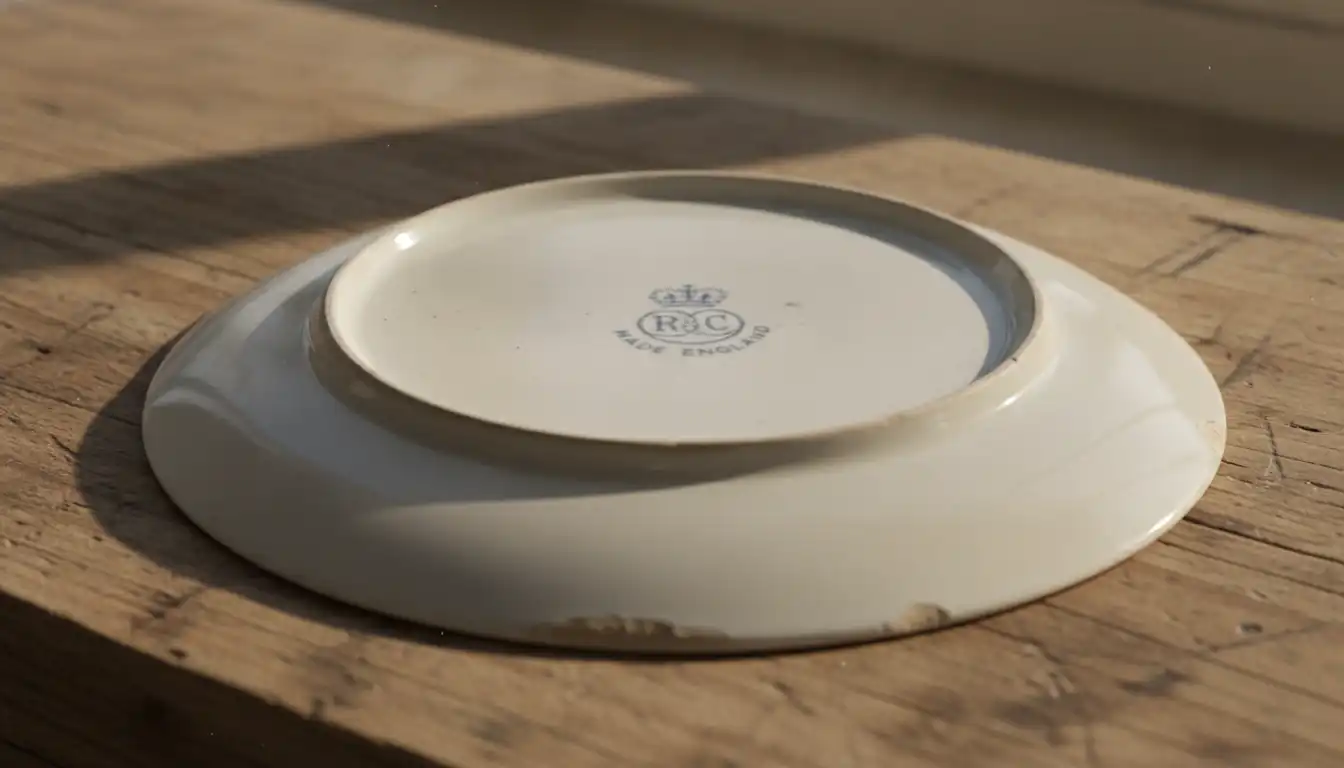
You are standing in a dimly lit thrift store, or perhaps you’re clearing out a relative’s attic, when you spot it. A single porcelain plate, tucked away behind stacks of chipped stoneware. It feels different—lighter, colder, and almost impossibly thin. When you turn it over, you see a small, faded blue stamp on the bottom.
Is it a mass-produced souvenir from the 1970s, or is it a piece of "white gold" from an 18th-century European factory? That tiny mark is the key to a story that could span centuries and continents. For most people, that mark is a dead end, a cryptic symbol that remains a mystery.
By the time you finish reading this, you will understand how to read these marks like a seasoned professional. You will learn the difference between a royal cypher and a factory monogram, why some of the most valuable pieces have no marks at all, and how modern technology has finally solved the problem of identifying blurry backstamps.
The Secret Language of Porcelain Backstamps
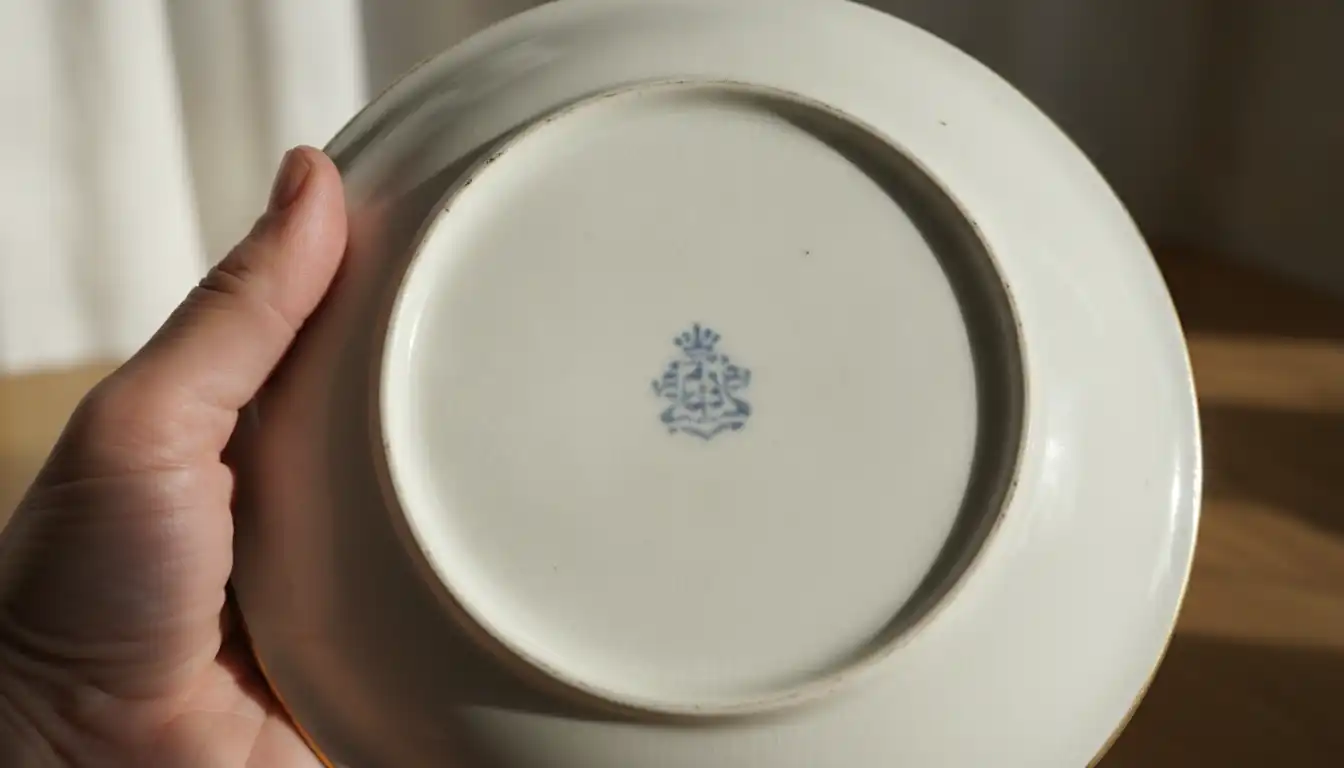
Every piece of antique porcelain tells a story, but it doesn't speak in English or French. It speaks in a language of symbols, initials, and tiny artistic flourishes known as backstamps or maker’s marks. These marks were originally intended as a form of branding and quality control, ensuring that a buyer knew exactly which workshop produced their luxury goods.
In the early days of European porcelain—think the early 1700s—marks were almost always hand-painted. Because they were applied by hand before the final firing, they are often slightly irregular. A painter might have been tired or in a hurry, leading to variations in the same mark across different pieces from the same set.
Decoding Monograms and Royal Cyphers
The most prestigious porcelain houses often operated under the protection or ownership of royalty. This is why you will see so many crowns, eagles, and interlaced initials. These are known as royal cyphers. For example, the famous "interlaced Ls" of the Sèvres factory in France represented King Louis XV.
As porcelain production moved from small, royal-funded workshops to the industrial factories of the 19th century, the marks changed. Hand-painted symbols were replaced by printed marks, often applied using a transfer process. These marks are much more uniform and often include the name of the pattern or the town where the factory was located.
| Symbol Type | Common Meaning | Historical Context |
|---|---|---|
| Crossed Swords | Meissen (Germany) | One of the oldest and most faked marks in history. |
| Crowns | Royal Patronage | Indicates the factory was authorized by a monarch. |
| Anchor | Maritime or Chelsea | Often used by the Chelsea factory in London. |
| Eagle | Germanic or American | Common in Prussian and early American porcelain. |
Why Some Masterpieces Carry No Marks at All
It is a common misconception that an unmarked piece of porcelain is worthless. In fact, some of the most valuable early porcelain in the world carries no mark whatsoever. During the mid-18th century, many factories were operating "under the radar" or were simply so well-known that they didn't feel the need to mark every piece.
Early English porcelain, such as that from the Bow or St. Cloud factories, often lacks a backstamp. In these cases, collectors must rely on the "body" of the piece—the weight, the color of the glaze, and the way the light passes through it. If you find a piece that feels incredibly old and high-quality but has no mark, don't dismiss it. You might be holding a rare early experimental piece that predates the standard use of factory stamps.
Pro Tip: A lack of a mark can sometimes be a sign of extreme age, while a very clear, perfectly centered printed mark often suggests a piece made after 1850.
Navigating the World of Digital Pottery Databases
If you’ve ever tried to identify a piece of pottery, you’ve likely asked the question: Is there a pottery marks database online? The answer is yes, but using them is often more difficult than it sounds. There are several venerable institutions and hobbyist sites that have spent decades cataloging thousands of marks.
Sites like The Potteries offer an incredible depth of information on Staffordshire makers, while Kovels has long been a staple for American collectors. These databases are essentially digital encyclopedias. They are organized by name, country, or symbol. However, they require you to already have a basic idea of what you are looking at.
Reliable Online Resources for Manual Identification
When you use a traditional database, you are essentially performing a manual search. You might start by looking up "Crown mark with initials" and then scroll through hundreds of variations.
- The Potteries: Excellent for identifying British makers, specifically those from the North Staffordshire region.
- Kovels: A broad database that covers everything from furniture to ceramics, useful for general American marks.
- Gotheborg: The gold standard for Chinese and Japanese porcelain marks, which are notoriously difficult to decode for Westerners.
The Limitations of Text-Based Search for Visual Symbols
The biggest hurdle with traditional databases is the "search bar problem." How do you describe a mark that looks like a squiggly line, a bird's wing, and a lowercase 'g'? If the mark is worn or the ink has bled into the glaze, a text description becomes almost useless.
You might spend three hours scrolling through "blue flower marks" only to realize the mark you’re looking at isn't a flower at all—it's a stylized bundle of wheat. This friction is where many amateur collectors give up. They have the item in their hand, and the information exists somewhere on the internet, but the bridge between the two is broken.
Modern Identification Through Visual AI Technology
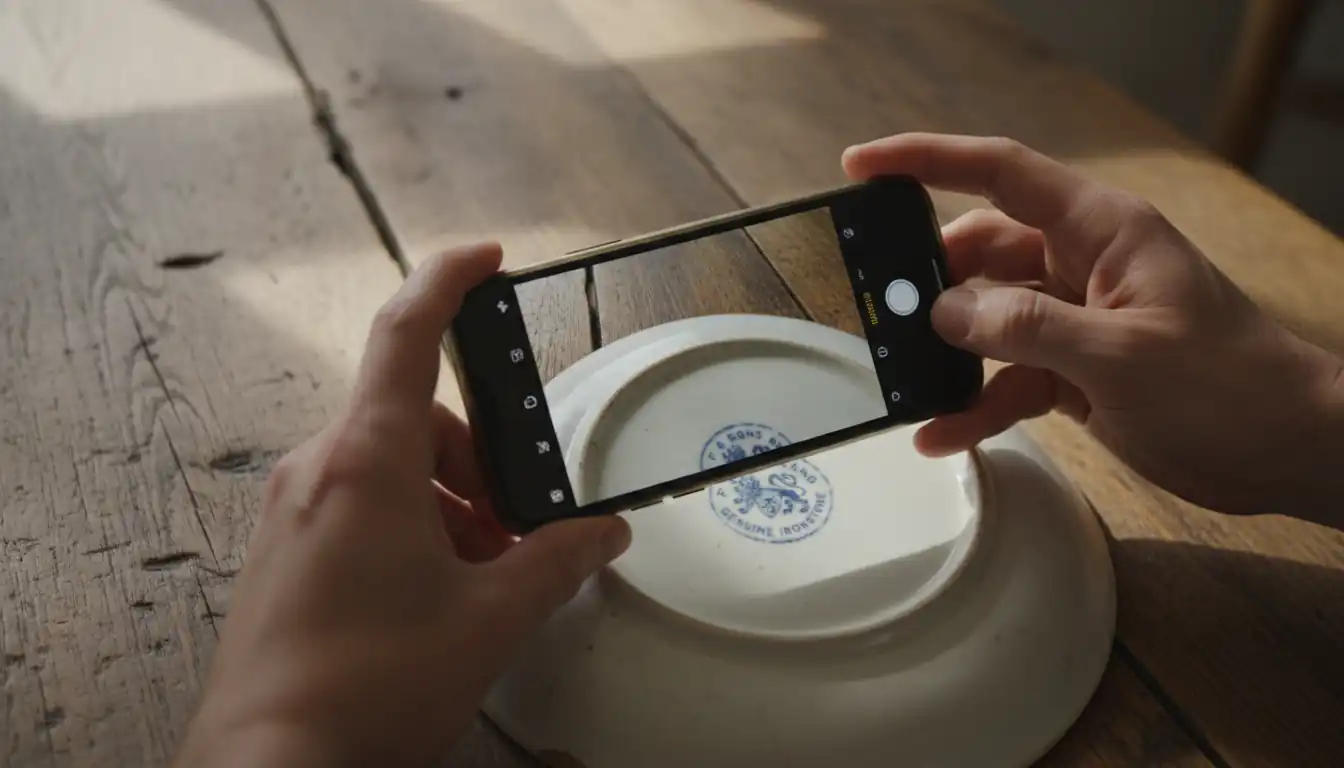
The gap between a physical object and a digital database has finally been closed by visual AI. Think about how apps can now identify a song just by "listening" to a few seconds of audio. That same logic is now being applied to the world of antiques. Instead of trying to describe a mark in words, you can now use the camera on your phone to "read" the object.
This technology doesn't just look at the mark; it analyzes the entire piece. It looks at the shape of the rim, the style of the handle, the color palette of the hand-painted flowers, and the specific typography of the backstamp. It then compares these visual data points against a massive library of known authentic pieces.
How Image Recognition Bridges the Information Gap
Visual AI removes the guesswork. When you upload a photo, the software looks for patterns that the human eye might miss. It can distinguish between a genuine 18th-century hand-painted mark and a 20th-century printed reproduction that was designed to look old.
This is a massive shift for the hobby. It moves the power from a few "expert" appraisers into the hands of anyone with a smartphone. You no longer need to carry a library of heavy reference books to a flea market. You just need a clear photo and a connection to an intelligent system.
Relic: Your Pocket Appraiser for Instant Porcelain History
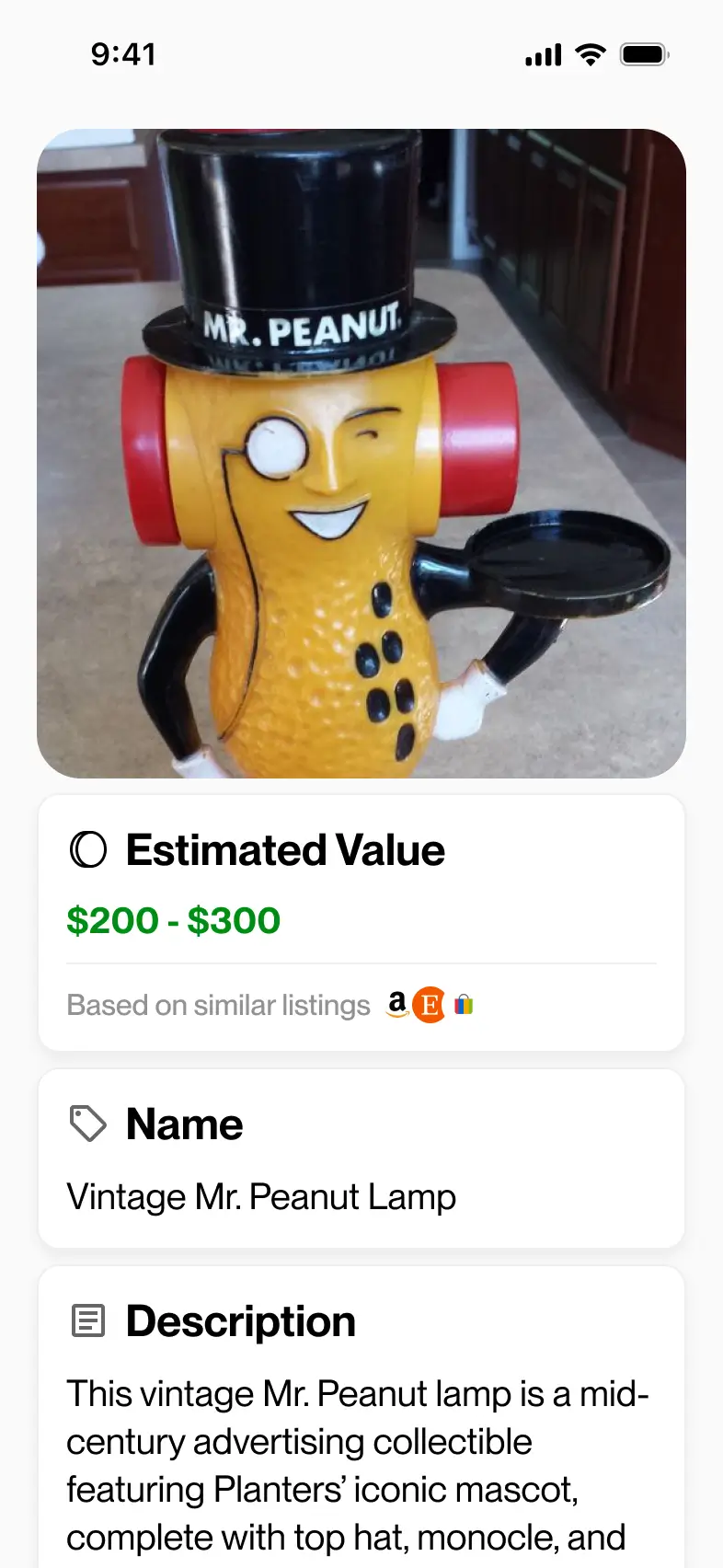
This is where the Relic app becomes an essential tool for any collector. Relic is an iOS app designed specifically to identify and appraise antiques using your phone’s camera. Instead of spending your afternoon scrolling through confusing databases, you simply take a photo of the plate and its mark.
Relic uses advanced AI to provide a real appraisal, history, and origin of the item in seconds. It’s essentially a "Shazam for antiques." For professionals like dealers or pickers, this is a massive time-saver. For the casual enthusiast, it’s a way to ensure you aren't overpaying for a reproduction—or underpricing a hidden gem. With a 4.9-star rating from over 20,000 reviews, it has become the go-to resource for instant identification.
- Instant Identification: No more guessing what a symbol means.
- Historical Context: Learn the story behind the factory and the era.
- Market Insights: Get a sense of what similar items are actually selling for.
Physical Clues That Databases Often Overlook
While a mark is a great starting point, it isn't the whole story. A database can tell you what a mark should look like, but it can't tell you how the porcelain feels in your hand. To truly master identification, you need to look at the physical integrity of the piece.
Analyzing Glaze Crazing and Clay Composition
One of the first things to look for is "crazing." These are the tiny, spider-web-like cracks in the glaze. While crazing can happen to old porcelain, it is much more common in earthenware or "ironstone." True hard-paste porcelain is fired at such a high temperature that the glaze and the body fuse together almost perfectly, making crazing much rarer.
The "Ring" Test: Hold the plate on the tips of your fingers and gently tap the rim with a fingernail or a wooden pencil.
- Hard-paste porcelain will produce a clear, high-pitched "ring" that lingers for a second.
- Soft-paste porcelain or earthenware will produce a dull "thud."
Spotting Modern Reproductions and Forged Marks
Because certain marks—like the Meissen crossed swords or the Sevres interlaced Ls—are so valuable, they have been forged for centuries. Some of these forgeries are actually "honest" reproductions made in the late 19th century (like the famous Samson of Paris factory), while others are modern fakes intended to deceive.
How to spot a fake mark:
- Under the Glaze vs. Over the Glaze: Most authentic early marks were applied "underglaze" (before the final clear coat). If the mark looks like it’s sitting on top of the glaze and you can feel it with your fingernail, be cautious.
- Perfect Symmetry: Early marks were hand-drawn. If a "1750" mark looks laser-perfect and perfectly centered, it’s likely a modern print.
- The "Acid Test": Some modern fakers use acid to dull the glaze and make a piece look old. Look for a "halo" of dullness around the mark compared to the rest of the base.
| Feature | Antique Porcelain | Modern Reproduction |
|---|---|---|
| Weight | Often surprisingly light | Usually heavier and thicker |
| Translucency | Holds up to light; you can see your hand through it | Often opaque or "muddy" |
| Wear Patterns | Natural wear on the "foot rim" (the bottom ring) | Artificial wear or no wear at all |
Turning Your Identification Into a Real Appraisal

Once you’ve identified the mark and confirmed the piece is authentic, the next question is always: "What is it worth?" Identification is the "who" and "where," but appraisal is the "how much." The value of porcelain is incredibly volatile and depends heavily on current interior design trends.
Determining Market Value in the Current Climate
The market for "brown furniture" and traditional floral porcelain has shifted in recent years. While rare 18th-century pieces still command high prices, mid-range Victorian porcelain has seen a dip in value. To get an accurate appraisal, you need to look at "comparable sales," or "comps."
Don't look at what people are asking for on eBay; look at what items have actually sold for. A seller might list a plate for $500, but if ten similar plates sold for $45, the market value is $45. Relic helps with this by providing market insights that reflect real-world value rather than just wishful thinking from sellers.
Documenting Provenance for Future Resale
If you discover that your plate is indeed worth thousands, the most important thing you can do is document its history. This is known as "provenance." Provenance is the record of ownership that proves an item's authenticity and history.
- Keep Receipts: If you bought it at a prestigious estate sale, keep the tag.
- Photograph Everything: Take high-resolution photos of the front, back, and any damage.
- Research the Pattern: If the plate was part of a famous service (like the "Flora Danica" or "Swan Service"), that history adds significant value.
"A piece of porcelain with a documented history is always worth more than an identical piece with a mystery past."
When you use an app like Relic, you can start a digital catalog of your finds. This not only helps you keep track of what you own but also provides a professional-looking record if you ever decide to sell your collection at auction or to a private dealer.
Conclusion
Identifying antique porcelain used to be a skill that took a lifetime to master. You had to spend years hovering over auction catalogs and memorizing the subtle differences between a Berlin KPM mark and a Meissen star. While that deep knowledge is still valuable, the barrier to entry has vanished.
By understanding the evolution of backstamps, recognizing the physical clues of clay and glaze, and utilizing modern tools like the Relic app, you can transform from a curious observer into a confident collector. The next time you see a dusty plate with a mysterious mark, don't walk away. Turn it over, take a photo, and see if you’ve found a piece of history.
Your Next Steps:
- Check your cabinets: Look for any porcelain with a mark you don't recognize.
- Perform the "Ring Test": See if your pieces are hard-paste or soft-paste.
- Download Relic: Use the app to scan your most interesting piece and see its real history and value instantly.
Identify antiques instantly
Point your camera at any antique, collectible, or vintage item. Get valuations, history, and market insights in seconds.
Download for iPhone