That Dusty Plate Could Be Worth Thousands—Here’s How to Read the Marks

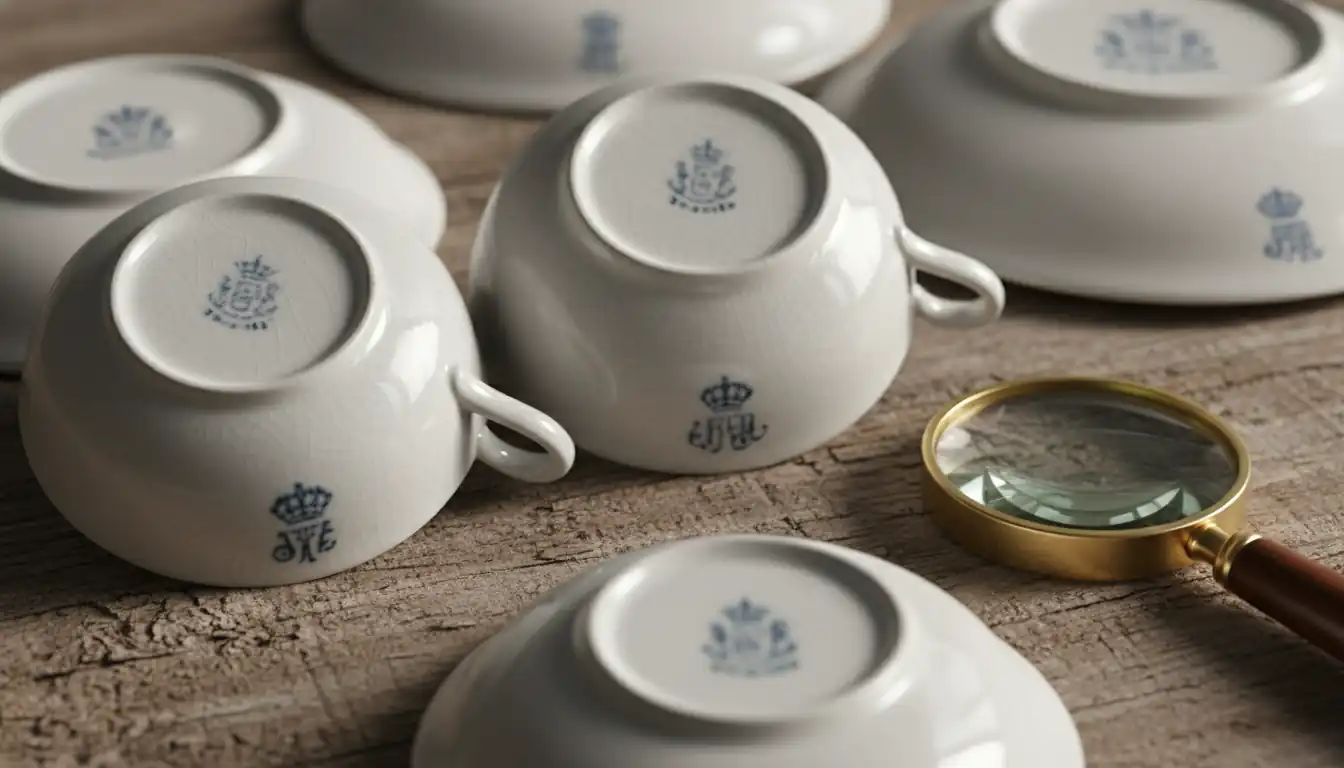
You are standing in a dimly lit thrift store, holding a porcelain plate that feels surprisingly light, almost like an eggshell. You flip it over, and there it is: a faint, hand-painted blue symbol. Your heart beats a little faster because you know that in the world of antiques, the difference between a five-dollar trinket and a five-figure masterpiece often hides in those tiny, ink-stained marks on the underside.
Deciphering these marks is a skill that combines art history, linguistics, and a bit of forensic science. It is about more than just identifying a brand; it is about reading the "DNA" of an object to understand when it was made, who painted it, and how far it traveled to reach your hands. Whether you are a seasoned collector or someone who just inherited a grandmother’s china cabinet, learning to read these signatures is the first step toward uncovering a hidden fortune.
This guide will walk you through the visual language of ceramics, from the rigid branding of European factories to the poetic reign marks of the East. You will learn how to spot the difference between a genuine antique and a respectful copy, and how modern technology is making it easier than ever to value your finds instantly.
Global Signatures of Ceramic History
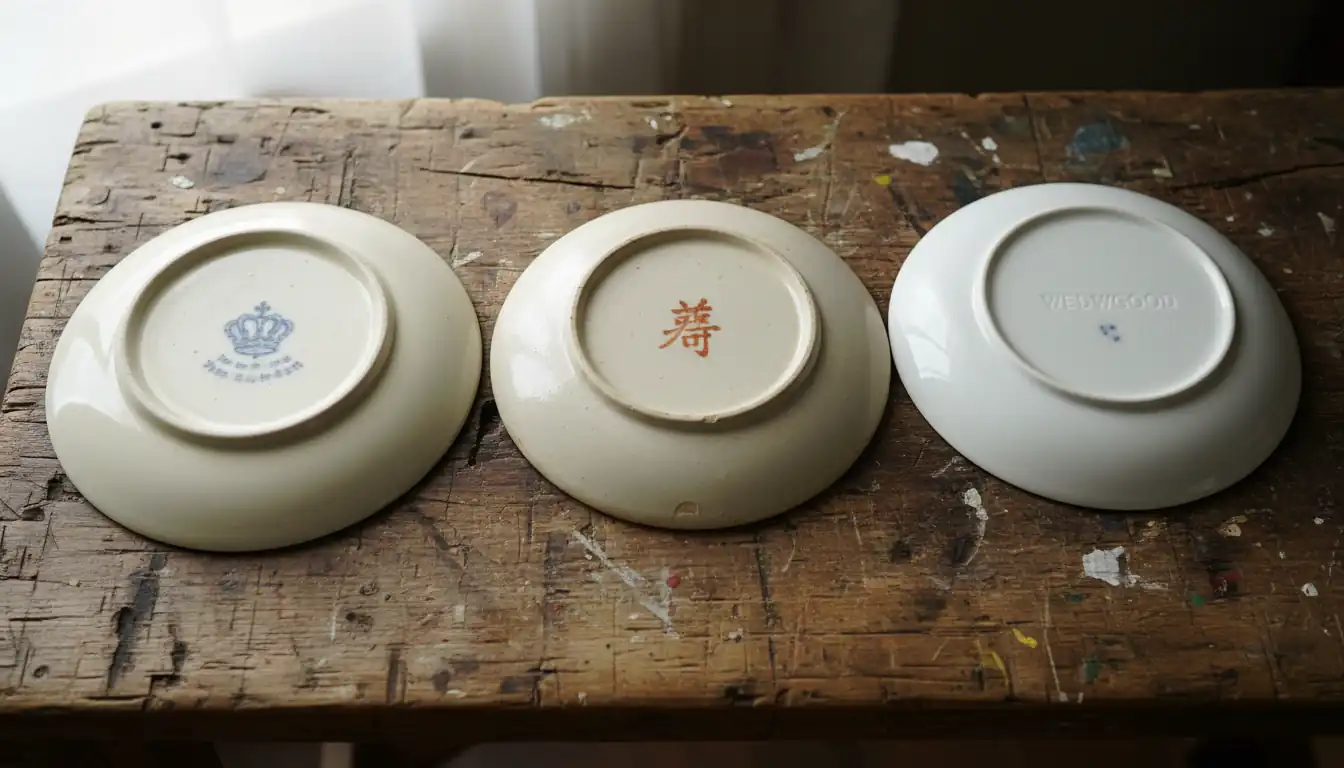
The first thing you notice when looking at the bottom of a piece of porcelain is the "vibe" of the mark. Is it a crisp, symmetrical logo that looks like it was printed with a stamp? Or is it a series of fluid, hand-painted characters that look like calligraphy? This initial observation is your primary clue in distinguishing between Western and Eastern traditions.
European Factory Stamps vs Asian Reign Marks
European porcelain history is defined by the quest for "white gold." When factories like Meissen in Germany or Sèvres in France finally cracked the secret of hard-paste porcelain in the early 18th century, they treated their marks like corporate logos. These marks were designed to protect their brand and signify royal patronage.
European marks are generally systematic. You will often see crossed swords (Meissen), interlaced Ls (Sèvres), or a crowned "N" (Capodimonte). These symbols were usually applied under the glaze in cobalt blue or impressed directly into the damp clay. They represent the factory as a whole, a unified stamp of authority that says, "This piece meets the standards of the King."
In contrast, Chinese and Japanese porcelain marks often follow a cyclical, dynastic logic. Instead of a factory logo, you are more likely to find a "reign mark" (known as Nian Hao in China). These typically consist of six or four characters written in vertical columns. They don't necessarily tell you who made the pot, but rather which Emperor was on the throne when the style was popularized. Reading them requires looking at the structure of the characters—the top two usually signify the dynasty (like Great Ming), the middle two name the Emperor, and the final two translate to "made during."
Deciphering the Fuku Mark and Japanese Symbols
If you find a mark that looks like a stylized, square-shaped character inside a double-bordered box, you might be looking at the Fuku mark. This is one of the most common and beloved symbols found on Japanese porcelain, particularly on Arita and Kutani wares from the 19th century.
The word Fuku translates to "good fortune" or "happiness." Unlike a royal cipher, the Fuku mark was used by various kilns as a decorative blessing rather than a strict brand name. It is a sign of high-quality export ware intended to bring luck to the owner.
When you see a Fuku mark, look at the quality of the cobalt blue. On older, more valuable pieces, the blue will have a deep, hazy quality where the ink has bled slightly into the glaze. On modern mass-produced versions, the lines will look "too perfect," almost like a digital print.
| Mark Type | Origin | Common Visuals | Meaning |
|---|---|---|---|
| Factory Mark | Europe | Swords, Crowns, Anchors | Brand/Manufacturer |
| Reign Mark | China | 4 or 6 Characters | Era of Production |
| Fuku Mark | Japan | Square Character | "Good Fortune" |
| Impressed Mark | Global | Numbers or Letters | Mold or Batch Code |
Hidden Clues in Monograms and Decorative Themes
Once you have identified the region of origin, the next step is to look for the "hand" of the artist. While the factory mark tells you which building the plate came from, the monogram tells you who sat at the bench and painted the flowers.
Ceramic Monograms as Artist Signatures
In high-end European factories, the work was divided between the "throwers" (who shaped the clay) and the "decorators" (who painted the scenes). Many of these decorators were famous artists in their own right. They would often tuck a tiny monogram or a specific number near the factory mark.
For example, on a piece of Sèvres, you might see the standard interlaced Ls, but inside those Ls is a letter. A "D" might indicate the year 1756, while a tiny "painter's mark" nearby—like a small leaf or a specific set of initials—identifies the individual artist. These artist signatures can drastically increase the value of a piece. A standard floral plate might be worth a few hundred dollars, but a plate signed by a master gilder or a renowned landscape painter can fetch thousands.
Regional Motifs That Validate Origin
Sometimes the mark is faded or missing entirely. When this happens, you have to look at the "visual vocabulary" of the decoration. Every region had its own specialty that acted as a secondary signature.
- Delft (Netherlands): Known for its iconic blue and white tin-glazed earthenware. Look for scenes of windmills, tulips, or "Chinoiserie" (European interpretations of Chinese life). The blue in genuine Delft has a specific "inky" depth that is hard to replicate.
- Tournai and Brussels (Belgium): Belgian porcelain is a hidden gem for collectors. Tournai is famous for its "décor à la mouche" (small fly-like sprigs) and its distinctive soft-paste body. The marks often involve a small tower or crossed swords with small crosses in the angles.
- Kutani (Japan): This style is famous for its "Gosu" colors—deep reds, golds, and greens. If the plate looks like a crowded, colorful tapestry with heavy gold leaf, it is likely Kutani, even if the mark on the bottom is just a simple red square.
Pro Tip: Always compare the style of the painting to the mark. If you see a 17th-century Meissen mark on a plate painted in a 1920s Art Deco style, you know something is wrong. The "story" told by the front of the plate must match the "signature" on the back.
The High Stakes of Apocryphal and Copycat Marks
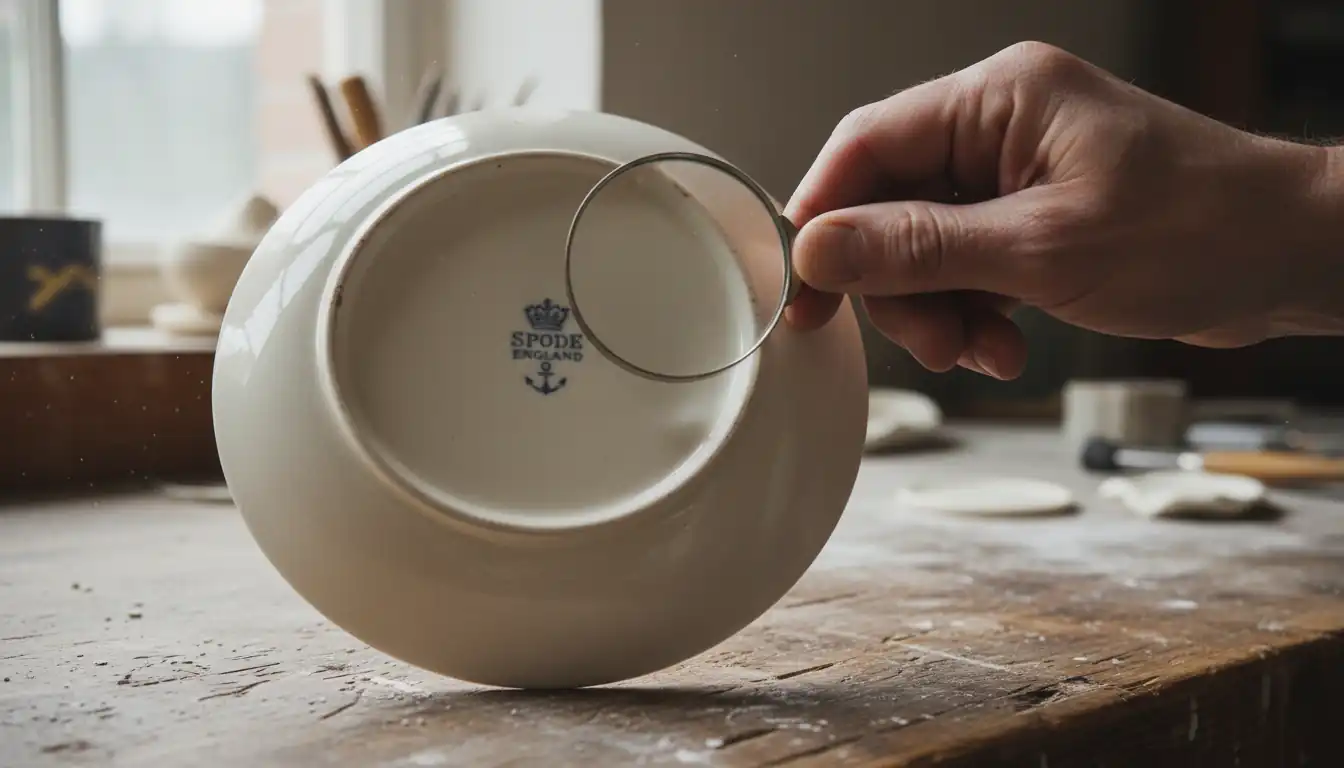
This is where porcelain identification gets tricky. In the world of ceramics, a mark isn't always a lie, even if it isn't "true." This brings us to the concept of apocryphal marks.
Why Later Marks Copy the Jiajing Period
In Chinese culture, there is a deep reverence for the past. During the 19th century (the Qing Dynasty), potters often placed the marks of the Ming Dynasty (such as the Jiajing or Chenghua periods) on their work. They weren't necessarily trying to scam buyers; they were paying homage to the "Golden Age" of porcelain. They were saying, "This piece is made in the grand tradition of the Jiajing Emperor."
However, for a modern collector, this creates a massive headache. How do you tell a genuine 16th-century Ming vase from an 1880s "tribute" piece?
- The Calligraphy Test: On genuine early pieces, the calligraphy is bold and fluid. On later copies, the characters often look "hollow" or stiff, as if the artist was tracing a shape they didn't quite understand.
- The Cobalt Quality: Early Ming blue comes from imported Persian cobalt, which often has "heaping and piling"—darker spots where the mineral concentrated. 19th-century blue is usually more even and flat.
Common Pitfalls in Porcelain Identification
The biggest mistake a beginner makes is becoming a "mark hunter." They flip a plate over, see a crown, and assume it’s royal. But marks are the easiest thing to fake. To be a true porcelain detective, you have to look at the "body" of the piece.
- Weight: Is it too heavy for its size? Modern fakes are often made of heavier, cheaper clay.
- Translucency: Hold the piece up to a light. Genuine fine porcelain should allow a soft glow to pass through it. If it’s opaque like a brick, it’s likely earthenware or a low-quality reproduction.
- The Foot Rim: Look at the unglazed ring on the bottom where the piece sat in the kiln. On old pieces, this rim will be slightly discolored from decades of sitting on shelves. If it’s stark white and feels like sandpaper, it’s likely brand new.
Instant Appraisal in Your Pocket
If all of this sounds overwhelming, you aren't alone. Even professional appraisers spend decades memorizing the nuances of glaze bubbles and brushstrokes. For the rest of us, the gap between "garage sale find" and "documented treasure" can feel impossible to bridge.
This is where the Relic app changes the game for collectors. Instead of carrying around a stack of heavy reference books or spending hours scrolling through blurry forum photos, you can use your iPhone to get answers in seconds.
The way Relic works is remarkably simple but incredibly powerful. When you find a mysterious piece of porcelain, you just open the app and take a clear photo of the mark and the overall item. Relic uses advanced AI that has been trained on millions of data points—including rare factory marks, artist monograms, and regional styles.
Within moments, the app provides a real appraisal, historical context, and the origin of the item. It can catch the subtle differences in a "Fuku" mark or identify a rare Belgian factory that you might have overlooked. Because the AI analyzes the painting style alongside the mark, it helps you avoid the "apocryphal mark" trap by flagging inconsistencies that the human eye might miss. For a picker or an online seller, having that kind of professional-grade expertise in your pocket is the difference between passing over a fortune and making the find of a lifetime.
Uncovering Rare European and Export Treasures
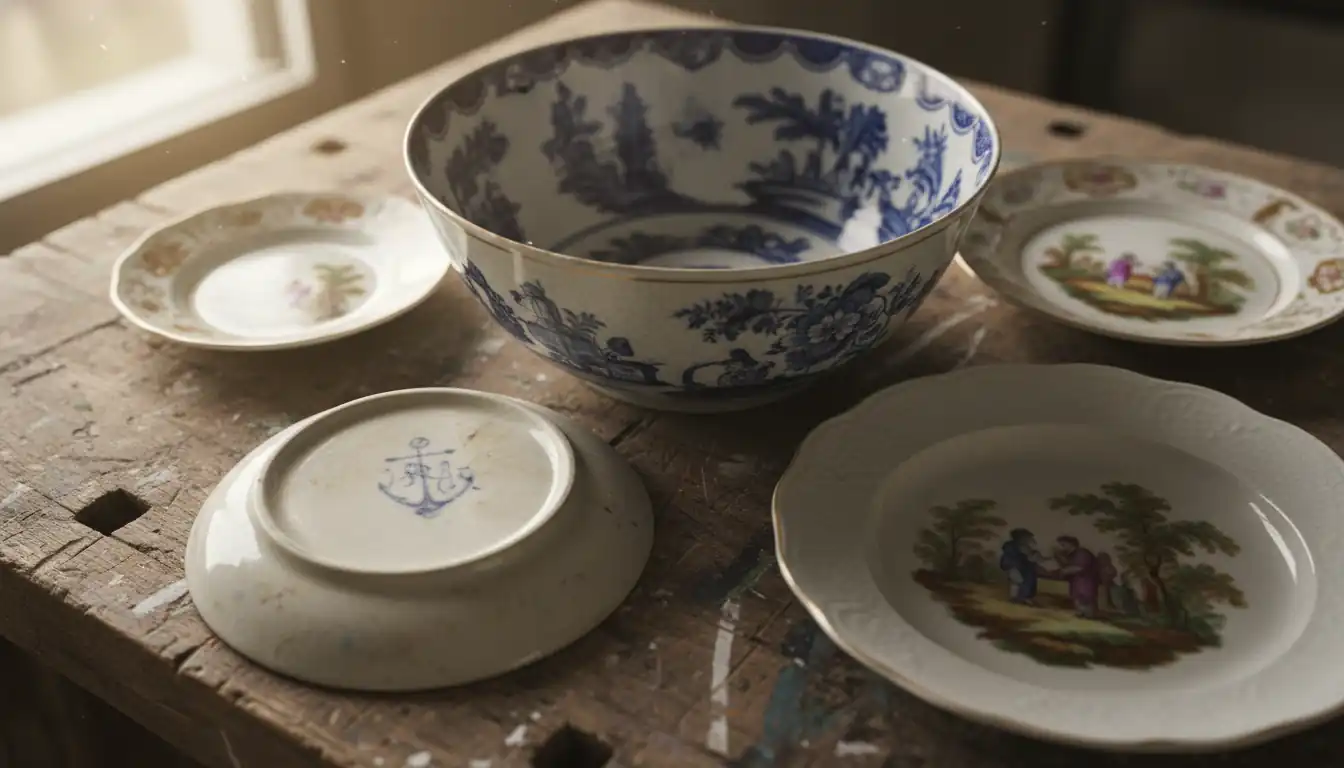
While everyone is looking for Meissen and Ming, some of the most consistent "hidden" value lies in regional European factories and the specific rules of the export trade.
The Distinctive Marks of Belgian Porcelain
Belgian porcelain is often undervalued because it is frequently mistaken for French or German ware. However, collectors in the know specifically look for pieces from Tournai and Brussels.
Tournai porcelain, produced between 1751 and 1891, is highly prized for its creamy color. The marks changed frequently, which helps with dating:
- The Tower: Used in the early period (1751-1760).
- Crossed Swords with Four Small Crosses: Used during the peak of production.
- The "A" Mark: Often used for pieces intended for the royal court.
Brussels porcelain is even more elusive, as it was often unmarked. You have to identify it by its "stiff" neoclassical shapes and very bright, almost gaudy gilding. If you find a piece that looks like high-end French porcelain but has a slightly different weight and a "B" incised in the bottom, you might have a Brussels treasure.
Identifying Valuable Export Wares Post 1891
If you are wondering how to identify "valuable vintage" versus "true antique," the year 1891 is your best friend. This was the year the McKinley Tariff Act went into effect in the United States.
The law required all imported goods to be marked with their country of origin. This is a massive shortcut for dating your porcelain:
- No Country Name: Likely made before 1891.
- "Made in [Country]": Likely made after 1914.
- "Nippon": This was the Japanese word for Japan. Pieces marked "Nippon" were generally made between 1891 and 1921. After 1921, the US required the mark to be in English, so they switched to "Japan."
"Nippon" hand-painted porcelain is a massive category for collectors. While it was mass-produced for export, the quality of the "moriage" (beaded decoration) on these pieces is often spectacular. A large, well-preserved Nippon vase can easily sell for several hundred or even thousands of dollars, depending on the complexity of the scene.
The "Occupied Japan" Mark: Pieces marked "Made in Occupied Japan" were produced between 1945 and 1952. While these aren't "ancient," they have a dedicated collector base and can be quite valuable because of the very specific seven-year window in which they were made.
Conclusion
The world of porcelain marks is a vast, silent library of history. Every stamp, monogram, and hand-painted character is a clue left behind by a craftsman who wanted their work to be remembered. By learning to distinguish the rigid stamps of Europe from the poetic reign marks of Asia, and by understanding the "honest fakes" of the 19th century, you transform yourself from a casual observer into a knowledgeable collector.
Remember that the mark is only the beginning of the story. You must look at the weight of the clay, the depth of the blue, and the soul of the painting. And when the marks become too complex or the history too deep, don't be afraid to use modern tools.
The next time you see a dusty plate at an estate sale, don't just walk by. Flip it over. Look for the crossed swords, the Fuku square, or the McKinley-era "Nippon" stamp. You might be holding a piece of history—and a significant windfall—right in the palm of your hand. Download the Relic app today to ensure you never miss a treasure again, and start turning your curiosity into a curated collection.
Identify antiques instantly
Point your camera at any antique, collectible, or vintage item. Get valuations, history, and market insights in seconds.
Download for iPhone