That Faded Mark on Your Glassware Could Mean a $500 Payday—Here’s How to Decode It

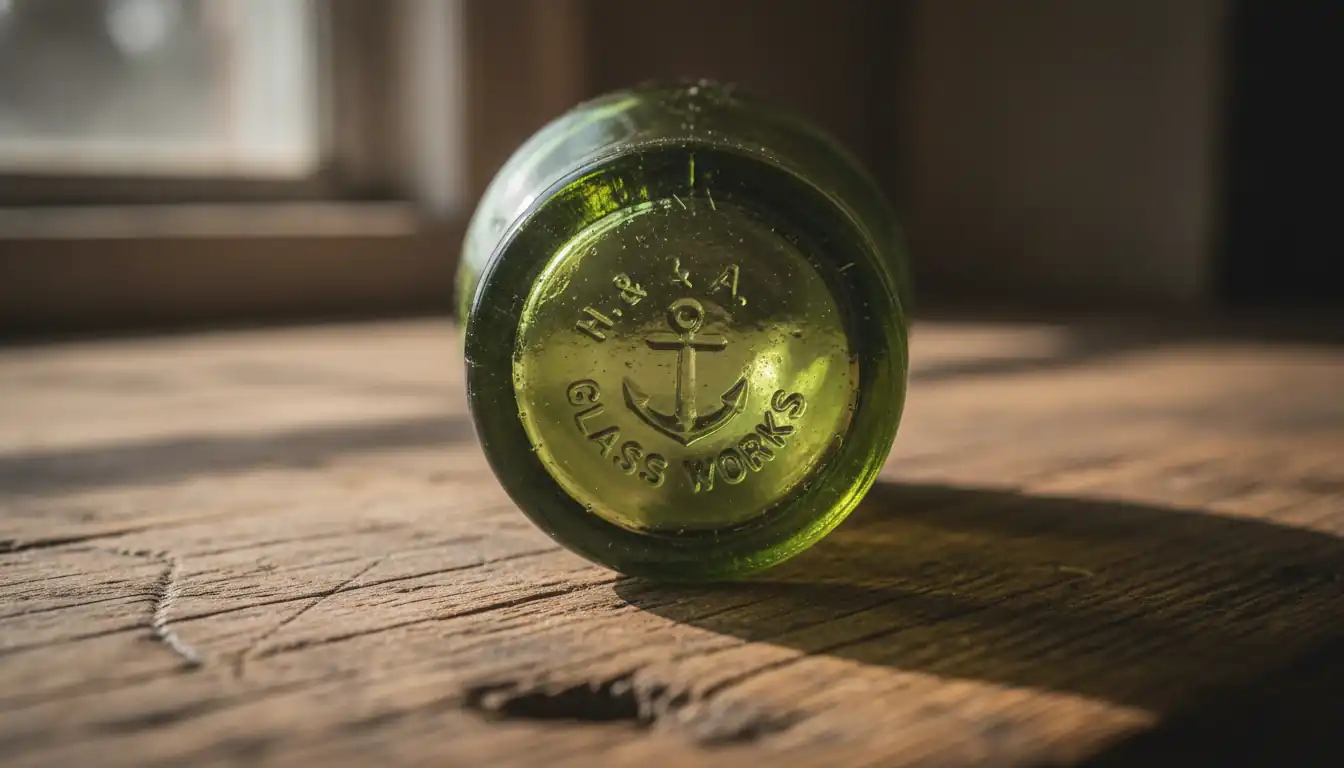
You are standing in a crowded thrift store, the air smelling faintly of dust and old paper. Your eyes land on a heavy, amber-colored glass bowl tucked away on a bottom shelf. You pick it up, feeling the cool weight of it in your hands, and flip it over. There, in the center of the base, is a faint, circular mark. It is so worn that it looks more like a smudge than a logo, a ghostly remnant of a manufacturer long gone. Most shoppers would see a five-dollar fruit bowl, but a seasoned collector sees a potential treasure.
That faded mark is a piece of history. It is a fingerprint left by a factory worker in Ohio in 1930, or perhaps a master craftsman in Venice. Identifying these marks is the difference between owning a piece of mass-produced junk and a sought-after antique that could fetch hundreds of dollars at auction. The challenge, of course, is that glass doesn't always keep its secrets well. Time, dishwashers, and decades of use wear down these signatures until they are nearly invisible to the naked eye.
In this guide, you will learn how to look past the surface. We will break down the technical ways glass is marked, how to identify the giants of American glassmaking, and how to spot the prestigious hallmarks of European artisans. You will also discover how modern technology is making it possible to identify pieces that were once thought to be "mystery glass" forever. By the time you finish reading, you will know exactly how to turn a dusty find into a documented discovery.
Decoding the Language of Glassmaker Marks
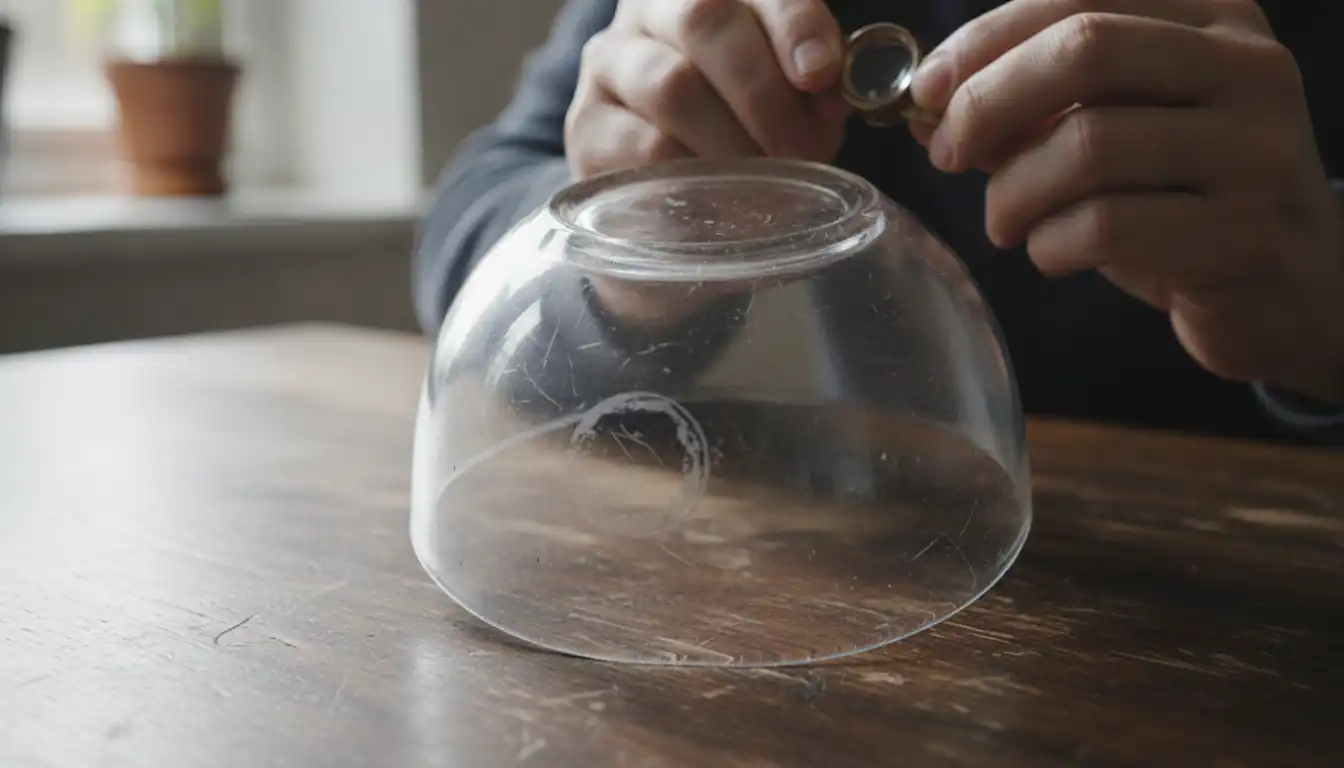
Before you can identify a specific brand, you have to understand how the mark was physically applied to the glass. Glassmakers have used various methods over the last two centuries, and the technique used can tell you a lot about the age and quality of the piece. If you can feel the mark with your fingernail, you are already halfway to an identification.
Embossed Logos vs. Acid Etched Signatures
The most common type of mark you will encounter is the embossed logo. These are "molded" into the glass during the manufacturing process. When the molten glass is pressed or blown into a metal mold, the logo is already engraved into the mold itself. As the glass cools and hardens, the logo becomes a permanent, raised part of the vessel.
- Physical Texture: Embossed marks are raised. You can feel the ridges of the letters or symbols.
- Durability: These marks are incredibly hardy. Because they are part of the glass structure, they rarely wear away completely, though they can become "soft" or blurred if the mold was used too many times.
- Production Style: This method was the standard for industrial, mass-produced glass from the late 19th century through the 20th century. If you see an embossed mark, you are likely looking at a piece intended for the general consumer market.
On the other end of the spectrum is acid etching. This was a more refined method often used by higher-end manufacturers. After the glass was finished and cooled, a stencil was applied, and a strong acid was used to eat away a thin layer of the surface. This left a frosted, delicate signature that feels smooth or slightly matte to the touch.
- Visual Appearance: Acid marks are often faint and white or translucent. They look like a "breath" on the glass.
- Vulnerability: These are the marks that fade the most. Decades of washing can scrub the etched surface until it is nearly invisible.
- Sandblasting: A similar effect was achieved via sandblasting in later years, which used high-pressure grit to create the mark. This is common on mid-to-late 20th-century art glass.
Why Some Manufacturers Never Used Marks
It is a common frustration for new collectors to find a stunning piece of glass with absolutely no mark on the bottom. Does this mean it is a cheap reproduction? Not necessarily. In fact, some of the most valuable glass in the world was never permanently marked by the factory.
Many manufacturers, especially during the mid-20th century, relied on paper or foil stickers. These labels were bright, colorful, and looked great on a showroom floor, but they were designed to be peeled off by the buyer. If the original owner didn't remove it, the first time the bowl was submerged in soapy water, the label was gone.
Furthermore, some companies produced "blanks" or generic patterns for other retailers to sell under their own names. In these cases, the glassmaker remained anonymous by design. Learning to identify these pieces requires looking at the "pontil mark"—the spot where the glassblower’s rod was detached.
A "snapped" pontil is rough and jagged, indicating an older or more rustic piece. A "polished" pontil is ground down until it is a smooth, concave dimple, a hallmark of high-quality hand-blown glass.
| Mark Type | Feel | Common Era | Value Indicator |
|---|---|---|---|
| Embossed | Raised/Bumpy | 1880s–Present | Mass-market / Industrial |
| Acid Etched | Frosted/Smooth | 1890s–1960s | Professional / High-end |
| Sandblasted | Matte/Gritty | 1950s–Present | Modern Art Glass |
| Foil Label | N/A (Missing) | 1940s–1970s | Mid-Century Modern |
The Modern Way to Identify Mystery Glass
For decades, identifying a piece of glass with a faded mark meant a trip to the local library. You would have to lug your heavy glass bowl into the stacks and spend hours flipping through massive, black-and-white catalogs of "Depression Glass Patterns" or "Early American Pressed Glass." If the mark was half-gone, you were essentially guessing based on the shape of a handle or the number of scallops on a rim.
Using AI to Scan Faded and Partial Logos
Is there an app to identify old glassware? This is one of the most frequent questions asked by modern pickers and estate sale enthusiasts. The answer is yes, and the technology has progressed far beyond simple image searching.
Relic is an app specifically designed to bridge the gap between a mystery object and a verified antique. Instead of relying on your own ability to squint at a faded logo, you can use your phone’s camera to capture the item. The AI doesn't just look at the mark; it analyzes the entire "DNA" of the piece. It looks at the silhouette, the specific hue of the glass, the way light refracts through the pattern, and even the smallest remnants of a signature.
This is particularly useful for those "ghost marks" mentioned earlier. Where the human eye sees a smudge, advanced image processing can often detect the original geometry of the logo. By comparing your photo against a massive database of known manufacturer marks and patterns, the app can provide a real appraisal and a detailed history of the item in seconds.
Moving Beyond Manual Catalog Searching
The traditional method of identification is a slow process of elimination. You start with the color, then the shape, then the pattern. If you think you have a match, you then have to find a price guide that was hopefully updated within the last five years. It is a manual, error-prone system that often leads to "misidentification fatigue."
Using an app like Relic changes the workflow for a collector or a professional dealer. Instead of spending your Saturday night in a research rabbit hole, you get instant identification while you are still standing in the thrift store aisle.
- Instant Context: You get the manufacturer's name, the pattern name, and the years of production immediately.
- Market Insights: You can see what similar pieces are actually selling for in the current market, not what a book from 2012 says they are worth.
- Searchable Catalog: Every item you scan is saved, allowing you to build a digital inventory of your collection with one touch.
This technology allows you to act with the confidence of a pro, even if you are just starting out. It removes the "fear of the unknown" that often prevents people from buying a piece that might actually be a high-value find.
Famous American Glass Logos You Should Know
If you are hunting for glass in North America, you are going to run into a few "Big Names" over and over again. These companies dominated the kitchenware and decorative glass markets for nearly a century. Knowing their marks—and how those marks changed over time—is essential for dating your finds.
The Evolution of the Hazel-Atlas and Anchor Hocking Marks
Hazel-Atlas is perhaps the most famous name in "Depression Glass." Their pieces were everywhere from the 1920s through the 1960s. Their logo is iconic: a large capital "H" with a smaller capital "A" nestled underneath the crossbar of the H.
- The Early "H over A": In older pieces, the mark is often very crisp and deeply embossed.
- The Faded Era: As molds wore down in the late 1950s, the "A" can sometimes look like a small triangle or even a solid blob. If you see a capital H with a mysterious bump underneath it, you’ve likely found a Hazel-Atlas piece.
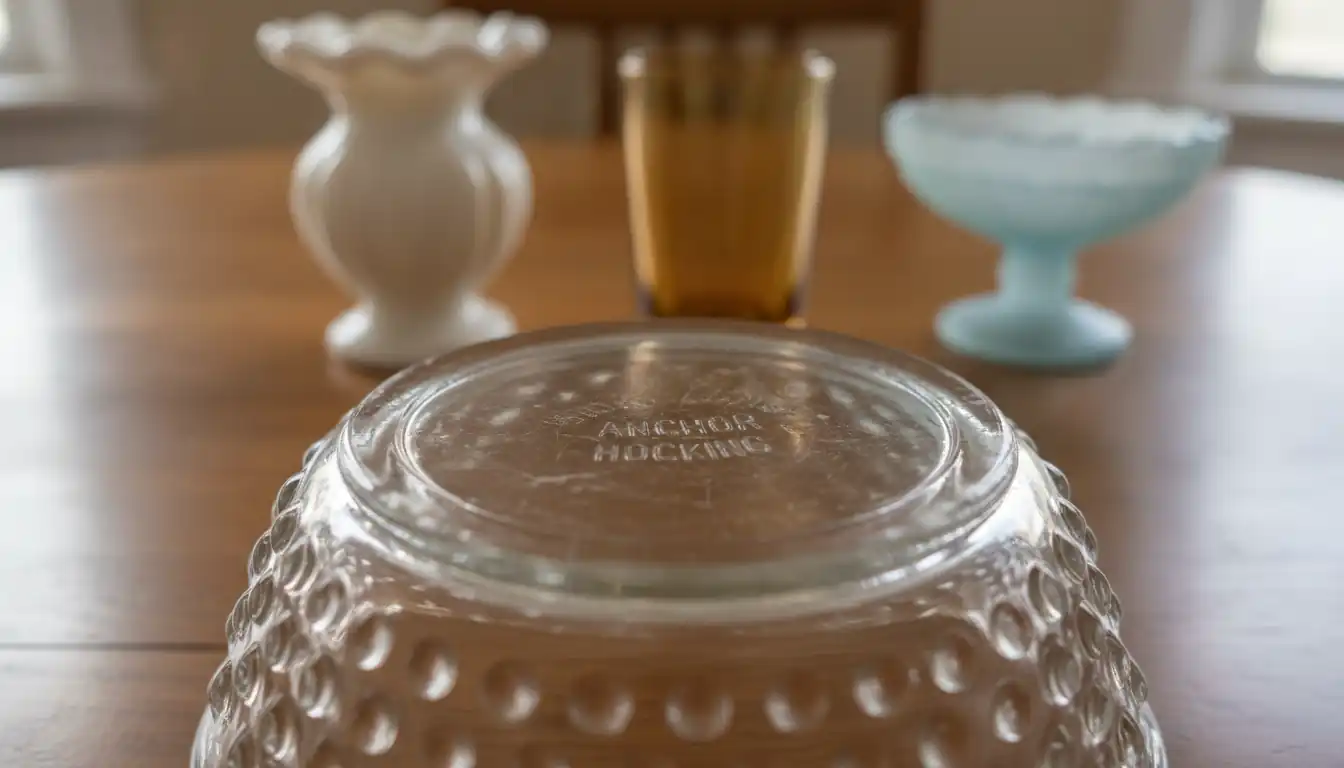
Anchor Hocking is another giant, and their marks are a bit more varied. The most famous is the "Anchor" logo. In the early days, this was a simple, literal anchor. Later, they merged the anchor with an "H" (for Hocking).
- Fire-King: This was Anchor Hocking’s answer to Pyrex. The marks are usually embossed on the bottom of milk glass or "Jadeite" pieces. Look for the words "Fire-King" in a script font, often accompanied by "Made in U.S.A."
- The "Suburban" Mark: In the mid-20th century, the logo became more stylized and minimalist. If the anchor looks more like a geometric symbol than a nautical tool, it’s likely a later piece from the 1960s or 70s.
Identifying Mid-Century Modern Giants like Blenko and Viking
As we moved into the 1950s and 60s, the aesthetic shifted. Collectors today go crazy for Mid-Century Modern (MCM) glass, but these pieces are notoriously difficult to identify because they rarely have permanent marks.
Blenko Glass is the king of MCM color. Based in West Virginia, they produced bold, architectural shapes in colors like "Tangerine," "Turquoise," and "Wheat."
- The Sticker Problem: Blenko almost exclusively used silver or gold foil stickers. If the sticker is gone, you have to identify the piece by its base.
- The "Sand" Pontil: Blenko pieces often have a very distinct, slightly rough pontil mark on the bottom that hasn't been fully polished away, giving it a handmade feel.
Viking Glass is another favorite. They are famous for their "Epic" line, which featured long, pulled "swung vases" that can stand over two feet tall.
- Visual Cues: Look for vibrant, solid colors and "stretchy" looking glass.
- The Base: Like Blenko, Viking used stickers. However, Viking bases are often very heavy and perfectly flat, designed to balance those tall, top-heavy vases.
When identifying MCM glass without a mark, look at the "weight" of the color. High-end makers like Blenko used glass that was colored all the way through, whereas cheaper competitors often used "flashed" glass, where the color is just a thin coating on the surface.
International Marks and the Art of the Pontil
When you move away from American kitchenware and into the world of fine art glass and Victorian antiques, the rules change. International manufacturers, particularly those in Britain and Italy, used a completely different "language" to sign their work.
Spotting British and European Glassware Hallmarks
If you find a piece of Victorian-era glass, you might see a strange, diamond-shaped mark embossed or etched into the bottom. This is the British "Registry Mark." It wasn't a brand logo, but a government-issued stamp that proved the design was registered with the Patent Office.
Reading these diamonds is like cracking a code. Each corner of the diamond represents a different piece of information:
- Top Corner: The "Class" of material (Glass is Class III).
- Right Corner: The Year of registration.
- Bottom Corner: The Day of the month.
- Left Corner: The Month.
By decoding this diamond, you can pinpoint the exact day a design was protected, which usually places the manufacture of the piece within a few years of that date. This is a goldmine for collectors because it provides an objective age that few American pieces can match.
European Art Deco glass, particularly from France (like Lalique or Daum), often uses very tiny, very precise acid-etched signatures. These are frequently hidden in the "ground" of the pattern—perhaps tucked under a leaf or along the very edge of the base. You often need a magnifying glass to find them.
When the Bottom of the Glass Tells the Story
In the world of hand-blown glass, the most important "mark" isn't a logo at all—it’s the pontil. This is the spot where the glassblower’s pipe was attached to the piece.
Murano Glass from Italy is the gold standard for many collectors. Authentic Murano pieces are rarely signed with a logo. Instead, experts look at the base.
- The Polished Base: A true Murano master will almost always grind and polish the pontil mark until it is perfectly smooth and looks like a clear, shallow pool of water.
- The "Wear" Pattern: On an authentic antique, you should see "shelf wear"—tiny, random scratches on the bottom from decades of being moved across tables. If a piece looks perfectly pristine on the bottom but claims to be 100 years old, be suspicious.
| Feature | British Victorian | Italian (Murano) | French Art Deco |
|---|---|---|---|
| Primary Mark | Registry Diamond | Polished Pontil | Acid Signature |
| Location | Center Base | Center Base | Edge or Pattern |
| Key Detail | Date Codes | No "Scars" | Very Small Font |
From Identification to Appraisal
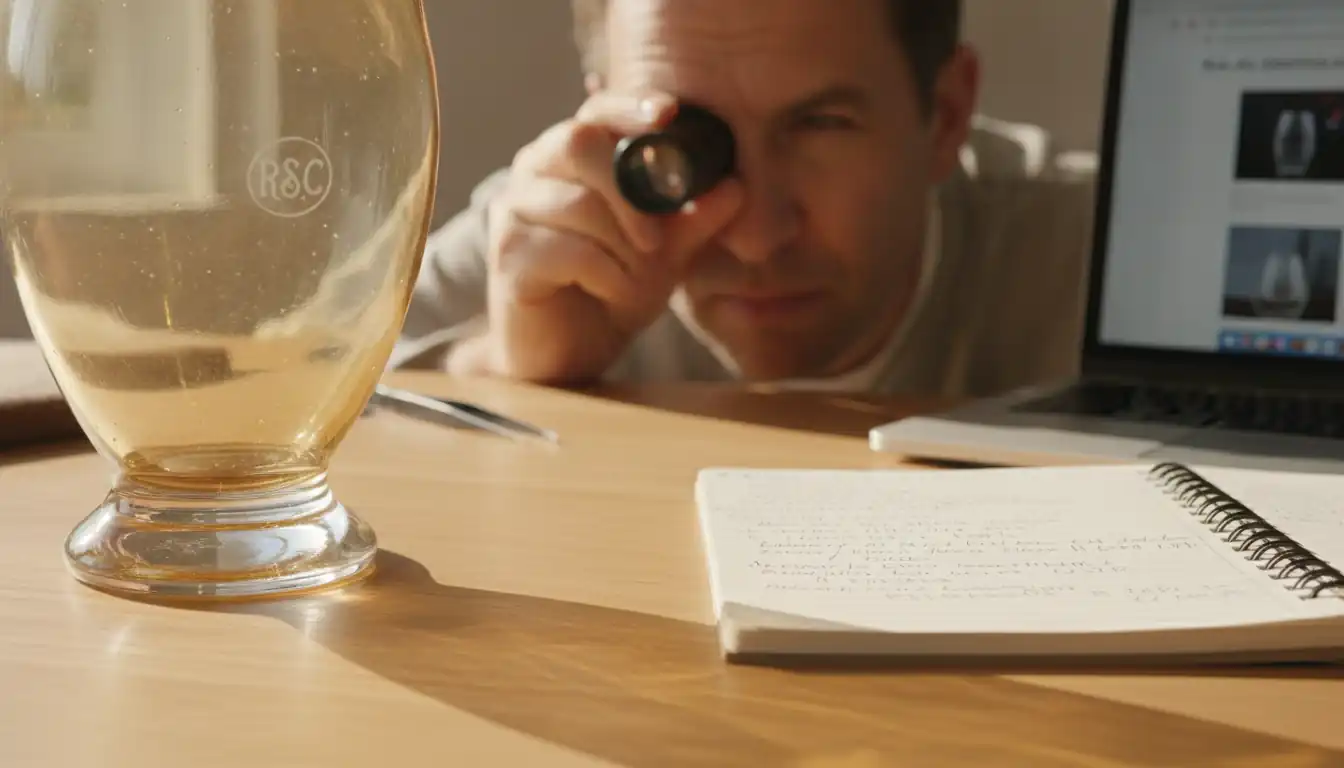
Once you have identified the mark and the manufacturer, the next question is always: "What is it worth?" This is where many collectors get tripped up. A prestigious logo is a great start, but it is not a guarantee of a high price tag. You have to look at the "Three Cs": Condition, Color, and Context.
Factors That Turn a Common Logo into a High-Value Find
Even a common manufacturer like Anchor Hocking can produce high-value items if the right factors align.
- Condition: This is the most brutal factor. "Sick glass" is a term used for glass that has a permanent, cloudy white film. This isn't dirt; it’s a chemical reaction where the unstable ingredients in the glass begin to leach out. Sick glass is almost impossible to fix and can tank the value of a piece by 90%.
- Rarity in Color: Manufacturers often produced a pattern in millions of "Crystal" (clear) pieces, but only a few thousand in "Royal Ruby" or "Delphite" (opaque blue). A clear bowl might be worth $10, while the same bowl in a rare color could be worth $500.
- Limited Runs: Some logos were only used for a single year to commemorate an event. These "transitional" marks are highly prized by specialists.
Avoiding Common Misidentifications and Forgeries
As the market for antique glass has grown, so has the market for fakes. Some modern companies have purchased the original molds of defunct factories like Fenton or Imperial and are producing "new" antiques.
- The "New" Fenton Mark: Authentic vintage Fenton (pre-1970) was mostly unmarked or used stickers. In the 1970s, they started embossing an "F" in an oval. If you see a logo that looks too crisp and modern, it likely is.
- Weight and Clarity: Forgeries are often made with cheaper glass formulas. They may feel "greasy" to the touch or have a yellowish or grayish tint compared to the vibrant clarity of the original.
- The Relic Advantage: This is where using a tool like Relic becomes a safety net. Because the app uses real-time market data and a massive database of known authentic pieces, it can help you distinguish between a genuine 1930s Imperial "Laced Edge" plate and a 1990s reproduction. It provides a "real appraisal" based on what collectors are actually paying today, helping you avoid overpaying for a clever fake.
Conclusion
The world of antique glass is a landscape of hidden details. That faded mark on the bottom of a glass isn't just a smudge; it's a doorway to the past. Whether it's the industrial "H over A" of a Hazel-Atlas mixing bowl or the sophisticated polished pontil of a Murano vase, these signatures tell the story of craftsmanship and commerce.
To become a successful collector, you must train your eyes to see the physical differences between an embossed mold and an acid etch. You must learn the "language" of the base, from British registry diamonds to the heavy, flat bottoms of Viking swung vases. Most importantly, you must be willing to look closer than the average person.
If you find yourself staring at a mystery mark that refuses to give up its secrets, remember that you don't have to go it alone. Technology like the Relic app can act as your digital magnifying glass, turning a "maybe" into a "definitely" in a matter of seconds.
The next time you’re at a garage sale or an estate auction, don't just look at the color and the shape. Flip that glass over. Check the light. Feel for the ridges of a logo. You might just be holding a $500 payday in the palm of your hand. Your next step? Start practicing. Go through your own cabinets, find a piece of glass with a mark, and try to decode it. The history is there—you just have to know how to read it.
Identify antiques instantly
Point your camera at any antique, collectible, or vintage item. Get valuations, history, and market insights in seconds.
Download for iPhone