Turn Pocket Change into Paychecks: The Modern Hunter's Guide to Garage Sale Coins

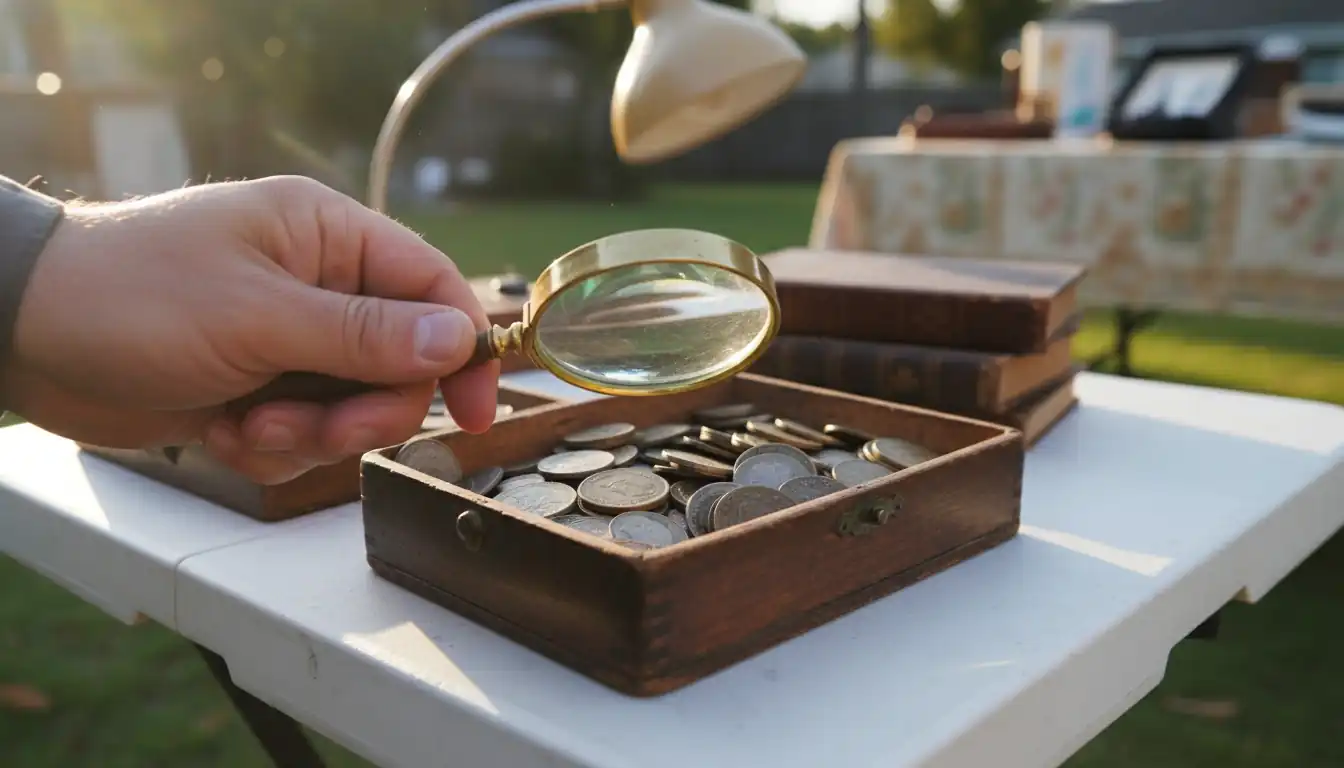
Imagine standing in a sun-drenched driveway on a Saturday morning, staring at a dusty mason jar filled with dull, brown pennies and tarnished silver discs. To the homeowner, this is a heavy nuisance they’re willing to part with for five dollars just to clear some space. To the trained eye, that jar represents a mathematical certainty of profit and the potential for a life-changing find.
Most people walk past these containers, dismissively labeling them as "pocket change." They are looking for mid-century furniture or vintage electronics, missing the literal wealth hidden in plain sight. This guide will transform how you view every garage sale, estate sale, and neighborhood cleanout, turning you from a casual browser into a precision-targeted numismatic hunter.
Success in this field isn't about luck; it is about preparation, the right technology, and a deep understanding of what the rest of the world has forgotten. By the time you finish this article, you will possess the framework to identify, negotiate for, and sell coins that most people don't even know are in their pockets.
Spotting High Potential Sales Before You Arrive
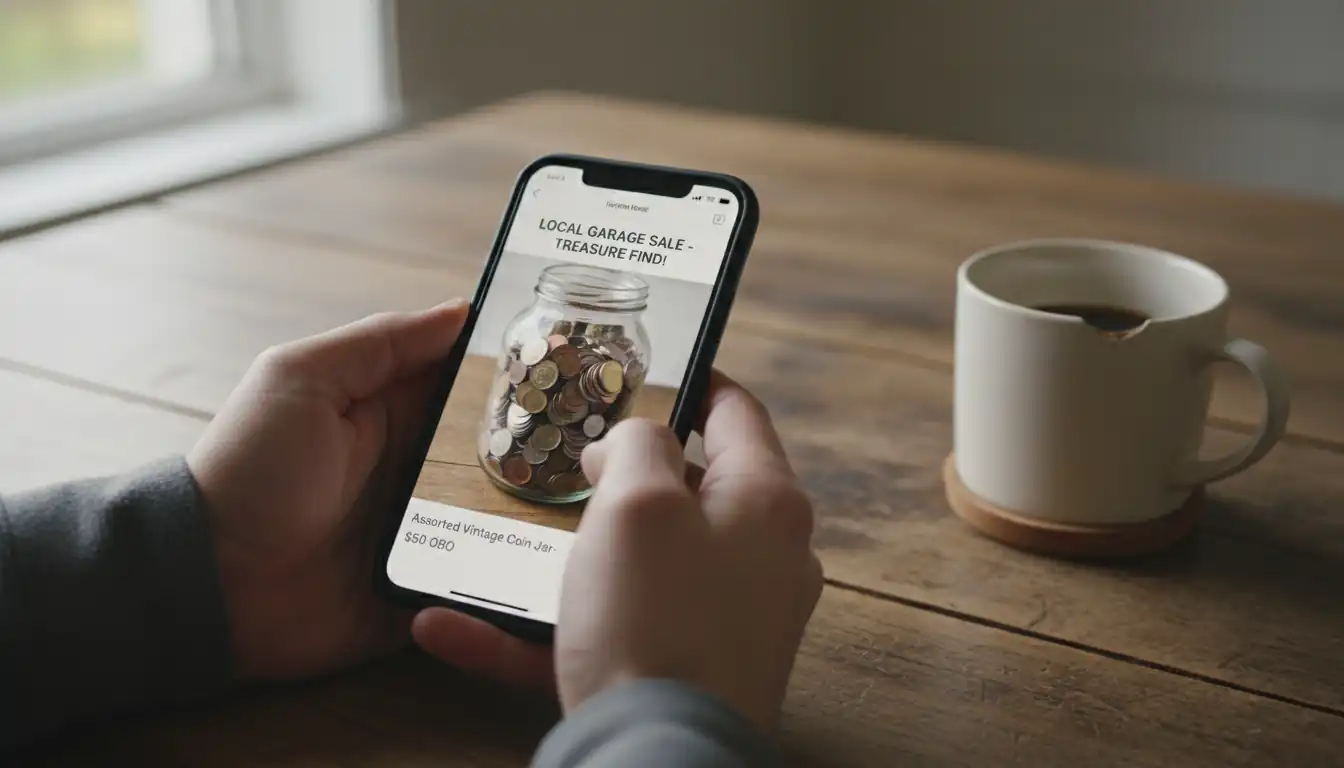
The hunt begins long before you turn the key in your ignition. In the era of digital listings, the most successful pickers have already mapped their route by Friday night, having filtered through hundreds of noise-filled advertisements to find the "gold mines." Your goal is to find sellers who are overwhelmed, uneducated about their holdings, or simply looking to liquidate an entire household quickly.
Efficiency is your greatest asset. You cannot visit every sale in a twenty-mile radius, so you must learn to read between the lines of a Craigslist or Facebook Marketplace post. A listing that says "Coin collection for sale" is often a trap; it implies the seller knows exactly what they have and has likely priced it at full retail value. You are looking for the "accidental" coin sales.
Analyzing Online Listings for Numismatic Clues
When scanning digital listings, look for specific keywords that signal a lack of professional sorting. Terms like "estate," "vintage collection," "attic cleanout," or "old jars" are your primary targets. These words suggest that the items being sold belonged to a previous generation and have been sitting undisturbed for decades.
Pay close attention to the photos. You aren't looking for a neatly organized display of coin folders. Instead, look for heavy glass jars, cigar boxes, or blue Whitman folders tucked into the corner of a photo featuring "miscellaneous kitchen items." If you see a photo of a desk or a dresser, look at the top drawer or the small bowls nearby. These are the places where silver was often dropped and forgotten.
- The "Old Jar" Signal: A photo of a large glass jar filled with coins is the ultimate green flag. It suggests the seller views the contents as bulk weight rather than individual currency.
- The "Estate" Keyword: True estate sales, especially those run by family members rather than professional companies, are prime locations for unsearched hoards.
- The "Grandpa's Tools" Hook: Often, coin collections are stored in workshops or garages alongside old tools. If a sale lists "vintage tools and garage items," there is a high probability of finding a forgotten stash in a metal cabinet.
Targeting Estate Sales versus Neighborhood Cleanouts
Neighborhood demographics play a massive role in your success rate. Target older, established communities where residents have lived in the same home for thirty, forty, or fifty years. These "long-term" households are far more likely to have accumulated silver coinage before it was pulled from circulation in the mid-1960s.
Contrast this with a "multi-family neighborhood sale" in a brand-new subdivision. While these sales might be great for finding gently used baby gear or modern electronics, the chances of finding a 1916-D Mercury Dime are statistically near zero. The residents in these areas typically don't have the "accumulation time" required for rare coins to surface in a junk drawer.
Pro Tip: Use satellite imagery or real estate sites to check the age of a neighborhood before you go. Look for mature trees and architectural styles from the 1940s through the 1960s. These are your primary hunting grounds.
Essential Gear for Field Identification
Once you arrive at a promising sale, you need to be able to make split-second decisions. You are often competing with other pickers, and you don't have the luxury of sitting on the curb with a massive reference book. Your "field kit" should be compact, professional, and technologically advanced.
The goal of your gear is to minimize risk. Every dollar you spend on a coin is an investment, and you want to ensure that investment is backed by data. While physical tools help you see the coin, digital tools help you understand its value.
Physical Tools for On-Site Inspection
You don't need a laboratory, but a few key items will prevent you from buying a "filler" coin when you thought you were buying a "key date." First and foremost is a 10x jeweler’s loupe. This allows you to see mint marks and small errors that are invisible to the naked eye. A 10x magnification is the industry standard; anything higher makes the field of view too narrow for quick scanning.
A small, high-lumen LED flashlight is also vital. Garage sales are often held in dimly lit garages or under tents. You need to see the "cartwheel" luster on a coin—the way light reflects off the original mint surfaces—to determine if a coin has been cleaned or damaged. Finally, carry a pair of cotton gloves or simply learn to handle coins only by their edges. The oils on your skin are acidic and can permanently "fingerprint" a high-grade silver coin, destroying its numismatic premium.
- 10x Loupe: Essential for identifying mint marks like the "D" on a 1916 dime or the "S" on a 1932 quarter.
- LED Flashlight: Reveals surface scratches, cleaning marks, and original luster.
- Microfiber Cloth: Not for cleaning the coins, but for wiping your hands or the surface of a display case to get a better look.
Leveraging AI for Instant Appraisals
The traditional method of coin identification involved carrying a "Red Book" and manually flipping through hundreds of pages while trying to look inconspicuous. This is slow, cumbersome, and often inaccurate because prices change faster than books can be printed. This is where modern technology changes the game for the hunter.
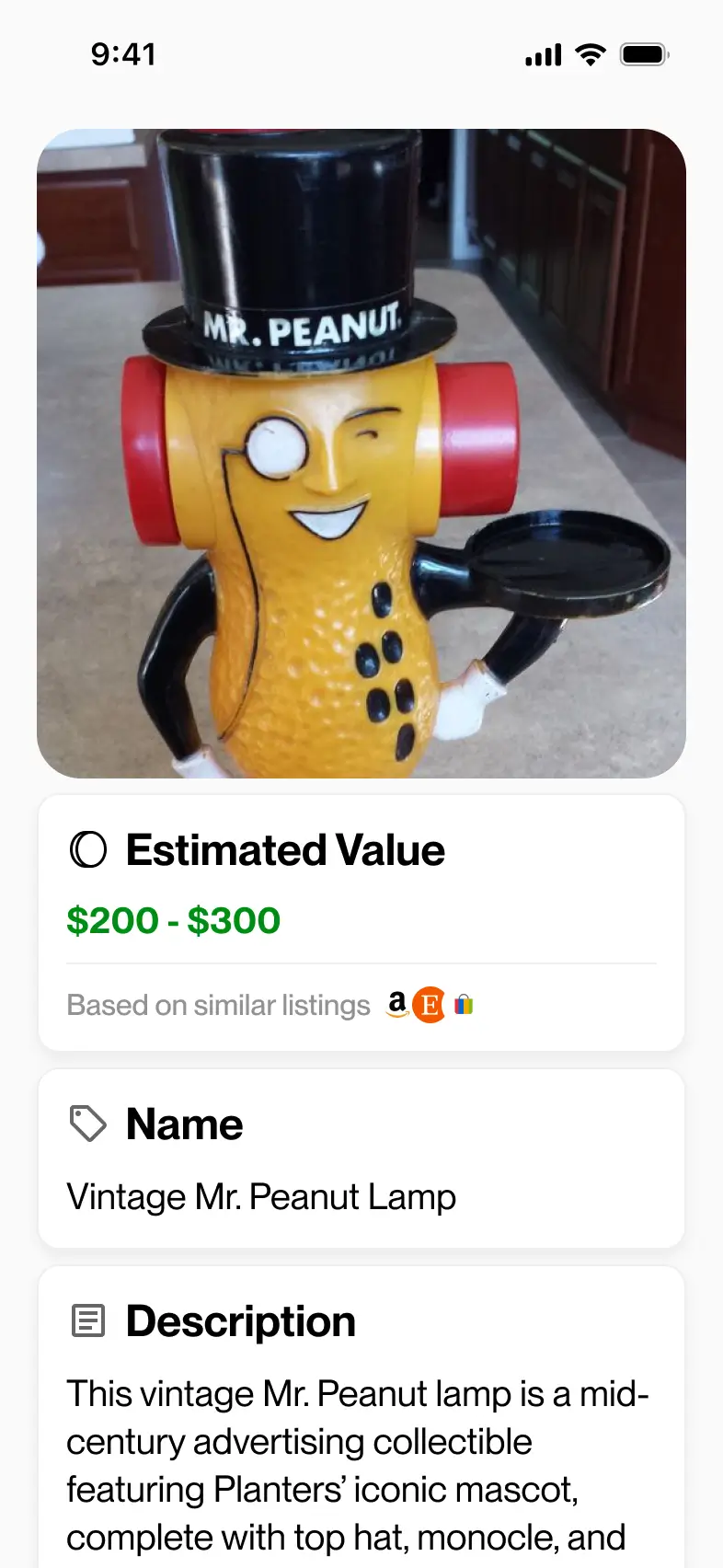
The Relic app is the most powerful tool in your digital arsenal. Instead of guessing or searching through endless forums, you can simply take a photo of a coin you’ve found. Relic uses advanced AI to analyze the coin's features, providing an instant appraisal, historical context, and origin. This allows you to know the real-world value of a find before you even start negotiating with the seller.
| Tool | Purpose | Advantage |
|---|---|---|
| Jeweler's Loupe | Visual Inspection | See tiny mint marks and errors |
| Relic App | Instant Appraisal | Get AI-driven valuations and history in seconds |
| LED Light | Surface Analysis | Detect cleaning or damage |
| Cotton Gloves | Preservation | Prevent acidic oil damage to surfaces |
Using an app like Relic levels the playing field. It gives you the confidence of a professional numismatist without requiring decades of study. When you see a strange foreign coin or an old token in a jar, you don't have to wonder if it's junk. A quick scan provides the answer, allowing you to move through a sale with speed and precision.
High Value Targets Often Overlooked by Amateurs
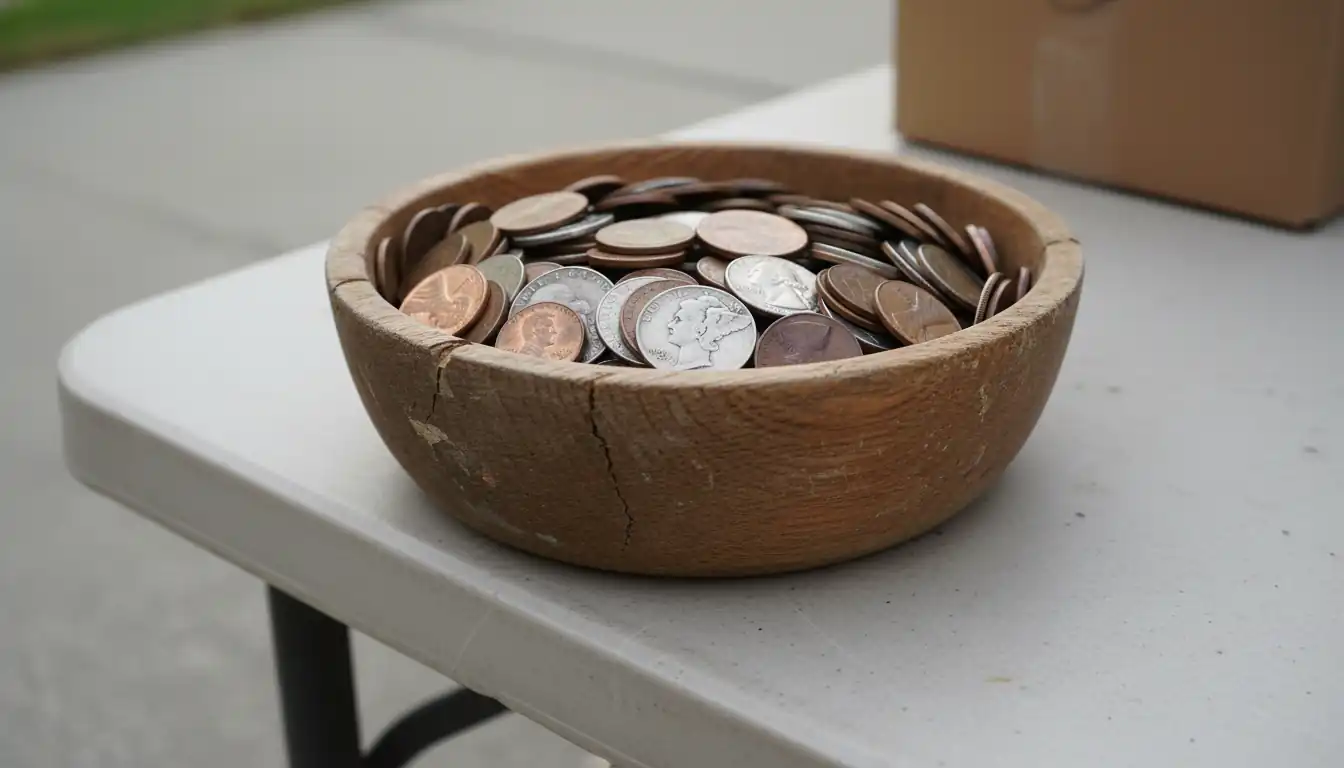
To make a paycheck from pocket change, you must know what you are looking for. Most people know that "silver is good," but they don't know which specific dates turn a five-dollar silver coin into a five-hundred-dollar treasure. You are looking for three things: precious metal content, key dates, and minting errors.
The most common "win" at a garage sale is 90% silver coinage. In the United States, dimes, quarters, and half dollars minted in 1964 and earlier are 90% silver. These have an inherent "melt value" that is usually 15 to 20 times their face value, depending on the current market price of silver.
Key Dates and Mint Marks to Memorize
A "key date" is a coin produced in low quantities at a specific mint. These are the "Holy Grails" of the garage sale circuit. While they are rare, they are often found in unsearched jars because they look nearly identical to common coins.
- 1916-D Mercury Dime: The king of dimes. Only 264,000 were made. If you see a Mercury dime, always flip it over to look for the "D" mint mark on the bottom left of the reverse.
- 1932-D and 1932-S Washington Quarters: These are the first year of the Washington quarter. The Denver (D) and San Francisco (S) mints produced very few. Even in poor condition, these are worth hundreds.
- 1921 Peace Dollars: Unlike other Peace dollars, the 1921 version was struck in "high relief," making it stand out visually and financially.
- "W" Mint Mark Quarters: From 2019 and 2020, the West Point mint released a limited number of quarters into general circulation. They look like modern change, but they carry a "W" mint mark and are worth $10 to $20 each in average condition.
Error Coins and Varieties Hiding in Plain Sight
Error coins are the result of a mistake during the minting process. Because the U.S. Mint has high quality control, these errors are rare and highly sought after by collectors. Sellers almost never notice these because they require a loupe to see.
The most famous is the 1955 Doubled Die Lincoln Penny. The date and lettering appear to be "doubled" or blurry. It is unmistakable once you see it. Another target is the 1937-D "3-Legged" Buffalo Nickel. A damaged die caused the buffalo's front leg to disappear. If you find a jar of buffalo nickels, this is the first thing you should check.
The difference between a five-cent nickel and a thousand-dollar rarity is often a single letter or a slight blur in the date. Precision is your profit margin.
The Art of the Garage Sale Negotiation
Finding the treasure is only half the battle. The other half is acquiring it at a price that leaves room for profit. Negotiation at a garage sale is a delicate dance. If you act too excited, the seller will realize they have something valuable and might pull the item from the sale. If you act too aggressive, they may refuse to sell to you out of spite.
Your demeanor should be that of a curious hobbyist. You are someone who "likes old things" or "enjoys the history of coins." This builds rapport and makes the seller feel like their items are going to a good home rather than a "flipper" who is just looking to make a buck.
Building Rapport with the Seller
Start by engaging in small talk. Ask about the history of the items on the table. "Did these belong to your family?" is a great opening. People love to tell stories about their parents or grandparents. By listening, you are building a relationship that makes negotiation much easier.
When you find a jar of coins, don't immediately dump it out and start sorting with your loupe. Instead, hold the jar and ask, "How much are you looking to get for this whole container?" Let them set the price first. Often, they will give you a "bulk" price based on the weight or the volume of the jar, which is almost always lower than the value of the individual coins inside.
- Be Respectful: Treat the seller's home and items with care.
- Be Inquisitive: Ask questions that encourage the seller to talk.
- Stay Calm: Even if you see a $500 coin, keep your "poker face" on.
Bundling Strategies to Increase Profit Margins
One of the most effective ways to secure valuable coins is the "bundling" technique. If you find a few silver quarters in a bowl, don't just try to buy those. Instead, find a few other items—an old book, a vintage kitchen tool, or a picture frame—and ask for a price on the whole "lot."
This masks the value of the coins. The seller sees you buying a pile of "junk" for $20, and they are happy to see it all go at once. In their mind, they just sold some clutter. In your mind, you just bought $60 worth of silver and some free inventory for your next eBay listing.
Using the Relic app's appraisal data gives you a massive advantage here. You can quickly scan a few items in a box, see their total market value, and know exactly how high you can go in your offer while still maintaining a healthy profit. You don't need to show the seller the screen; the information is for your confidence and your bottom line.
Protecting and Liquidating Your Finds
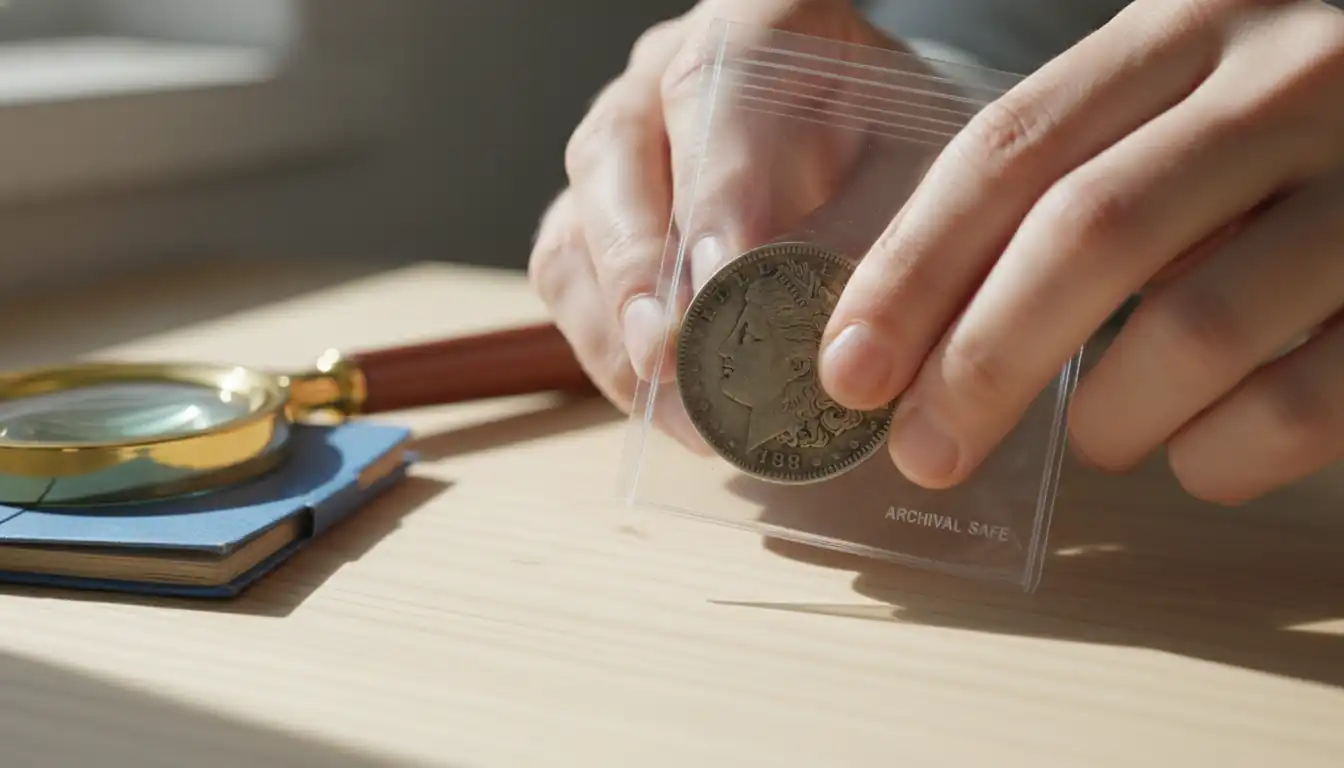
Once you’ve secured your finds and are safely back in your car, the work of a professional begins. How you handle the coins from this point forward will determine whether you get the full market value or just a fraction of it. The most important rule in all of numismatics is one that beginners break every single day.
NEVER clean a coin.
It doesn't matter how dirty, black, or "ugly" the coin looks. Cleaning a coin with chemicals, polish, or even a soft cloth creates microscopic scratches that collectors can see instantly. A "cleaned" coin can lose 50% to 90% of its numismatic value. Collectors want "original skin"—the natural patina that develops over decades.
Safe Storage and Preservation Techniques
To preserve your profit, you must store your coins correctly. Do not throw them back into a jar where they can clink against each other, causing "bag marks" or scratches. Use PVC-free coin flips. These are small plastic holders that allow you to see the coin without touching it. Avoid older flips that contain PVC, as the chemicals can leak out and create a green, slimy residue that eats into the metal.
For higher-value finds, consider archival-safe tubes or hard plastic "slabs." Keep your collection in a cool, dry place. Humidity is the enemy of copper and silver, leading to unsightly spotting or corrosion.
- PVC-Free Flips: The gold standard for individual coin storage.
- Mylar Envelopes: Great for long-term protection.
- Silica Gel Packets: Place these in your storage container to absorb moisture.
Choosing the Right Marketplace for Maximum ROI
When it comes time to turn your coins back into cash, you have several options. The "best" option depends on how quickly you need the money and how rare the coin is. For common silver (90% "junk" silver), a local coin shop is often the best bet. They will usually pay a percentage of the "spot" price and give you cash on the spot.
For key dates or error coins, you want to reach a wider audience. Online marketplaces like eBay or specialized numismatic auction houses are better choices. This is where the historical data and origin stories provided by the Relic app become invaluable. When you write your listing description, include the historical context and specific details the AI provided. A compelling story and technical accuracy can significantly increase the final sale price.
| Selling Avenue | Best For | Pros | Cons |
|---|---|---|---|
| Local Coin Shop | Bulk Silver / Common Coins | Instant cash, no shipping | Lower payout than retail |
| eBay | Key Dates / Mid-range Errors | Huge audience, competitive bidding | Fees and shipping hassle |
| Auction Houses | High-Value Rarities ($1k+) | Professional grading, elite buyers | Long wait times, high commissions |
Conclusion
Turning pocket change into paychecks is a skill that combines the thrill of the hunt with the precision of a financial analyst. By focusing on high-potential neighborhoods, equipping yourself with the right physical and digital tools like the Relic app, and mastering the psychology of the garage sale, you can build a consistent stream of income from items others have discarded.
Remember that every jar of coins is a puzzle waiting to be solved. Some will be filled with nothing but modern zinc pennies, but others will contain the silver and errors that fund your next adventure. The key is to stay disciplined, keep learning, and never stop looking.
Your next step is simple: download the Relic app, grab a 10x loupe, and check the local listings for this coming Saturday. There is a "gold mine" sitting in a driveway somewhere near you—go find it.
Identify antiques instantly
Point your camera at any antique, collectible, or vintage item. Get valuations, history, and market insights in seconds.
Download for iPhone