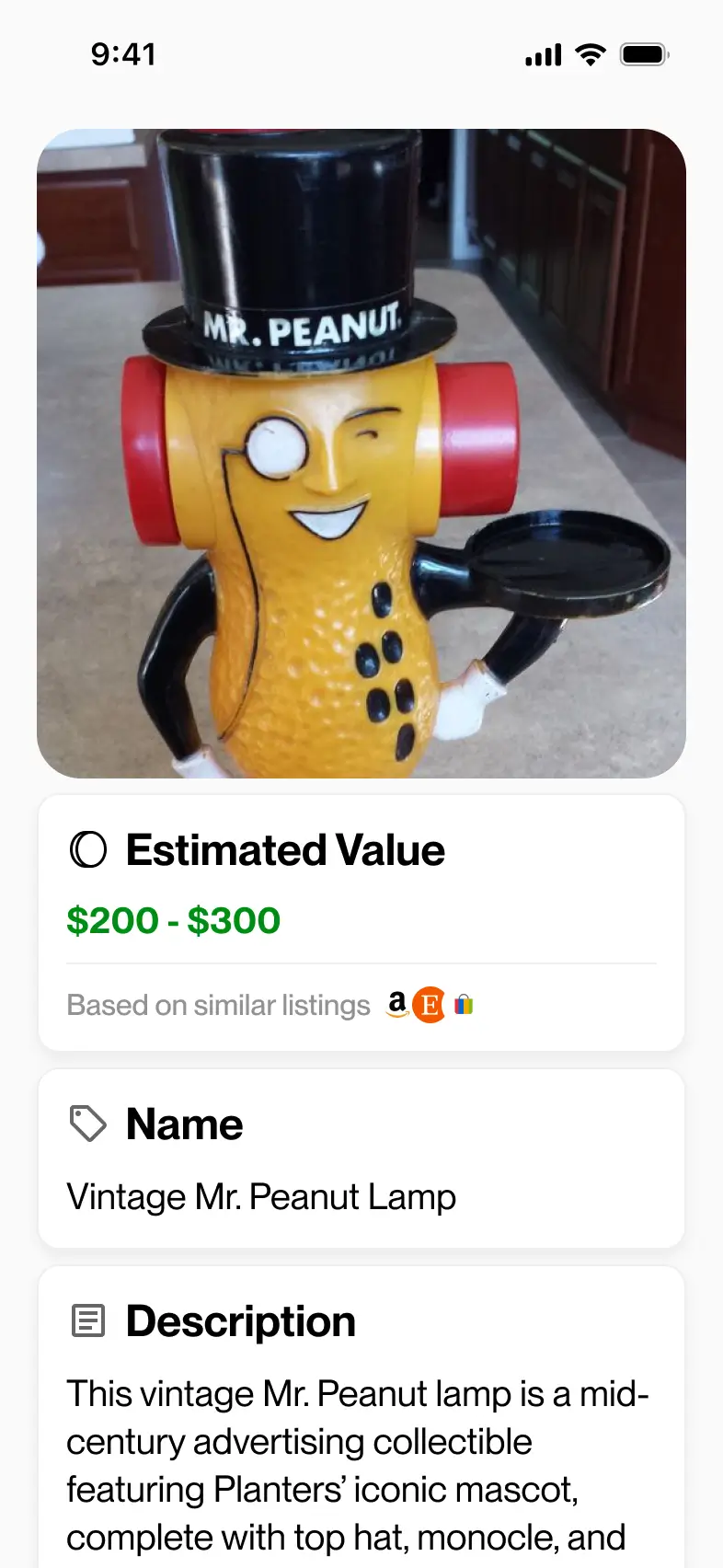
Your Attic Might Hold a Fortune: How AI Identifies Hidden Gems

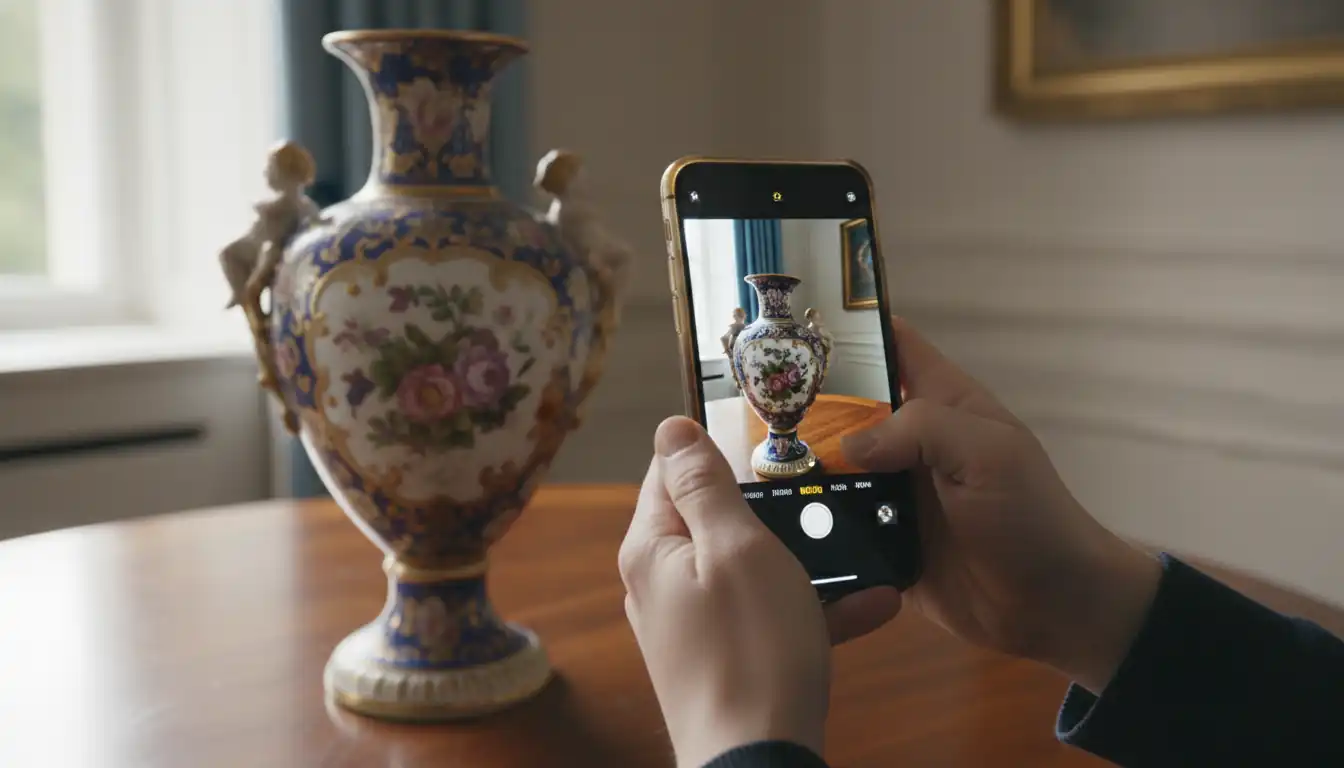
That dusty oil painting in your grandmother’s guest room or the heavy, tarnished teapot at the back of your kitchen cabinet might be more than just clutter. For decades, the only way to know if you were sitting on a goldmine was to haul the item to a local appraiser or wait for a traveling roadshow to visit your town. Most people simply didn't bother, leaving billions of dollars in historical assets to gather dust or, worse, end up in a landfill.
The barrier to entry for antique collecting has always been specialized knowledge. You needed to know the difference between a hand-planed drawer bottom and a machine-cut one, or how to spot the faint "beehive" mark on a piece of 19th-century porcelain. Without years of study, the average person was essentially blind to the value of their own possessions.
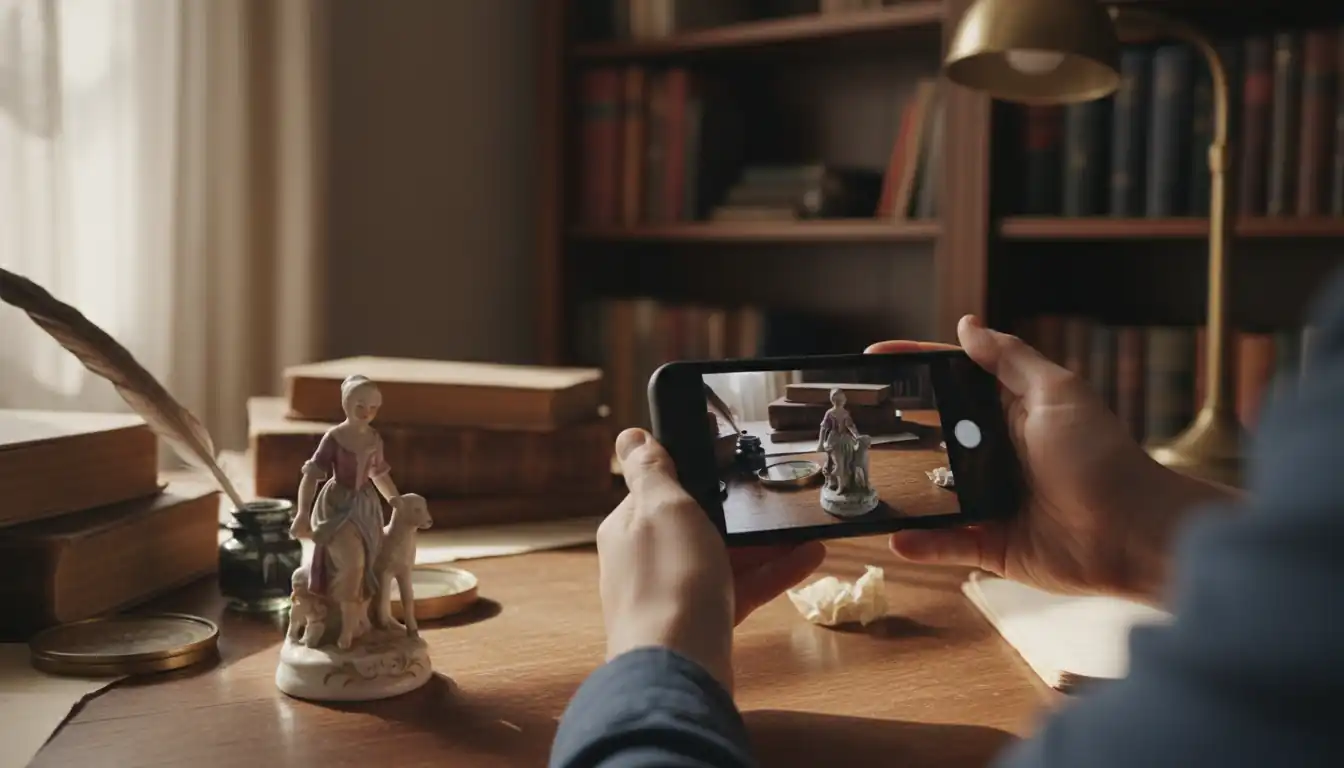
We are currently witnessing a shift in how we interact with the past. Your smartphone is no longer just a communication device; it has become a sophisticated optical laboratory capable of identifying objects with a level of precision that was once reserved for museum curators. By combining historical data with advanced visual analysis, you can now uncover the story of any object in seconds.
The Evolution of Visual Antique Identification
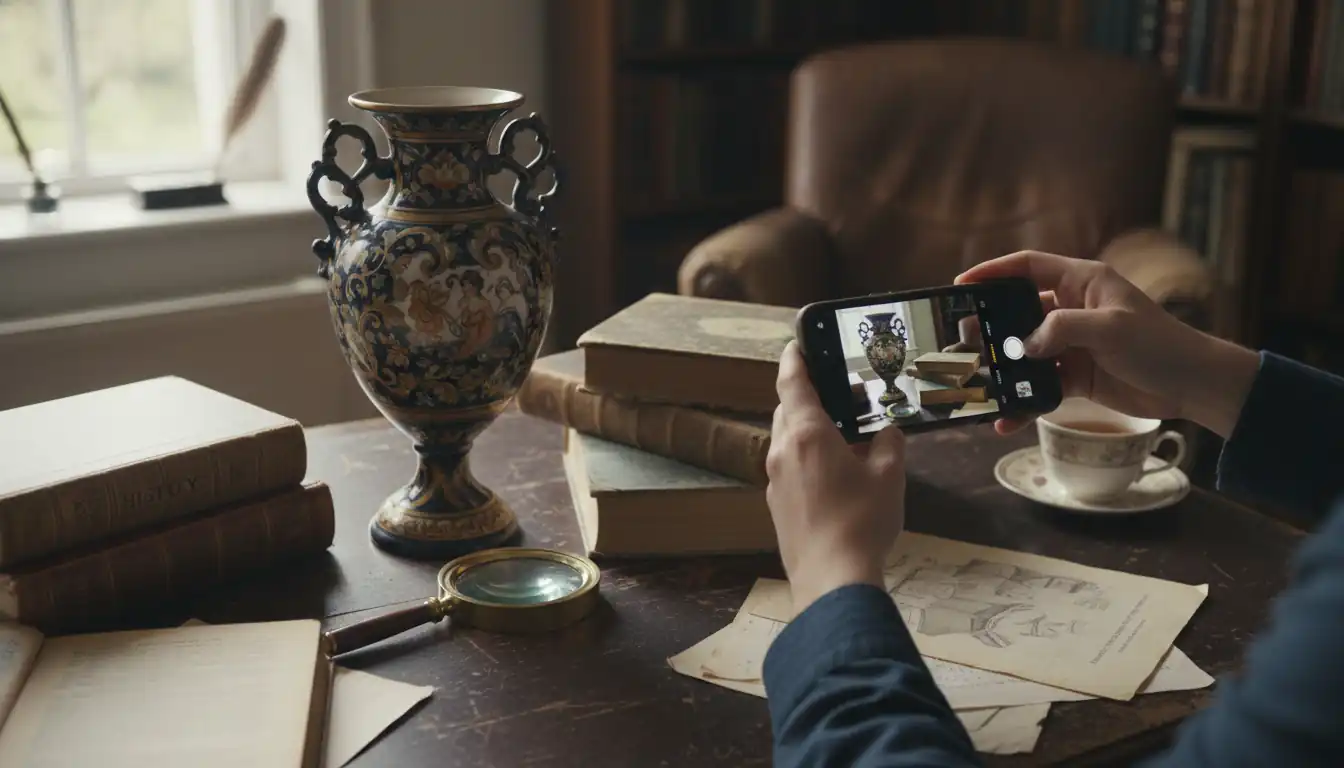
Can my phone take a picture of something and tell me what it is? This is the question that has defined the last decade of development in computer vision. The answer is a resounding yes, but the "how" is far more interesting than a simple photo match. In the past, identifying an antique required a manual search through massive, multi-volume catalogs like Miller’s or Kovels. You had to hope your item matched a grainy black-and-white photo and then cross-reference it with auction results that were often years out of date.
Modern identification has moved away from simple pattern matching to a process called feature extraction. When you point your camera at a chair, the AI isn't just looking at a "chair." It is breaking the object down into thousands of data points. It analyzes the silhouette to determine the era—perhaps the graceful curves of a Queen Anne leg or the geometric austerity of a Mission-style frame. It looks at the joinery, the color palette, and the specific way light reflects off the finish to determine if the piece is an original or a 20th-century reproduction.
How AI Recognizes Period Styles
Artificial intelligence functions much like a human expert who has seen every museum collection on earth. It recognizes period styles by identifying "clusters" of design elements that shouldn't exist together unless the piece is authentic. For example, a Chippendale-style chair should feature specific carvings, such as the acanthus leaf or the ball-and-claw foot. If the AI detects these shapes alongside modern Phillips-head screws, it immediately flags a discrepancy in the period style.
The Relic app uses this type of advanced logic to provide a real appraisal. By analyzing the "DNA" of an object—its proportions, materials, and construction methods—the technology can distinguish between a mass-produced item and a handcrafted masterpiece. This isn't just a Google search; it’s a structural analysis that compares your item against millions of verified historical records to find a match.
The Role of Global Database Matching
The true power of digital identification lies in the scale of the data. No single human appraiser can keep every auction result from London, New York, and Paris in their head simultaneously. AI can. When an image is processed, it is compared against a global database of historical sales, museum archives, and manufacturer records.
- Auction Records: Accessing realized prices from major houses like Sotheby’s or Christie’s to provide current market value.
- Museum Archives: Comparing your item to "gold standard" examples held in institutions like the Met or the V&A.
- Manufacturer Catalogs: Matching specific patterns in silver, china, or furniture to original company blueprints.
"The shift from manual cataloging to AI-driven identification has democratized the world of antiques, turning every smartphone into a gateway for historical discovery."
Mastering the Shot for Accurate Appraisals
The accuracy of an AI appraisal is heavily dependent on the quality of the data you provide. Think of the AI as a detective; it can only work with the clues it can see. If you provide a blurry, dark photo of a vase from across the room, the system might identify it as "ceramic vessel," which tells you nothing. To get a professional-grade origin report, you need to adopt a "pro-photographer" mindset.
The goal is to capture the "fingerprints" of the object. For furniture, this means the grain of the wood and the way the drawers are put together. For jewelry or silver, it means the tiny stamps hidden on the underside or inside a band. When using the Relic app, the quality of your input directly dictates the depth of the history and origin report you receive.
Lighting Techniques for Maker Marks
Lighting is the most critical factor in revealing hidden details. Avoid using your phone's built-in flash, as it creates a harsh "hot spot" that washes out the very details you need to see. Instead, use diffused natural light. Position your item near a window, but not in direct sunlight.
- Side-Lighting: Place your light source to the side of the object. This creates small shadows that make raised maker's marks or engraved signatures pop, making them easier for the AI to read.
- Diffused Light: If the sun is too bright, hang a thin white sheet over the window to soften the light. This prevents glare on shiny surfaces like glass or polished silver.
- Macro Focus: For tiny hallmarks, move your phone closer until the lens switches to macro mode. Ensure the mark is in sharp focus before snapping the photo.
Capturing Texture and Patina
Patina is the thin layer of oxidation or wear that develops on the surface of an antique over time. It is one of the most reliable indicators of age. AI looks for the specific "crackle" in an oil painting's varnish or the "bloom" on old mahogany. To capture this, you need to minimize background distractions.
Place your item against a neutral, non-reflective background—a plain grey or white sheet works best. This allows the AI to focus entirely on the object's texture without getting confused by the pattern on your wallpaper or the clutter on your coffee table. By providing a clean, high-contrast image, you allow the software to see the microscopic "wear patterns" that prove an item’s authenticity.
| Feature | Best Photo Approach | Why It Matters |
|---|---|---|
| Maker's Marks | Macro shot with side-lighting | Confirms the manufacturer and date. |
| Furniture Joints | Close-up of the interior corners | Distinguishes hand-cut from machine-cut. |
| Glass/Ceramics | Back-lit or diffused light | Reveals internal bubbles or hand-painted brushstrokes. |
| Paintings | Straight-on, no flash | Shows the "craquelure" (age cracking) in the paint. |
Decoding the Five Signs of Value
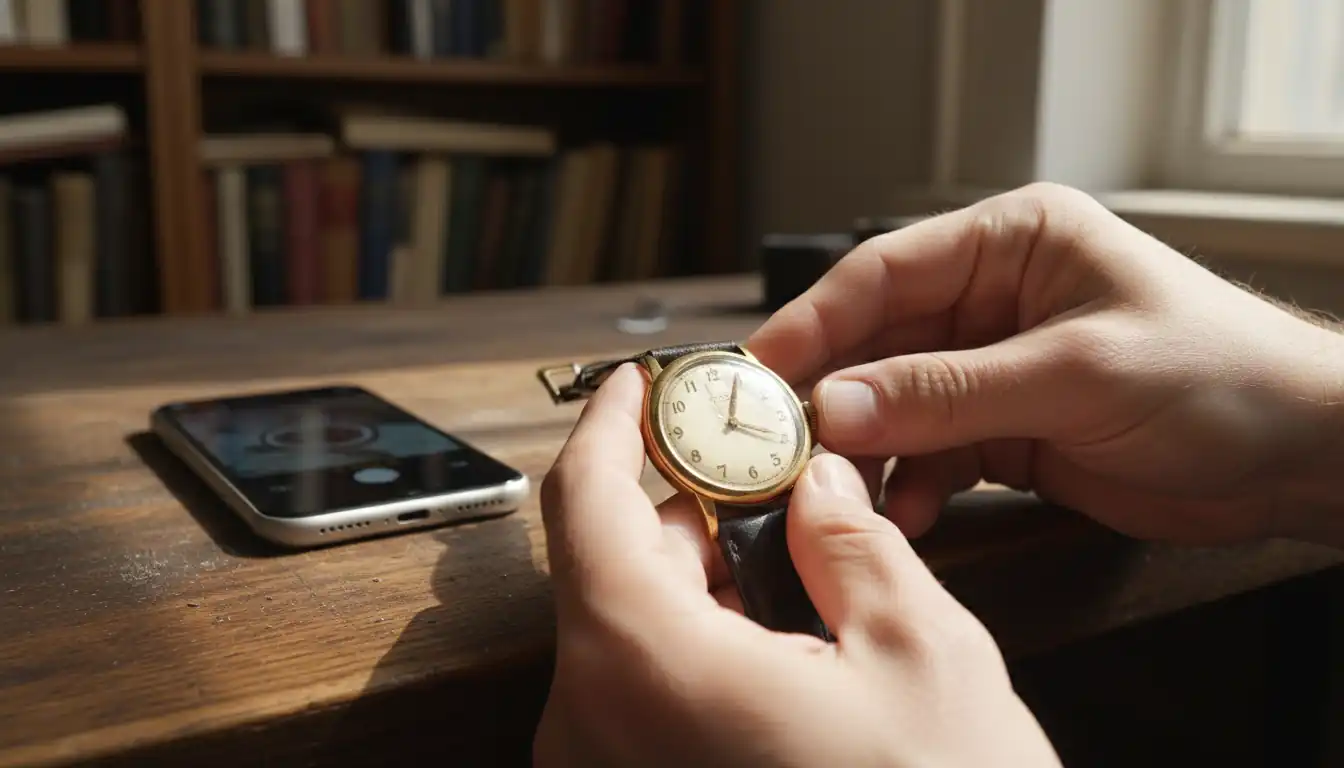
While the app processes your photo, you can perform your own "digital detective" work. There are specific physical markers that almost always indicate an item has significant value. Understanding these signs allows you to spot potential treasures at estate sales or flea markets before you even reach for your phone.
What are five signs of a valuable antique? Collectors and appraisers generally look for evidence of hand-craftsmanship, material quality, and authentic aging. When you combine your own observations with the instant identification of an app like Relic, you become a much more effective collector.
Identifying Handcrafted Joinery and Tool Marks
Before the Industrial Revolution, everything was made by hand. This left behind "mistakes" that are now signs of high value. Look at the drawers of a wooden chest. If the "dovetails" (the interlocking joints) are slightly irregular in size and spacing, they were cut by a human with a saw. Perfectly uniform, thin dovetails are a sign of a 19th-century machine.
- Dovetail Joints: Irregular, thick joints indicate 18th-century or earlier craftsmanship.
- Tool Marks: Look at the back or underside of furniture. Do you see long, slightly uneven grooves? Those are marks from a hand plane, a sure sign of age.
- Pontil Scars: On the bottom of old glassware, look for a rough, circular scar where the glassblower’s rod was snapped off. A smooth, indented bottom usually indicates modern mold-blown glass.
Spotting Authentic Wear and Provenance
Authentic wear cannot be easily faked. On a chair, the "stretchers" (the bars between the legs) should show wear where generations of people have rested their feet. On a silver spoon, the edge of the bowl should be slightly flattened from decades of hitting the bottom of a pot.
- The "Smell" Test: Old wood and old paper have a distinct, musty but sweet scent caused by the breakdown of lignin and cellulose. If a "100-year-old" desk smells like fresh pine or chemicals, it’s a reproduction.
- Patina vs. Dirt: True patina is a chemical change in the surface of the material. It shouldn't wipe off. If the "age" comes off with a damp cloth, it’s just grime or a fake finish.
- Weight and Density: Valuable antiques often use superior materials. A solid mahogany table will be significantly heavier than a modern veneered version. High-lead-content crystal will feel heavier and "ring" longer when tapped than standard glass.
The presence of a maker's mark is the most direct path to value, but the absence of one doesn't mean an item is worthless. Many of the world's finest pieces were unsigned, identifiable only by their construction techniques.
Beyond the Image: Understanding History and Origin
Once an item is identified, the focus shifts from "what is it?" to "why does it matter?" The value of an antique is rarely just about the materials it’s made of; it’s about the story it tells. A simple wooden stool might be worth $50, but a wooden stool used in the campaign tent of a Civil War general could be worth $50,000.
Relic doesn't just provide a name; it provides a comprehensive history and origin report. This context is vital for understanding the financial potential of your find. It connects your specific item to the broader movements of art and commerce, explaining how a change in trade routes in the 1700s might have influenced the type of wood used in your cabinet, or how a specific royal commission made a certain porcelain pattern famous.
Tracing the Lineage of Your Find
Understanding the lineage of an object involves looking at its "provenance"—the record of ownership. While an app can't know who owned your specific item without documentation, it can tell you the "lineage of the design." It can explain that your chair is a "Centennial" piece, made in 1876 to celebrate the 100th anniversary of the United States, which carries its own specific collector market.
- Manufacturer History: Knowing that a company went out of business in a specific year provides a "hard stop" for the age of your item.
- Design Influence: Learning that your vase was designed by a specific artist who later became famous can drastically increase its valuation.
- Historical Context: An item made during a period of war or economic depression often uses substitute materials, which makes "authentic" versions from that era rare and valuable.
Evaluating Market Demand and Rarity
The final piece of the puzzle is the current market. Antiques are subject to the laws of supply and demand, just like any other asset. Trends change; what was popular in the 1990s (like heavy Victorian oak) may not be as valuable today as Mid-Century Modern teak.
AI-driven tools analyze current auction trends to give you a "real-world" appraisal. This isn't a static number from a book; it’s a reflection of what people are actually paying right now. By looking at rarity—how many of these items were made versus how many have survived—the system can help you decide whether to sell your item at a local flea market or send it to a specialized auction house.
| Era | Key Style Markers | Current Market Status |
|---|---|---|
| Georgian (1714-1830) | Mahogany, symmetry, classical motifs | High value for rare, documented pieces. |
| Victorian (1837-1901) | Ornate carvings, dark woods, velvet | Stable, but specific to "high Victorian" tastes. |
| Art Deco (1920-1939) | Geometric shapes, chrome, exotic veneers | Very high demand, especially for lighting. |
| Mid-Century (1945-1970) | Teak, minimalism, organic curves | Peak market demand currently. |
Privacy and Ethics in Digital Appraising
As we move our collections into the digital space, security becomes a paramount concern. When you take a photo of a valuable antique in your living room, you are potentially creating a digital record that includes your home's interior and, often, your GPS location via the photo's metadata. This is why using a dedicated, secure app is a much safer choice than posting photos on public social media forums or "what is this" groups.
Public forums are often monitored by "pickers" or even less scrupulous individuals who can use the background of your photo to identify your neighborhood or the layout of your home. A professional tool like Relic keeps your scans and your catalog private. Your data is used to provide you with an appraisal, not to broadcast your collection to the world.
Protecting Your Collection Data
Managing a collection digitally is about more than just identification; it’s about documentation for insurance and estate planning. If your home were ever damaged by fire or theft, having a private, digital catalog of your items—complete with professional-grade appraisals—is the difference between a full insurance payout and a total loss.
- Metadata Scrubbing: Professional apps often strip location data from photos to protect your privacy.
- Private Clouds: Ensure your collection is stored in a secure, encrypted environment rather than a public photo stream.
- Discretion: Keeping your high-value finds off public social media prevents you from becoming a target for theft.
Navigating the Ethics of Online Valuation
There is also an ethical component to using AI for appraisals. While the technology is incredibly accurate, it should be used as a tool to supplement, not entirely replace, the expertise of human specialists for multi-million dollar items. If the AI identifies an item as a potential masterpiece worth six figures, the ethical next step is to use that report to seek out a physical inspection by a specialized auction house.
Furthermore, when buying items from others, there is a "buyer's ethics" to consider. If you use an app to discover that a $5 bowl at a yard sale is actually a $5,000 Ming Dynasty piece, you have a choice to make. While the "find" is the dream of every collector, professional ethics suggest that being transparent about your use of technology can build better long-term relationships in the collecting community.
- Insurance Accuracy: Use your digital reports to update your homeowners' insurance regularly.
- Estate Planning: A digital catalog makes it easy for heirs to understand the value of what they are inheriting, preventing valuable items from being sold for pennies at a garage sale.
- Professional Verification: For items of extreme value, use the AI report as your "ticket" to get a meeting with top-tier human experts.
Conclusion
The world of antiques is no longer a closed circle reserved for those with decades of academic study. The marriage of historical expertise and computer vision has opened the door for anyone to discover the hidden value in their own home. By understanding how AI analyzes the "DNA" of an object—from its joinery to its patina—you can transform your smartphone into a professional appraisal tool.
Remember that the journey from a dusty attic find to a realized fortune starts with a single, well-lit photograph. By mastering the "pro-photographer" mindset and learning the five signs of value, you can confidently identify the treasures hidden in plain sight. Whether you are a casual hobbyist or a professional dealer, the ability to instantly access the history, origin, and market value of an item is a powerful advantage.
If you’re ready to see what your collection is truly worth, the next step is simple. Take a look around your house, find that one item you’ve always been curious about, and let the technology do the work. You might just find that you’ve been sitting on a fortune all along.
Identify antiques instantly
Point your camera at any antique, collectible, or vintage item. Get valuations, history, and market insights in seconds.
Download for iPhone