Porcelain Insulator Value Guide
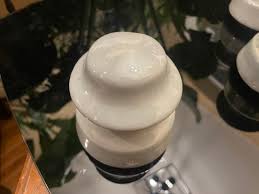
- Period
- 1900-1940
- Origin
- United States
- Materials
- Porcelain
- Category
- Porcelain insulator
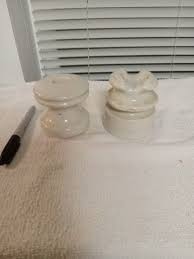
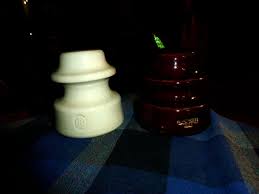
These vintage white porcelain insulators represent a pivotal era in American communication history, serving as essential components for telegraph and telephone lines between 1900 and 1940. Collectors prize these pieces for their superior durability compared to glass, showcasing the industrial transition toward materials capable of withstanding high-voltage and harsh environmental conditions.
What Is Porcelain Insulator Worth?
The typical price range for Porcelain Insulator is $25 - $40 based on recent sales. However, values can vary depending on the item's condition, rarity, and other factors such as:
- Condition of the porcelain, specifically the absence of chips, cracks, or 'flea bites' in the glaze.
- Rarity of the manufacturer's mark or specific utility company branding embossed on the side.
- Historical significance of the specific line or region from which the insulator was salvaged.
- Presence of unique design variations or patent dates that distinguish it from mass-produced standard models.
How to Identify Porcelain Insulator?
- Look for manufacturer markings or utility company stamps embossed directly into the porcelain surface.
- Examine the glaze for a smooth, uniform white finish characteristic of early 20th-century American production.
- Check for specific threading patterns inside the base designed to secure the unit to wooden crossarm pins.
- Identify the shape and size, as specific designs were engineered for either telegraph, telephone, or high-voltage power applications.
History of Porcelain Insulator
Porcelain insulators became crucial with the advent of electrical power transmission and communication lines. Their non-conductive properties made them ideal for separating electrical conductors from the wooden poles and metal structures that supported them. Early insulators were often made of glass, but porcelain offered superior strength and resistance to moisture and temperature fluctuations, making it a preferred material for high-voltage applications and harsh environments. Collectors often seek out insulators due to their historical significance and the variety of designs and markings from different manufacturers and utility companies.
Shop Similar
Canadian Pacific RY Co. Grey Dome Porcelain Telegr…
etsy.com · $5
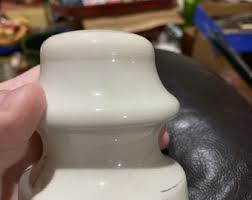
Porcelain Insulator PP Inc - Etsy UK
etsy.com
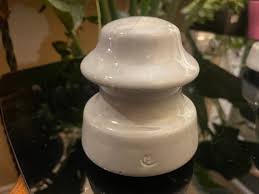
Canadian Pacific RY Co. grijze koepel porseleinen …
etsy.com
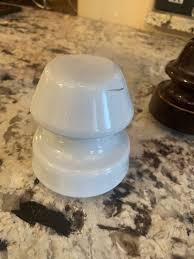
Vintage Porcelain / Ceramic Telegraph/telephone Ra…
etsy.com
White Ceramic Insulators for Sale in Seneca, SC - …
offerup.com
VINTAGE LOCKE 44 & CIRCLE B White Brown 3 1/2" Por…
picclick.com
Related Items
Have an antique to identify?
Get an instant AI appraisal with values, history, and market insights.
Download for iPhone