How can you tell if silver is real?

By Ellen Whitlock ·
Turn it over and look for STERLING, 925 or COIN; in the US, sterling means 92.5% silver. A magnet should not stick, and worn spots should show silver, not yellow or pinkish metal underneath. If the marks and wear agree, it is likely solid silver; a jeweler's acid test settles doubtful pieces.
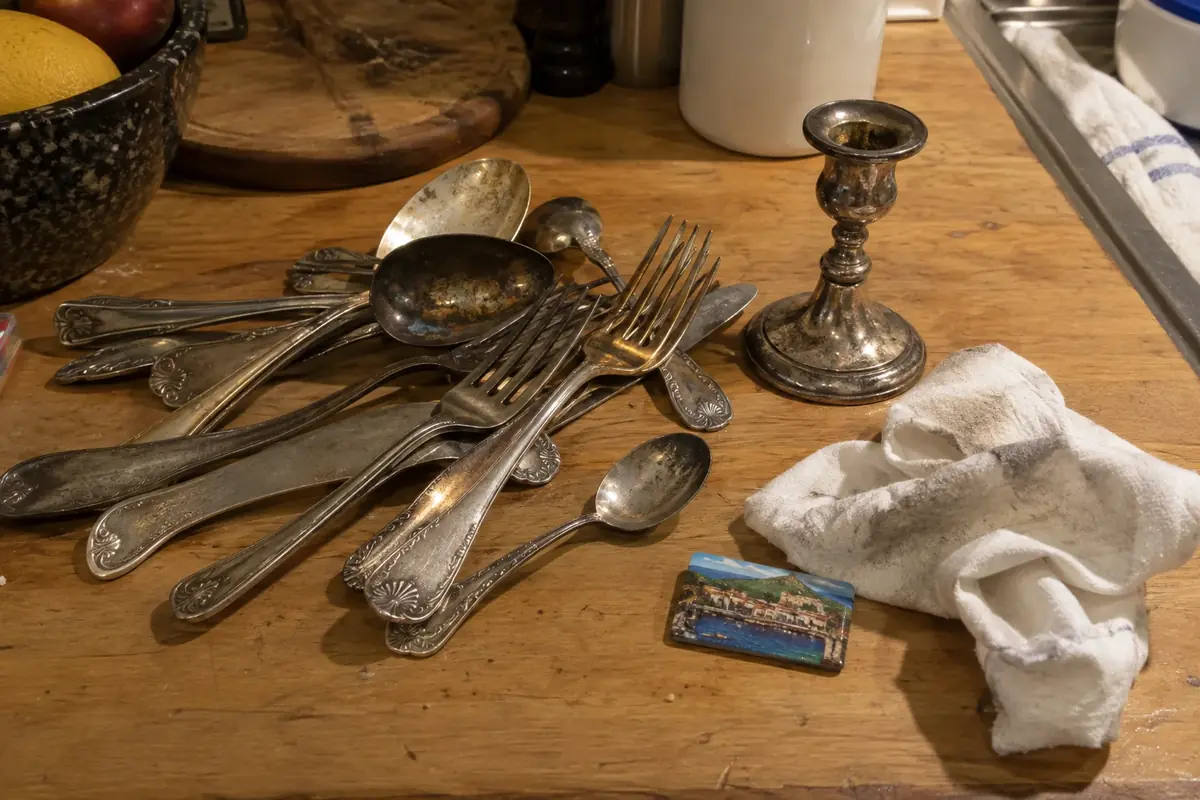
What is your silver worth?
Sterling or plate decides almost everything. A sterling set has a silver-weight floor under its price; a plated set is priced on design and condition.
| What you have | Typical value |
|---|---|
| Silver-plated Victorian tea serviceComplete electroplated services, priced on design and condition rather than metal. | $75–$400 |
| Sterling three-piece tea set, English makerSets by recognized English makers; weight and maker matter most. | $1,200–$4,000 |
Melt value is usually the lowest possible valuation, because it ignores the maker and the pattern. Before you sell anything for scrap, find out who made it.
To find the floor for sterling, GoldPrice.com gives the melt formula: weight in grams × 0.925 × the silver price per troy ounce ÷ 31.1035. The silver price moves daily, so use a current quote.
How to tell if silver is real
Turn the piece over and look at the underside, the back of the handle, or the inside of a ring or rim. Silver is usually stamped with a number showing parts per thousand of silver. EPNS, EP, EPBM and Quadruple Plate all mean plate, not solid silver.
| Mark | Years |
|---|---|
| Lion passant · UK sterlingSterlingA walking lion, set with a town mark, date letter and maker's mark | 1544 on |
| COINRoughly 90% silver, from when silversmiths melted coins | 1790–1879 |
| STERLING · US standardSterlingSolid silver, adopted by the major US makers | 1868 on |
| Gorham date letters A to QA capital letter that dates the hollowware | 1868–1884 |
| Gorham year symbolsA different pictorial symbol each year, found on published charts | 1885 on |
| EPNS · PlateA nickel silver base with a silver coating | 1840 on |
| QUADRUPLE PLATEThe heaviest plating grade for hollowware, but still plate | 1870–1919 |
| IS · International SilverThe International Silver Company's mark, most often on plated wares | 1898–1984 |
| 925 · Numeric sterlingSterlingThe numeric form of sterling, popular since the mid-twentieth century |
Marking was never compulsory in the US, so an unmarked piece can still be real; the 1906 National Gold and Silver Stamping Act only banned false purity claims.
Five checks for your silver
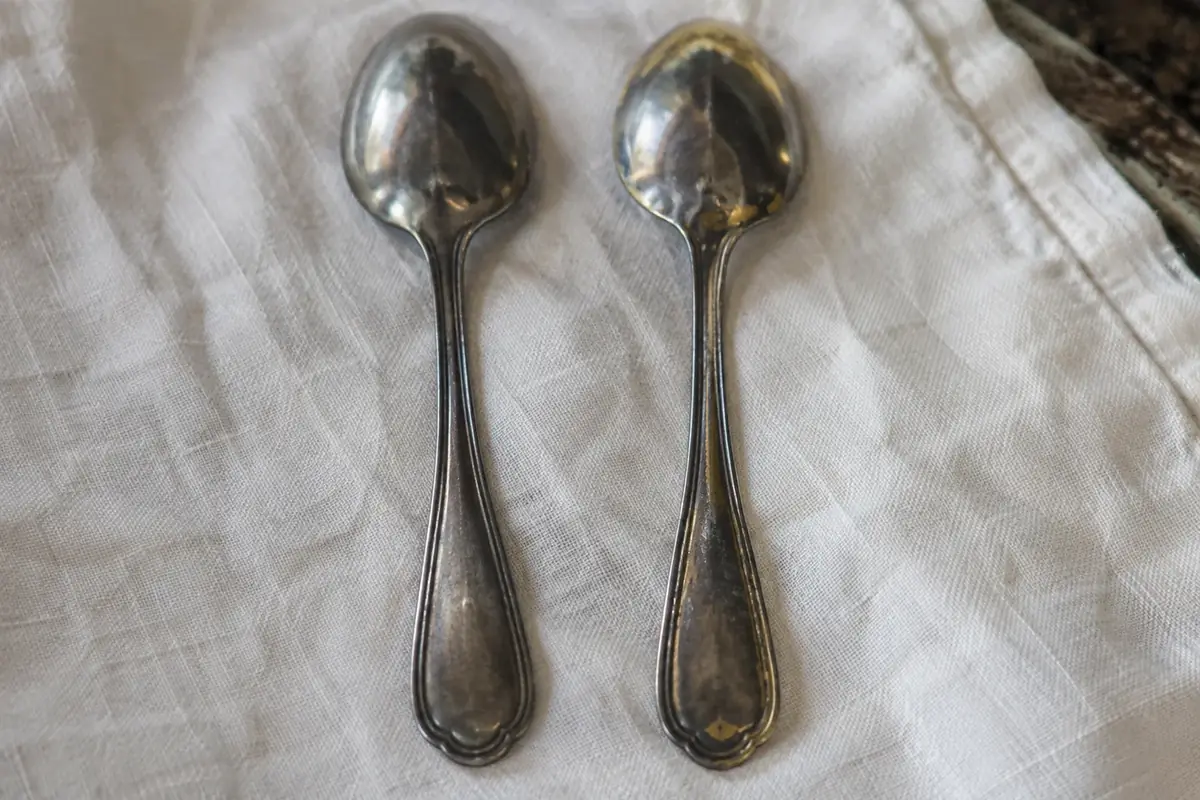
- Look at the wear. Plate shows base metal at high-contact spots such as spoon bowls, fork tines and handle edges: reddish copper, yellow brass or gray-white nickel silver. Sterling wears evenly and stays silver all the way through.
- Hold a magnet to it. Sterling is not magnetic, so a stick means plate or something else. A strong rare-earth magnet will also catch an iron or steel base under cheap plate. A pass proves little, since many silver-colored metals are non-magnetic too.
- Feel the weight. Silver's density is about 10.49 g/cm3, so sterling feels noticeably heavier than plate or stainless steel of the same size. A sterling teaspoon weighs about 23 grams.
- Watch how it tarnishes. Silver turns gray to black as silver sulfide forms from sulfur in the air. On sterling the tarnish polishes away cleanly, while plate can flake or expose base metal. Skip the bleach test: it blackens silver and plate alike and can damage the surface.
- Get an acid test if the checks disagree. A jeweler or silver buyer touches nitric acid to a hidden scratch; don't try it at the kitchen table, because it can harm the piece. Acadiana Gold Exchange says cream or off-white means sterling, and green points to a copper base.
For maker stamps and date marks, see silver marks and hallmarks.
What makes silver worth more?
- Weight
- Heavier-gauge pieces hold more metal, so they have a higher price floor. Most complete sterling tea services weigh 60 to 120 troy ounces.
- Maker
- Desirable patterns can fetch roughly double their scrap value, and premium makers such as Tiffany around four times, says ScrapSilverCalc. A Georg Jensen six-piece sterling tea set with tray reached $17,700 at auction.
- Design
- A plated set is priced on design. Elaborate patterns, Art Deco or Art Nouveau styling and unusual serving pieces do best.
- Condition
- Dents, monograms and over-polishing reduce value. A complete matched set outperforms a lone piece from a broken set.
- Purity mark
- Melt value scales with silver content: sterling is 92.5% silver and coin silver is roughly 90%.
Real silver or a look-alike?
Most plated flatware, tea sets and trays in American cupboards are plate, not solid silver. Two look-alikes turn up most:
- Silver plate. A thin layer of silver over base metal. Sheffield plate, the earliest form, fused thin sheets of silver onto a base-metal core, and electroplating later replaced it.
- Nickel silver, often called German silver. It contains no silver at all. It looks silvery, which makes worn plating less obvious, and EPNS wares use it as the base.
If yours turns out to be plated, see what silver plate is worth.
Common silver questions
Does a magnet tell you if silver is real?
Only partly. A stick rules out solid sterling, but a pass clears just one hurdle. On a knife, check whether only the blade is magnetic.
Does 925 on a piece mean it is real silver?
Not on its own. The Federal Trade Commission says a genuine stamp normally sits beside a maker's name or registered trademark, so a bare stamp deserves a second look. Confirm with wear and weight.
Is German silver or nickel silver real silver?
No. A typical formula is 60% copper, 20% nickel and 20% zinc.
Is silver plate worth anything?
Very little as metal. The coating is only microns thick, so refiners cannot profitably recover it.