How can you tell if your Tiffany lamp is authentic?

By Ellen Whitlock ·
A real Tiffany Studios lamp has a hollow bronze base with a lead ring inside, stamped TIFFANY STUDIOS NEW YORK in capitals with a model number, under a hand-cut glass shade. A stamp alone proves nothing, because some fakes carry one and some genuine lamps don't. Genuine lamps typically start at about $4,000–$5,000.
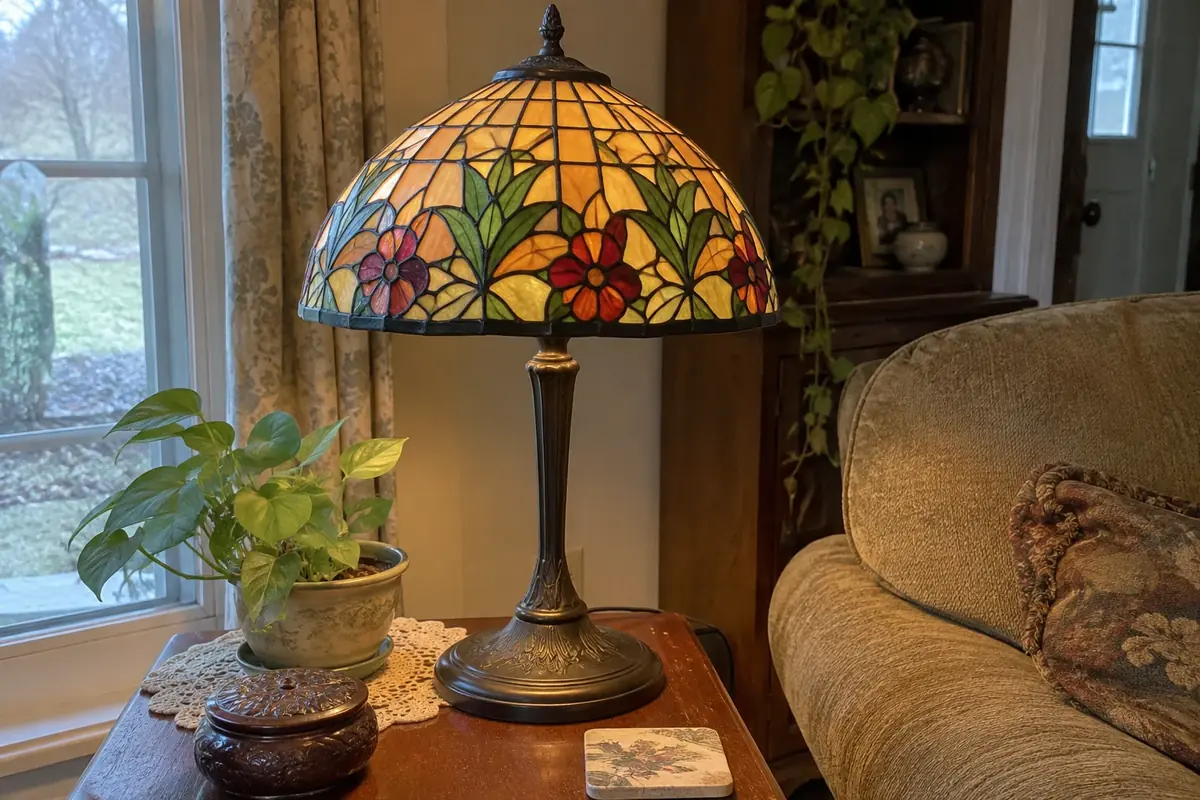
What is a Tiffany lamp worth?
A genuine Tiffany Studios lamp runs from the low thousands to well over $1 million at auction, according to Cottone Auctions. The design decides where yours lands.
| What you have | Typical value |
|---|---|
| Tiffany-style lamp by another makerCopies, from modern mass-produced pieces at the low end to vintage ones at the top. | $100–$5,000 |
| Genuine Tiffany Studios, simpler designsDesk lamps, screens and geometric shades; auction results and estimates. | $3,200–$15,000 |
| Genuine Tiffany Studios, named floral table lampsPoppy, Dragonfly, Daffodil and Apple Blossom; auction results and estimates. | $32,500–$150,000 |
| Genuine Tiffany Studios, top-tier designsPeony, Magnolia and Grape; auction results and estimates. | $200,000–$661,000 |
A modern mass-produced Tiffany-style lamp runs $100 to $1,500 in one price guide. The other rows are auction results and estimates.
Desk lamps have ranged from $3,200 to $14,000. At the top, a Dragonfly table lamp reached $150,000 at Heritage in 2021, according to Heritage Auctions, and a Magnolia floor lamp reached $661,000 at Cottone.
How to tell if a Tiffany lamp is authentic
A real one was made by Tiffany Studios in New York between 1893 and the late 1920s. Louis Comfort Tiffany approved the designs. Start with the underside of the base and match its stamp to the table.
| Mark | Years |
|---|---|
| TGDCOEarlier company initials, older than the usual stamp and worth a specialist's look | 1892–1900 |
| TIFFANY STUDIOS NEW YORKCapitals plus a model number; the base mark on about 90% of lamps | 1900–1928 |
| Tiffany Furnaces, Inc.Less common; furnace-era production, not a copy | 1902–1919 |
| Louis C. Tiffany Furnaces, Inc.The last base marking, found on late-period pieces | 1920–1928 |
| Shade rim stampThe name in capitals on the bottom inner metal rim edge, sometimes with a model number | |
| Mixed-case stampUpper and lower case letters point to a reproduction |
Dates are approximate. A shade with no stamp needs a closer look.
Five checks for your Tiffany lamp
- Read the stamp. The letters should be deeply struck, sharp and even, and look as aged as the metal around them. A correct stamp is a reason to keep checking: Winterthur found four lamps that all bore a Tiffany Studios mark, and only two were authentic.
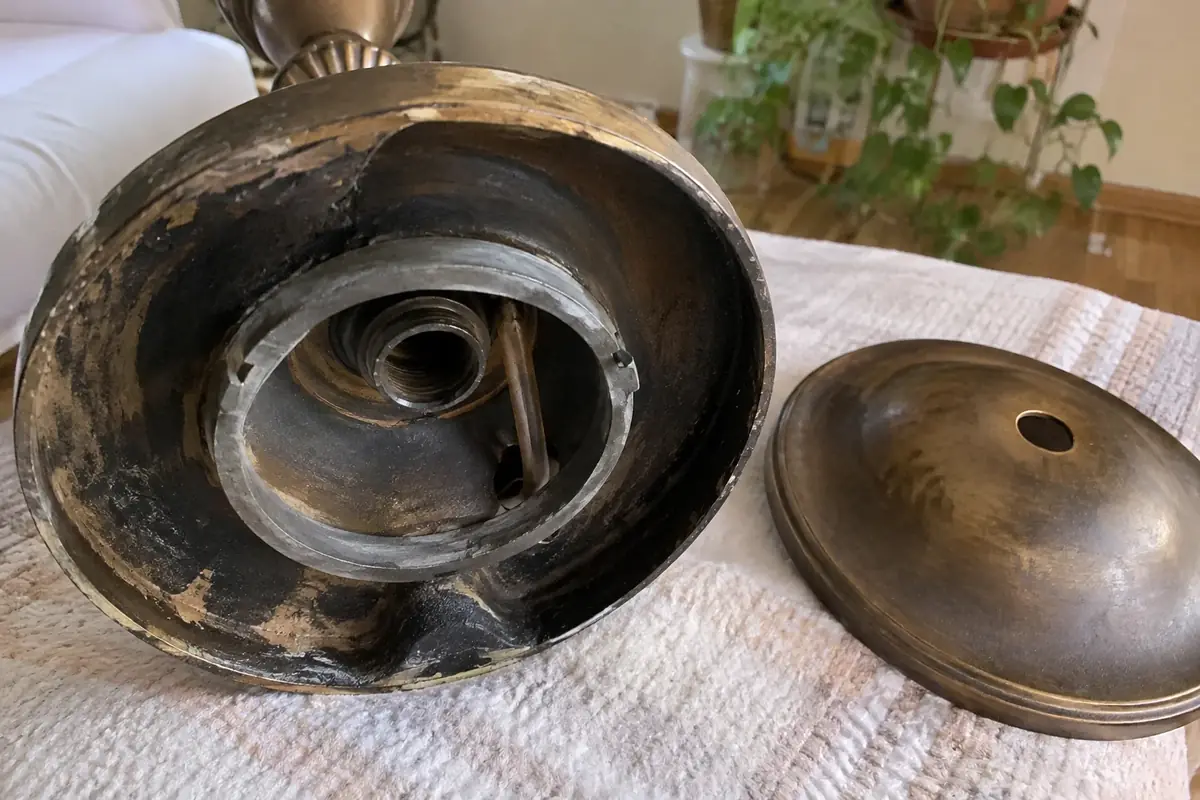
- Lift the cap under the base. Look for a gray metal ring. Antique Trader says real lamps use a lead ring inside a hollow bronze base, while reproductions use brass, zinc or plastic.
- Judge the patina. Bronze should show natural oxidation, brown or green and uneven. Brown residue inside and out can mean tea-staining added to fake age.
- Look closely at the glass. Genuine shades use hand-cut pieces, often with tiny flecks of color called confetti glass. Golden glass has a translucent amber sheen, while pale gold or green tints suggest a fake. The color should be in the glass, not painted on.
- Study the solder and the switch. Hand-soldered seams look dull and matte, not shiny and uniform. Originals use a turn-paddle knob or pull chains, and a modern switch suggests a reproduction.
What makes one Tiffany lamp worth more than another
- Genuine or copy
- The biggest swing. A genuine lamp starts in the thousands and climbs into six and seven figures, while copies by other makers top out far lower.
- The design
- Named floral designs such as Dragonfly, Poppy and Peony are priced well above simpler geometric shades and desk lamps. A Raised Branch Apple Blossom lamp reached $32,500 at Heritage in 2021. Christie's estimated a Peony floor lamp at $200,000–$300,000 in December 2025.
- Type of lamp
- Desk lamps and other small pieces are the accessible end of the genuine market, while large floor lamps reach the top.
- Shade and base
- A genuine base under a reproduction shade, or the reverse, is a married lamp and is valued very differently from a matched one.
- Condition
- Damage and needed repairs are priced in at auction, even on genuine lamps. Chasen Antiques describes an authentic Dragonfly lamp that came to auction needing damage and repairs addressed.
Real Tiffany lamp or a Tiffany-style reproduction?
Tiffany-style lamps from other makers, such as Meyda Lighting and Dale Tiffany, copy the look without being Tiffany Studios lamps. Mass production of replicas surged between the 1950s and the 1980s, and many are honest copies with no intent to deceive. Deliberate forgeries began appearing in the 1970s, when demand and prices surged. Signs of a reproduction:
- A rigid-looking shade; a genuine shade flows organically
- Ripple glass with random waves; genuine ripple glass shows orderly ripples
- A period base under a modern shade, or the reverse; Heritage notes that Lily table lamps frequently include reproduction shades
Common Tiffany lamp questions
Is a Tiffany lamp with a Tiffany Studios stamp always real?
No. Stamps were added to imitations during or after production, and some authentic lamps are unmarked, so judge the base, glass and solder as well.
Can I test the glass with nail polish remover?
Antique Trader suggests dabbing a cotton swab of nail varnish remover on a hidden spot of the glass: painted color rubs off, while color embedded in real Tiffany glass does not. Never try it on the bronze.
What if my lamp passes every check?
Get a specialist's opinion, because marks can be faked. Winterthur's lab work found fakes use zinc/tin solder, while genuine solder is a lead/tin alloy containing arsenic, a test you can't do at home.
Who designed Tiffany lamps?
Rarely Tiffany himself. Clara Driscoll, who led the Women's Glass Cutting Department, designed around 30 of the lamps, including Wisteria, Dragonfly and Peony.