What is the value of an antique book?

By Ellen Whitlock ·
Most old books bring modest money: family Bibles and 19th-century leather sets typically run about $10 to $350. Well-known first editions in good condition or with their dust jackets reach roughly $2,500 to $18,750. Edition, dust jacket, completeness and signatures decide which group yours belongs in.
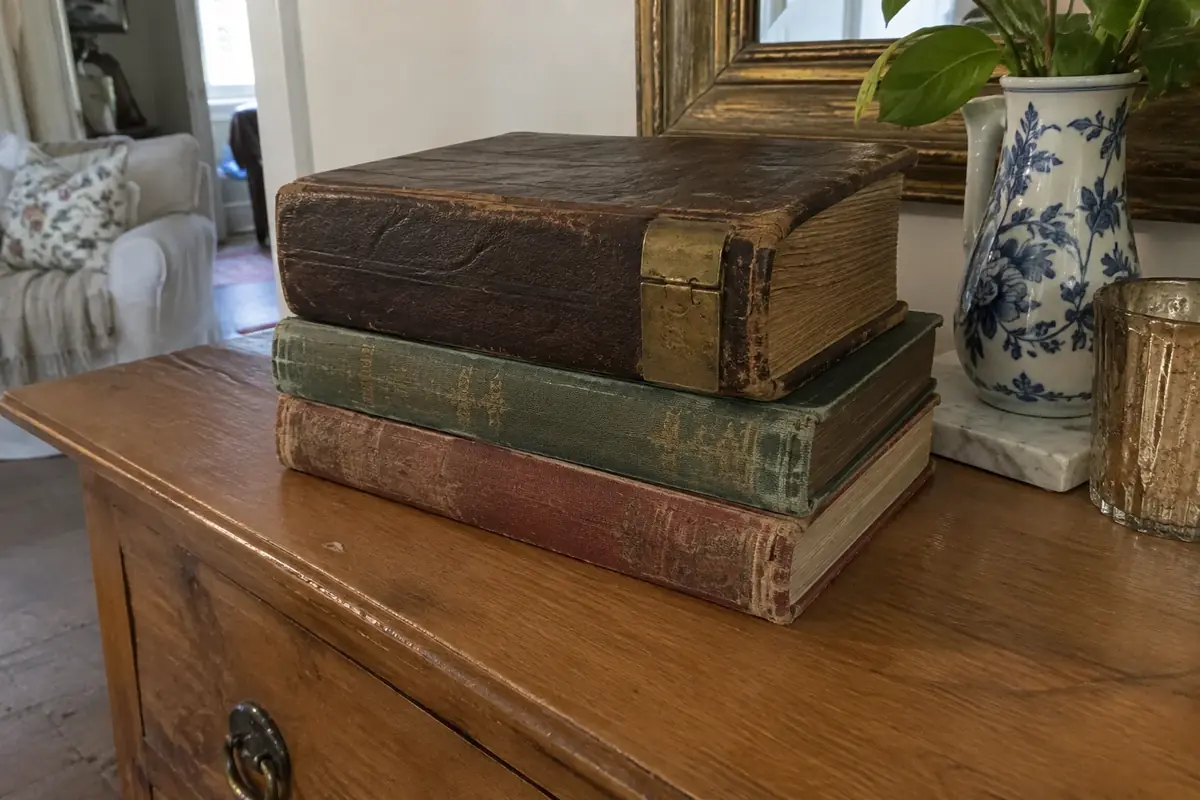
What is an antique book worth?
Age alone does not make a book valuable. Nelson Rare Books says the most valuable books combine rarity, condition and demand, and losing any one usually loses value.
| What you have | Typical value |
|---|---|
| Family Bibles, 1900s and undatedMost are common, and a plain leather copy with no family records sits at the bottom. | $10–$100 |
| Family Bibles, 1800sLarge, near-perfect copies with embossed covers and engravings reach the top. | $10–$300 |
| Decorative leather sets and pictorial-cover booksA beautiful cover or binding earns the price, and sets sell by the volume. | $40–$350 |
| Famous 1920s-30s first editions, no dust jacketThe title sets the price, and the missing jacket holds it down. | $300–$3,000 |
| Well-known first editions, good condition or jacketedIncludes The Grapes of Wrath, Tender is the Night with its jacket and Casino Royale. | $2,500–$18,750 |
| Scarce or signed first editionsIncludes Anne of Green Gables, signed Langston Hughes and an inscribed Goldfinger. | $12,000–$25,000 |
Ranges come from auction results and appraisals. Dealer prices on sites such as AbeBooks, Alibris and Biblio are asking prices, so treat them as a ceiling.
Bibles sit at the bottom: National Appraisal Consultants says those printed in the 1800s are rarely worth more than $75. At the top, a near-fine first edition of Darwin's On the Origin of Species (1859) reaches six figures.
How to tell if an old book is a first edition
Read the copyright page before anything else, because the edition tells you more than the age does.
Five checks for an old book
- Read the title page and copyright page. Note the publisher, the place and every date. If the copyright-page date matches the title-page date, it is probably a first edition.
- Look for a number line. AbeBooks says a row of numbers that includes a 1 usually means a first edition, whatever order the numbers run in. Go by the numbers, not by a 'First edition' line printed beside them.
- Rule out a reprint. If the publisher's name on the spine differs from the one on the title page, look closer. Book club and reprint-house editions rarely carry value.
- Check the jacket, pages and names. More than 90% of dust jackets were destroyed, so a surviving one matters. Blanks count as pages, so make sure the book is complete, and note where any inscription sits and whose name it is.
- If it is a Bible, turn to the family records. Several generations of a family help genealogists.
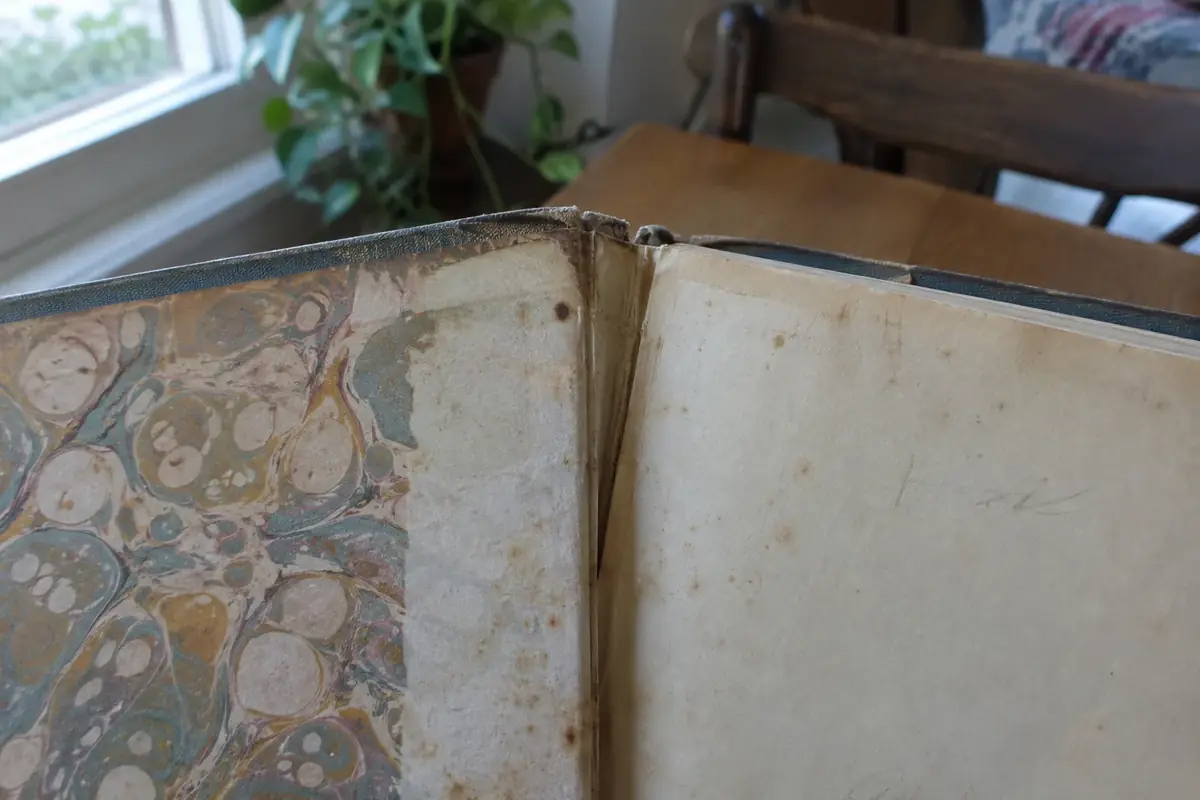
What makes one old book worth more than another?
- Edition
- Collectors pay for the true first printing; a later printing, or another country's edition of the same title, is worth a fraction. A 1695 second edition of Locke's Essay is worth only 5 to 10% of the 1690 first. Skinner Auctioneers puts a London first edition of Nineteen Eighty-Four at around $1,400 and the New York edition at $250.
- Dust jacket
- For 20th-century books the jacket can be most of the value, and a missing or rough one can cut it by up to 90%. A first edition of Tender is the Night is around $6,000 with its jacket and $300 without.
- Signature
- A signature by a significant writer can multiply the ordinary value ten times or more. Tender is the Night signed to Archibald MacLeish brought $23,500 at auction.
- Completeness
- Every page counts, blanks included, and one lost page can be devastating to a rare book's value. William Hubbard's 1677 Narrative of the Troubles with the Indians in New-England is about $35,000 without its original map and $250,000 or more with the folding map.
- Condition
- Collectors expect some ageing, but damage, restoration and rebinding can lower the price. A damaged Bible may fetch only a tenth of what the same Bible brings in better condition.
- Demand
- A book is likelier to be worth money if you have heard of it or its author. Rarity with no demand does not raise value. A first edition of Travels with Charley with its dust jacket is worth about $100, far less than a good first edition of The Grapes of Wrath.
Are old Bibles worth money?
The Bible is the most printed book in history, so few old copies have any collectible value. Completeness, good condition, family records, fine binding and a very early printing date push one up, while 20th-century printings and the generic 'Cottage Bible' of the 1870s pull it down. Early American printings are the exception: according to CBS News, a 1743 Saur Bible is $5,000 or more in fine condition, and a complete 1776 Saur printing can reach $10,000.
Where to sell an old book
Match the venue to the value. One bookseller suggests a rare book dealer or a reputable auction company for very rare items, and a site such as eBay for books that are not especially unique. The Antiquarian Booksellers' Association of America has more than 450 members, and many offer appraisals. Skinner takes photographs through an online auction evaluation form, so photograph the title page, copyright page, binding and any damage before you contact anyone.
Common old book questions
Are old family Bibles worth anything?
Usually only a little. A Bible from the family of a historical figure, or signed by someone famous, could be valuable.
Does a missing dust jacket really matter?
Yes, for 20th-century first editions: a famous title can lose most of its value without its jacket. Keep any jacket that survives with the book.
How do I know if my book is a first edition?
Start with the number line on the copyright page. A stated 'first edition' or 'first printing' also counts, as long as the dates match the title page.
Are book club editions and reprints worth anything?
Typically very little. A.L. Burt, Grosset & Dunlap and Book of the Month Club are the usual names to look for.
Is a signed book worth more?
Often, when the signer is a significant writer. Where the inscription sits matters too: blank pages before the title page are ideal, and writing on the title page lowers value.