How much is my McCoy pottery worth?

By Ellen Whitlock ·
A common McCoy vase typically brings $25 to $65, and an ordinary cookie jar $15 to $150. Rare cookie jars reach $2,520 to about $5,000. The mark on the base dates it; the design, its condition and whether it still has its lid decide where it lands.
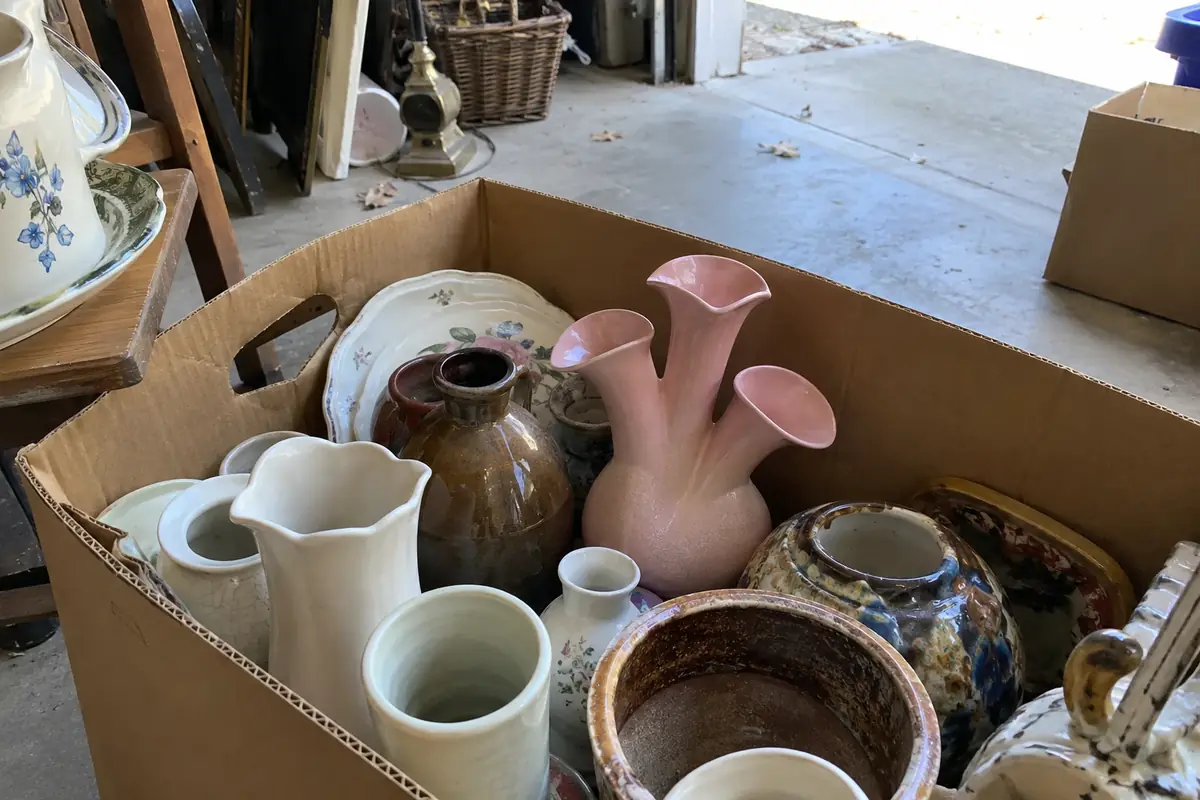
What is McCoy pottery worth?
Most McCoy in a home is everyday output with the common McCoy USA mark, used from the 1940s through the 1960s: vases, planters, jardinieres and cookie jars. The name on the base sets a floor, not the price. Kovels says rarity, form, glaze, condition, decoration and collector demand all count.
| Type of piece | Typical value |
|---|---|
| Common vases, such as Triple Calla LilyIncludes the 1940s Triple Calla Lily. Glaze and color decide where each one falls. | $25–$65 |
| Common cookie jars, good conditionDesign and condition decide where a jar falls. | $15–$150 |
| Sought-after cookie jars, such as Stagecoach or Coalby catPopular designs, with the rarer jars at the top of the range. A Stagecoach jar brought $799 in 2023. | $200–$800 |
| Rare top-tier jars, such as Freddy the Gleep or Fox SquirrelA multicolor Fox Squirrel jar reached $4,600 in 2010. The exact design and condition set the price. | $2,520–$5,000 |
Guides disagree even on common jars, so identify the exact design before you price it.
The jump comes from a small number of cookie-jar designs and designer-era pieces. Kovels reports a Freddy the Gleep jar selling for $4,999.99 on May 15, 2026, and Chairish calls Sidney Cope's art deco Giraffe vase the most expensive McCoy piece sold at auction.
How to date McCoy pottery from the mark on the base
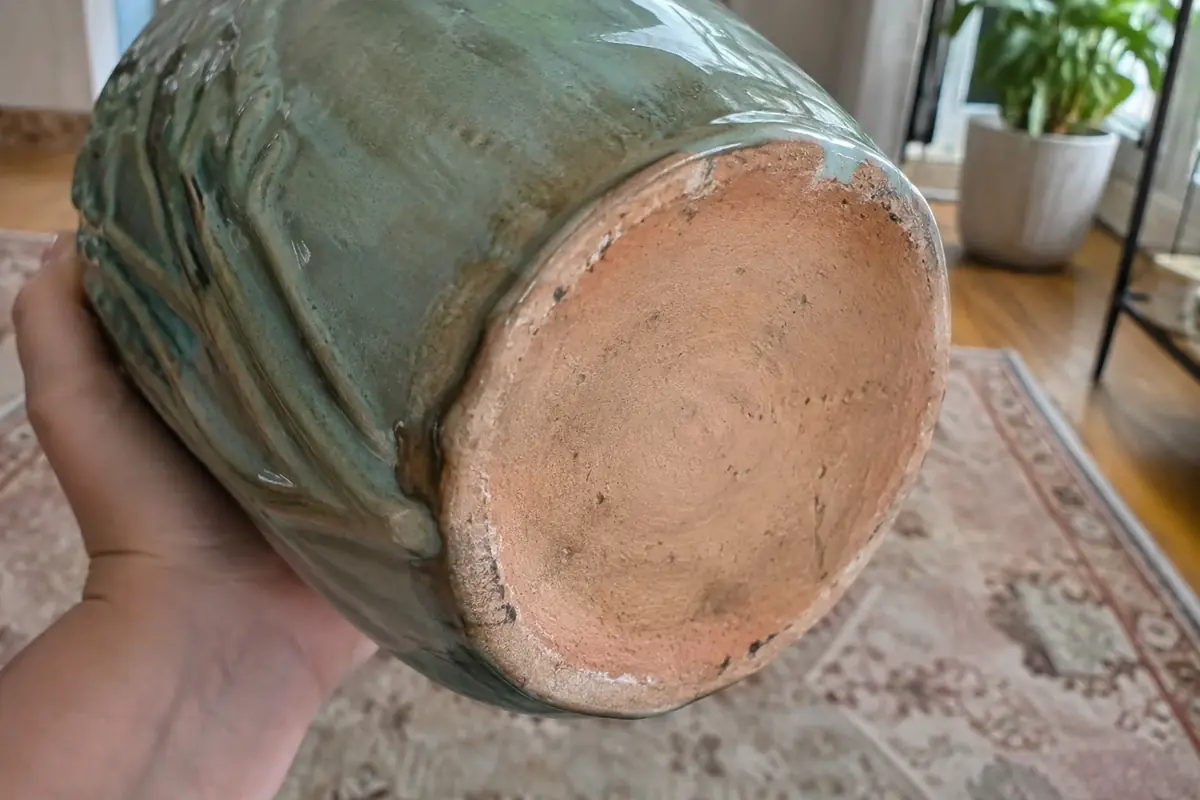
The mark changed each time the pottery changed hands, and the company closed in 1990. The McCoy Pottery Collectors Society dates the incised, then embossed, McCoy mark from the early 1940s to the late 1960s. Turn yours over and match what you see.
| Mark | Years |
|---|---|
| No mark · Stoneware yearsUsually unmarked, because company policy was against marking wares | 1910–1927 |
| J.W. McCoy and Brush-McCoyListed under their own company names, with hand-incised line names or Brush-McCoy style numbers | 1899–1925 |
| NM initials · First marksIncised NM for Nelson McCoy; nothing marked before 1929 has been found | 1929 on |
| McCoy · Often with USAIncised, then embossed, sometimes with USA, Made in USA or a style number | 1940–1967 |
| Floraline · Florist wareA separate line mark for the florist trade | 1960 on |
| Mount Clemens eraThe first marks left off the McCoy name; it returned in 1968 | 1967–1974 |
| McCoy LCC USA · Lancaster ColonyEmbossed or incised, often with a style number | 1974–1985 |
| Designer Accents eraMarks leave off the McCoy name; the pottery closed in 1990 | 1985–1990 |
A later mark does not mean low value: the Freddy the Gleep jar, from around 1974, is among the rare top-tier jars. A bare base is normal for the stoneware years but is also how a look-alike appears.
Checking your McCoy
- Match the design to the books. A McCoy mark on a design that isn't in the reference books means suspect a fake.
- Measure the longest side. Six percent or more under the book size is a warning sign.
- Check the lid and paint. A jar needs its original lid, and painted details should still be there.
- Look for damage. Chips, cracks, hairlines, staining, heavy crazing and repairs all cost you.
- Photograph the whole piece, the base and any damage. You will want them for comparing against the books or getting an opinion.
For marks from other potteries, see our guide to pottery marks.
What makes one McCoy piece worth more than another?
- The design
- Two jars with the same mark can be worlds apart. Common designs sit in the low tens of dollars while scarce ones reach the thousands.
- Lid and condition
- A jar needs its original lid, and chips, cracks, hairlines, staining, heavy crazing and repairs usually reduce buyer interest. Painted details that survive in excellent condition raise desirability substantially. One guide reports a Native American cookie jar bringing $300 with its lid and $20 without it in August 2024.
- Designer era
- Figural pieces from the designer-led years and early jardinieres draw collectors beyond the cookie-jar crowd. A Sidney Cope art deco giraffe vase brought $4,200 on LiveAuctioneers, and a mermaid jardinière $500 in June 2020.
- Demand
- Prices for the top jars move with collector demand, so an old price guide can mislead.
Is it a real McCoy, a fake or a look-alike?
Two different problems get lumped together, and the mark alone doesn't settle either. A fake carries a McCoy mark on a design the pottery never made; the McCoy Pottery Collectors Society names the Little Red Riding Hood, Snow White, Cinderella, Daisy Cow and Mugsie cookie jars. A look-alike is an unmarked piece that resembles McCoy, and the Society calls these the harder ones to spot. Signs of a copy:
- It runs small. Clay shrinks as it dries and fires, so a copy made from an existing piece comes out smaller.
- The clay color, glaze, weight or painted detail differs from a piece you know is right.
Where to sell McCoy pottery
Match the venue to the price level. For everyday vases, a local sale or an online marketplace listing keeps fees from eating the price. For a jar or designer piece worth hundreds or thousands, a specialist or collector-society auction reaches buyers who know the line: an orange ghost lantern brought $800 at a McCoy Pottery Collectors Society auction in July 2022. Before you set a price, look at completed results rather than asking prices.
Common McCoy pottery questions
Is McCoy pottery worth anything?
Yes. Most home pieces are modest, and the big prices come from a few cookie-jar designs and designer-era pieces, so identify yours first.
How do I tell how old my McCoy piece is?
Match the base mark to the table. If the McCoy name is missing, the piece may be from the Mount Clemens or Designer Accents years, when marks left it off.
Why does my McCoy piece have no mark?
Company policy was against marking wares in the early stoneware years, and no marked piece from before 1929 has been found. A bare base can also mean a look-alike.
What are the top prices for McCoy pottery?
Reported top results include a blue train-shaped jar at $6,100 in 2010, a Fox Squirrel cookie jar at $4,600 in 2010 and a Sidney Cope giraffe vase at $4,200.
How can I tell a reproduction from the real thing?
Ask the seller for exact measurements. An answer like "almost" or "nearly" is a warning sign.