How do you read Waterford crystal marks, and what is yours worth?

By Ellen Whitlock ·
A single piece of Waterford typically runs about $15 to $500, with matched sets higher. A small acid-etched mark on the base helps date it: Gothic lettering suggests 1950 to 1986, script 1986 to 2000 and a seahorse 2000 onward, though guides disagree. Marquis pieces are worth less.
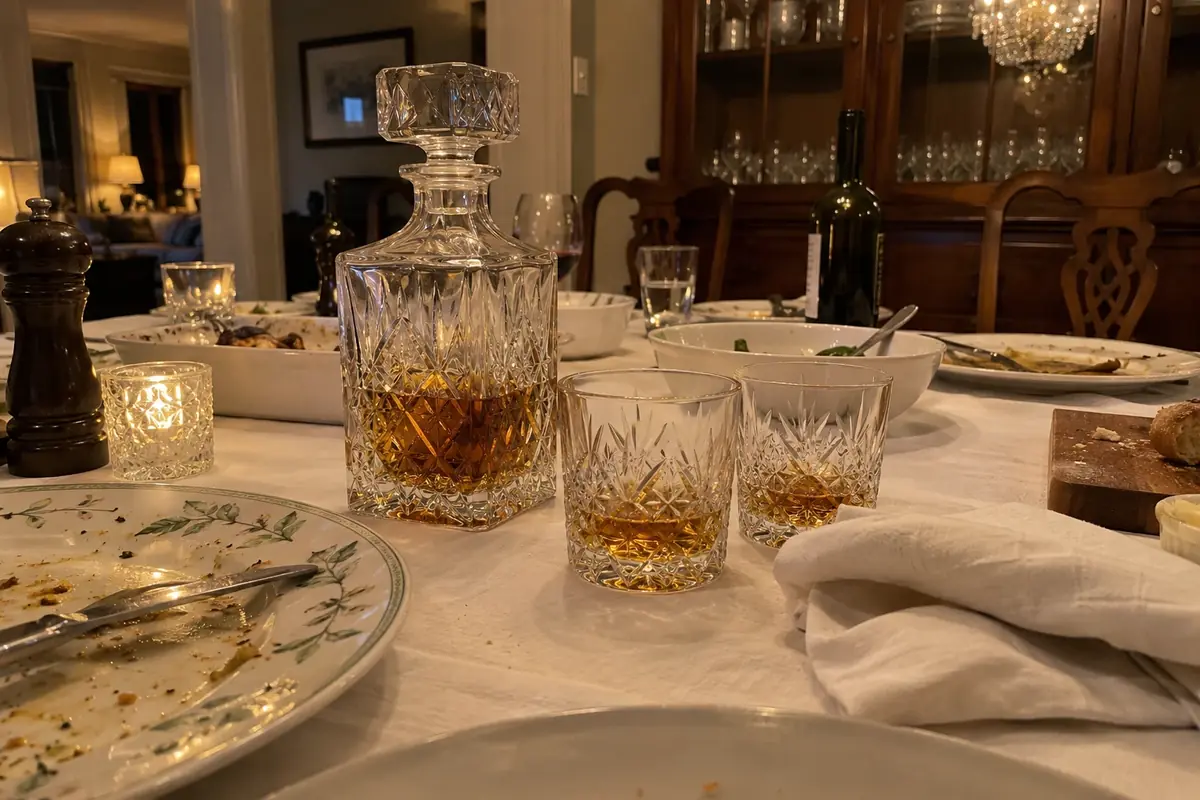
What is Waterford crystal worth?
A single glass is worth little. Where yours lands depends on whether the base says Waterford or Marquis, the type of piece, the pattern and the condition.
| Type of piece | Typical value |
|---|---|
| Marquis by Waterford glass or small pieceUsed Marquis glasses and small pieces, the lowest price tier. | $10–$150 |
| Single stem, goblet or tumbler, common patternEveryday patterns such as Lismore, which sell used for far less than shop prices. | $15–$75 |
| Set of four wine glassesAuction results and dealer asking prices for four cut-crystal stemmed wine glasses. | $198–$400 |
| Decanter or decanter setAuction results and an auction-house estimate; a missing stopper cuts the price. | $100–$200 |
| Vase, bowl or candlesticks, common patternsThe pattern decides where a piece lands. | $50–$500 |
| Punch bowl, large pedestal bowl or table lampAuction results for large bowls and dealer asking prices for lamps. | $489–$920 |
| Matched set (dozens of pieces)Lismore sets; set size drives the top end and imperfections pull it down. | $500–$3,500 |
| ChandelierOne auction result and one dealer asking price; few examples turn up. | $1,323–$2,800 |
These rows mix auction results and dealer asking prices, and shop tags run higher. Stores may price a new Lismore wine glass at $80 to $90 a stem, while a pair of Lismore goblets on eBay in October 2025 was $31.
The better money is in pieces that stand alone, according to Barnebys results: decanters, bowls, lamps and chandeliers. A six-branch chandelier reached $1,323.
How to read Waterford crystal marks and date your piece
Most owners have crystal from the revived Waterford, whose first glass was blown on September 11, 1947. Most Waterford is now made in Slovenia, the Czech Republic, Hungary and Germany, so the name on a base can mean mid-century Irish crystal or a newer piece made elsewhere. According to SafeKitchn, Waterford has never released one official chart tying mark styles to exact years, so treat any date as a clue, not a verdict.
| Mark | Years |
|---|---|
| Foil label · no etchA foil label, often missing, instead of an etched mark | 1947–1950 |
| Gothic · acid stampFavoredA small etched "Waterford" in Gothic lettering, like a stencil | 1950–1986 |
| Script · acid markThe lettering changes from Gothic to a script font | 1986–2000 |
| Seahorse · with the nameThe seahorse logo joins the name in the etched mark | 2000 on |
| Marquis by WaterfordEtched, stamped or on a paper label, on the lower-priced lead-free line |
Sources disagree on the edges of each range, and an unmarked base does not prove a piece is fake. Irish-made pieces with the Gothic mark are the favored group.
Five checks for your Waterford
- Tilt the base to a window. Look for a small frosted, etched patch. On stemware it is under the foot; on bowls, vases and giftware it is at the center or edge of the base. A magnifier helps on older pieces.
- Read the wording. It will say "Waterford" alone or "Marquis by Waterford". Then note whether the lettering is Gothic, script or a seahorse.
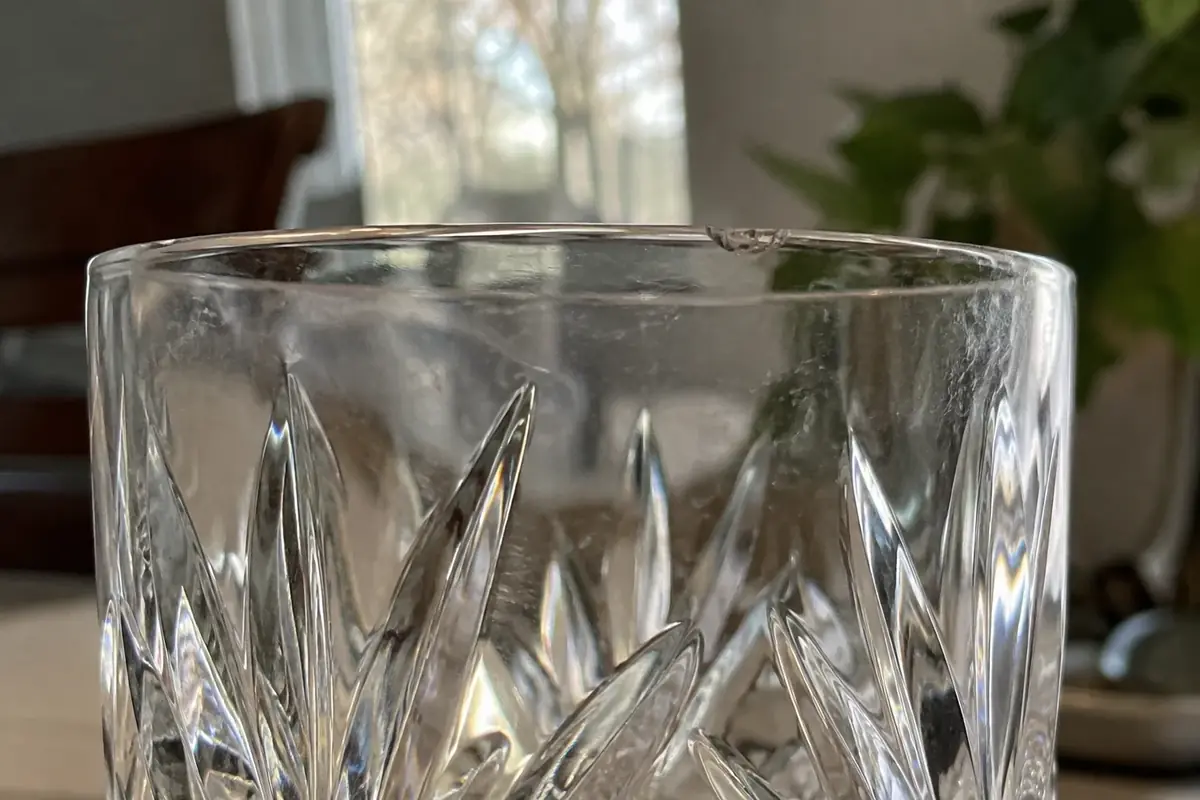
- Hold it to the light. Look for chips, scratches and cloudiness, which can halve the value. Chips and scratches show best under a bright light.
- On a decanter, check the stopper. A missing one is a big deduction.
- Count and name. Count your matching pieces and write down the pattern name.
What makes one piece of Waterford worth more than another?
- Waterford or Marquis
- The wording on the base sets your price tier. SafeKitchn puts Waterford at $100 to $500+ a piece and Marquis at $30 to $150.
- Condition
- Chips, scratches and cloudiness cut value sharply, and a damaged piece can be worth half or less of an undamaged one. One selling guide takes 20% to 30% off for minor damage, 50% or more for a crack and 40% to 60% for a missing decanter stopper.
- Type of piece
- Decanters, bowls, lamps and chandeliers outvalue single glasses.
- Pattern and color
- Discontinued patterns and colored cut-to-clear pieces draw more collector interest than everyday patterns. One guide lists full Clarendon sets at $800 to $2,000+ against $40 to $120 for Tramore pieces.
- Era and origin
- Irish-made pieces with the earlier Gothic mark are favored over later international production. One pattern guide calls pre-1970 pieces with the Gothic-script mark the priority finds.
- Complete set
- A full matching set usually brings more than the same glasses one by one. But everyday patterns are languishing on the market, so a big set is not a guaranteed windfall.
Real Waterford, Marquis or a look-alike?
Marquis is the easiest mix-up, so check whether the base says Waterford or Marquis by Waterford. A mark on its own proves nothing, because faked marks on inferior glass are common. Hunker gives these signs of real lead crystal:
- It is heavier than ordinary glass and chimes when you tap the rim.
- Held to the light, it looks clear and silvery-white. Imitations often show a yellow or green tint.
- A country of origin other than Ireland is not a red flag by itself, since production moved elsewhere.
If your piece is colored or pressed rather than cut, it may be something else entirely. See Fenton glass, Depression glass or carnival glass.
Where to sell Waterford crystal
Start with a local auction house or an estate sale specialist, since crystal is heavy and fragile to ship piece by piece. According to Lion and Unicorn, auction houses are the usual route for a valuable collection, and online marketplaces, consignment shops and replacement services charge fees from 6.5% to 50%. Compare before you commit.
Common Waterford questions
Is Waterford crystal worth anything?
Yes, but less than most owners expect. The prestige Waterford held in the late 20th-century bridal market has faded, and Antique Trader says heavy, ornate stemware is especially tough to move.
How can I date my Waterford crystal by the mark?
Match the lettering on the base to the table: Gothic, script or seahorse. Pieces near a boundary can fall in either era, since one guide puts the switch to script a year or so later than another.
What is the difference between Waterford and Marquis?
The material. Waterford proper is about 33% lead crystal, while Marquis is lead-free crystalline. Used Marquis glasses run about $10 to $15 each in one guide.
Can Waterford crystal with no mark still be real?
Yes. Factory practice, hand-signed promotional pieces or simple wear can all leave a base bare. Judge it by the pattern, weight and ring instead.
Where is the best place to sell Waterford crystal?
Sort your pieces by type first, because a decanter and a single tumbler belong in different places. Online collectibles sites and specialty retailers tend to pay more than a garage sale or liquidation.