Is silver plate worth anything?

By Ellen Whitlock ·
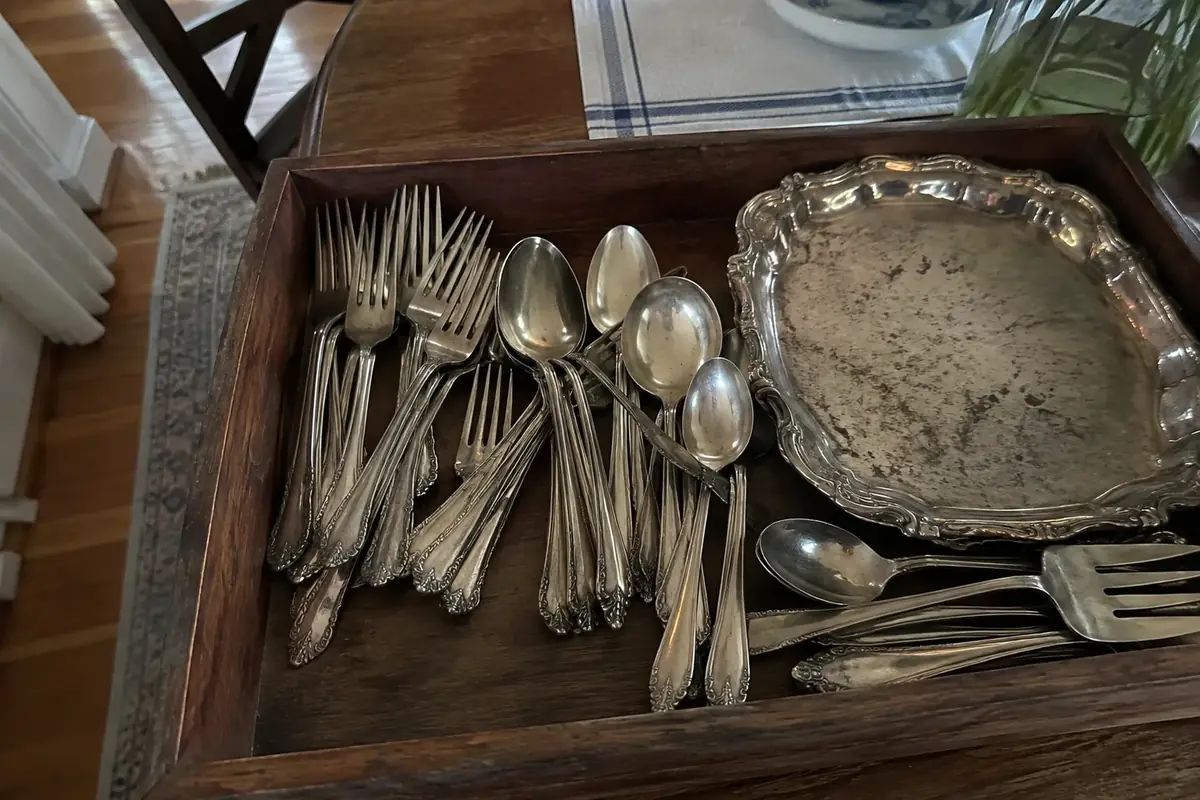
Usually not much. Everyday silver plate typically brings $1 to $15 a piece and $50 to $200 for a full flatware set, with almost no melt value. Maker, pattern, serving pieces, condition and boxed sets push it higher, and tea sets can reach the hundreds.
What is silver plate worth?
Silver plate is a thin layer of silver over a base metal, so it is priced as a decorative antique, not as silver.
| What you have | Typical value |
|---|---|
| Single fork, knife or spoonEveryday patterns, from estate-sale tables up to dinner forks and knives. | $1–$15 |
| Full flatware set, service for 6 to 8Worth most when complete, boxed and like-new; incomplete or monogrammed sets sell for less. | $50–$200 |
| Unusual serving piecesSugar tongs and pierced or scarce-pattern servers beat place-setting pieces in the same pattern. | $10–$120 |
| Serving trayA typical silver-plated tray; one guide narrows it to $50 to $150 for decorative use. | $40–$250 |
| Tea setReported examples include an Art Deco three-piece set at about $170. | $75–$450 |
| Stand-outs: designer, luxury maker, Old SheffieldUncommon. Examples are a Gorham Rosewood six-piece set at just under $900 and Old Sheffield plate candlesticks at an asking price of $1,850. | $450–$1,850 |
Typical values for used pieces, from price guides and dealer and auction-house articles. The top row includes an asking price, not a sale price.
Lion & Unicorn says estate-sale tables often price plated flatware at $1 to $5 a piece. At the top, LoveToKnow reports a Gorham Rosewood six-piece plated tea set at just under $900.
Silver plate marks: how to date yours
Plate marks mostly name the process or the plating grade, not a date. The most misread is 1847 on Rogers Bros. pieces: Antique Silver Hallmarks says it is the year the Rogers brothers perfected electroplating, not the year yours was made. Look for IS beside the Rogers name, which puts a piece after the International Silver merger.
| Mark | Years |
|---|---|
| EPNS · Nickel silverElectro-plated nickel silver; made after the 1840 patent, but not an exact year | 1840 on |
| EP · EPC · BP · EPBMAll mean plated, not sterling; EPBM is a tin-based Britannia metal | |
| A1 · Triple · QuadrupleGrade words that hint at plating thickness, not age | |
| 1847 Rogers Bros. · Eagle and starA process year, not your piece's date; it is silverplate, not sterling | |
| 1847 Rogers Bros. · ISIS is International Silver, so the piece is from after that merger | 1898 on |
| Made in EnglandOften found on English plate made for US export | 1891 on |
| 925 · Sterling · LionSterlingNot plate marks; they point to sterling, worth more for the silver itself |
Sterling is worth more than plate for the silver in it. Grade words like Triple were sometimes just marketing.
Checking your silver plate, step by step
- Read the stamps. Look on the back of the handle or the underside, where makers usually put them. EP, EPNS, EPC, BP, A1, Triple or 1847 Rogers Bros. mean plate. Silver marks and hallmarks is the key to the stamps.
- Write down the maker and pattern name. Pattern is what collectors pay for, not weight.
- Check the wear. Base metal showing at edges, worn tines, dents and pits all lower the price.
- Count the pieces, then look for the box and monograms. A full set, especially boxed, sits toward the top of its price band. Collectors tend to pass on monograms.
- Photograph the marks, the pattern and any worn spots.
What makes one piece of silver plate worth more than another?
- Maker and pattern
- Ordinary makers in common patterns sit at the bottom of the range, because the silver itself adds almost nothing. Luxury makers such as Christofle are named among the exceptions to ordinary estate-sale prices.
- Type of piece
- Serving pieces and unusual forms bring more than place-setting pieces in the same pattern. In 1847 Rogers Bros. plate, a teaspoon runs $2 to $8, while a serving spoon or pierced server runs $12 to $50.
- Condition
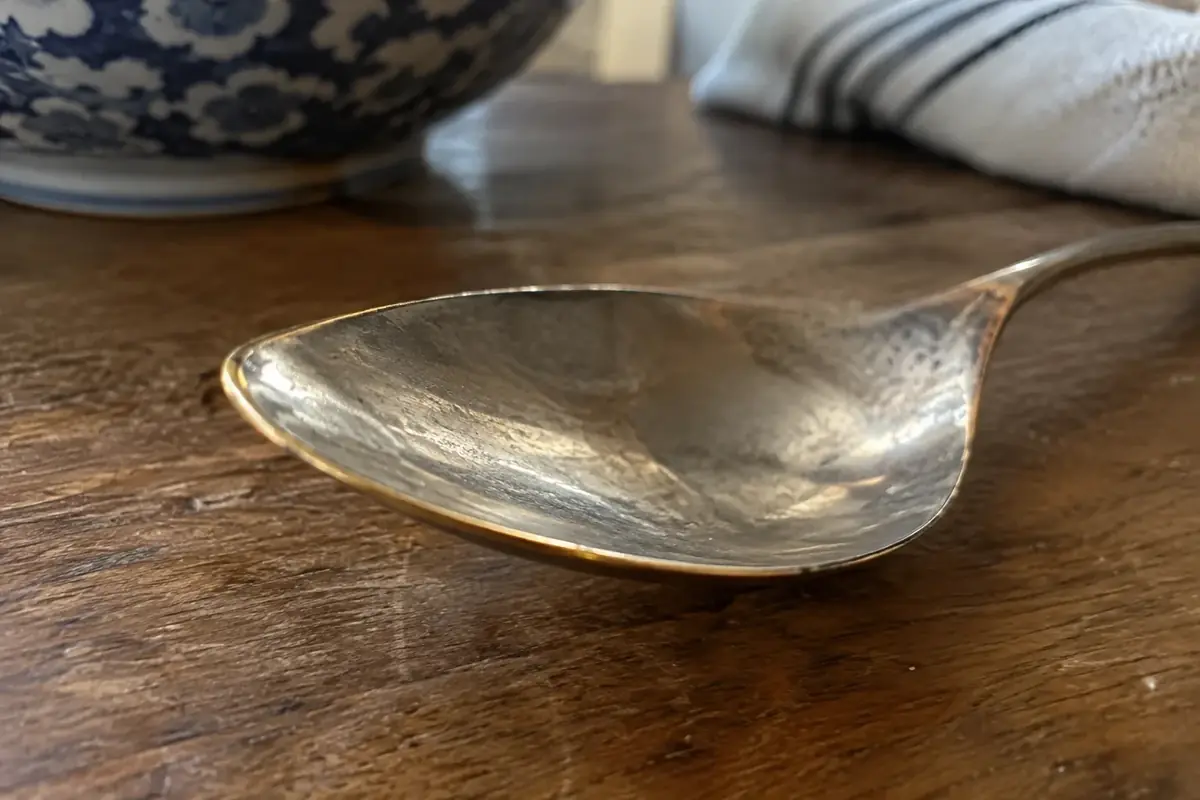
- Dents, worn tines, deep scratches, pits and plating rubbed down to the base metal all pull the price down. Re-plating lowers collector value.
- Sets and boxes
- A full set in its original box or case, in like-new condition, lifts flatware toward the top of its band. Incomplete sets and monograms sell for less. A complete boxed six-place set of 1847 Rogers Bros. is listed at $60 to $200.
- Design and period
- Ornate pieces and pieces from an identifiable period are more wanted than plain ones. SilverSeason says pieces from about 1890 to 1910 command premium prices, and a plated Christopher Dresser teapot of 1878 made GBP 552 with premium at Bonhams London in May 2006.
- Old Sheffield
- Old Sheffield plate is silver fused to copper, the older method that electroplating largely replaced. Genuine early pieces are more collectible than later electroplate.
Is it silver plate or sterling?
Check this first, because sterling is worth considerably more than plate for the silver in it. Antique Silver says sterling carries 925, .925, the word Sterling or a lion hallmark. The signs:
- Plate: EP, EPNS, EPC or BP, or grade words like A1. An 1847 Rogers Bros. stamp means plate.
- A magnet is a weak test. If it sticks strongly, the piece is plated. But plate over copper or brass is not magnetic, so a magnet that doesn't stick proves nothing.
- Trust the marks. If you think you have sterling, how to tell if silver is real goes further.
Where to sell silver plate, or whether to
Set expectations first: most plate sells for little, and scrap buyers are not the answer. Better routes are an auction house, an antiques dealer or an online marketplace such as eBay or Etsy, and ornate Victorian serving pieces, luxury-maker pieces and like-new boxed sets are the ones worth the effort. Fees matter on small amounts: eBay takes roughly 15%, consignment stores up to 40%, and 20% is not uncommon at auction houses. Be wary of traveling buyers and hotel-room "gold and silver" events, which typically underpay.
Common silver plate questions
Is silver plate flatware worth anything?
A little, and mostly for the pattern rather than the silver. Gorham, Reed & Barton and Oneida are among the American makers of silverplate flatware, so look for those names in the stamps.
Can I sell silver plate for scrap?
Almost never. Recyclers pay by the base metal, not the thin silver coat, so a plated platter might bring a few dollars.
What does EPNS mean on silver?
Electro-plated nickel silver: a thin silver coat over a nickel-silver base. It marks the piece as plate, not sterling.
Does 1847 Rogers Bros. mean my set is from 1847?
No. It is silverplate, not sterling, and 1847 Rogers Bros. plate has almost no melt value.
Is Old Sheffield plate worth more than regular silver plate?
Often, but not always. Many surviving pieces have been re-plated, which makes them harder to judge. Copper showing at worn edges and seams the maker disguised are clues to the older method.