What is my vintage Singer sewing machine worth?

By Ellen Whitlock ·
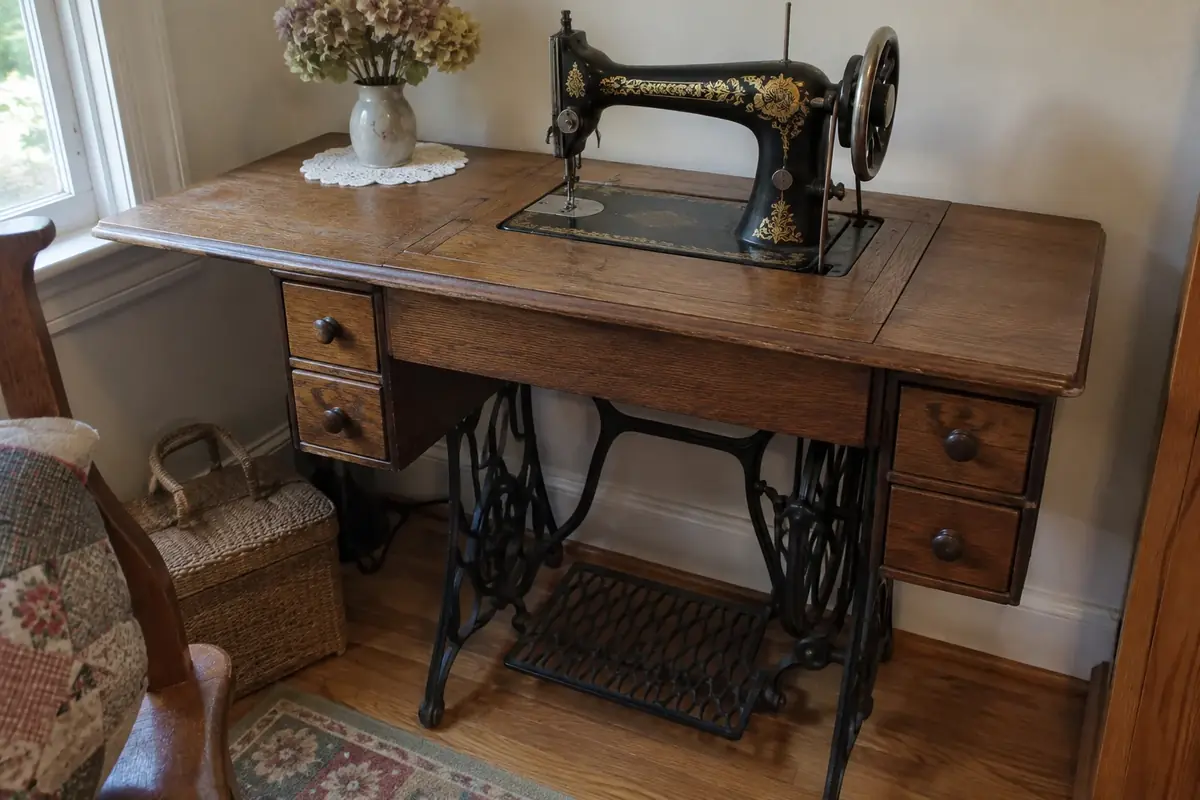
Most vintage Singer sewing machines are worth $20 to $150 at auction. A working treadle in a cabinet is typically $100 to $500. The Featherweight 221 is the exception: typically $300 to $700 working, with its case. Your serial number dates the batch it came from.
What is a vintage Singer worth?
Most old Singers are common, and common machines bring modest money: Singer sold about 250,000 machines in 1875 alone. Model matters more than age.
| Type of machine | Typical value |
|---|---|
| Common Singer at a local auctionHead only, or a treadle in a cabinet. Plentiful models sit at the low end. | $20–$150 |
| Working treadle in a cabinetModel 15, 27 and 66. Intact decals and a clean stand push toward the top. | $100–$500 |
| Model 99 portable, workingCondition and completeness set the spread. | $75–$200 |
| Model 201 electric, workingCondition and what comes with the machine drive the spread. | $100–$500 |
| Black Featherweight 221, working, with its caseOne quilting retailer's average asking price is $350. | $300–$700 |
| White or beige Featherweight 221K (1964-1968)A complete machine with its case is at the top of the range. | $800–$1,500 |
| Featherweight 222K free-armCondition and included accessories drive the spread. | $800–$2,500 |
Common treadles can sell very low at auction: a UK auction house sold a Singer treadle in an oak cabinet, bundled with three other machines, for £15 in July 2021.
LoveToKnow puts general guide ranges for antique Singers at $50 to $150. The Featherweight 221, built at Elizabethport, New Jersey from October 1933, is the exception: Know Old Stuff lists a 1930s head alone at $400 to $900.
How to find your Singer serial number and date it
The serial number can sit on a small plate at the front near the base, on top of the bed, or on a raised pad under the bed. Type it into the ISMACS database to get the year, which is when the batch of numbers was issued, not the day yours was made. Then find your prefix in the table.
| Serial prefix | Years |
|---|---|
| No letter · numbers onlySought-afterMade before 1900; hand-crank machines of that era are valuable rarities | to 1899 |
| Single letter · N, L, K, B, D, GElizabethport letter series, with G running 1910 to 1923 | 1900–1923 |
| Two letters · AA onwardElizabethport two-letter serials, reaching AN by 1959 | 1924–1959 |
| AD · First Featherweight 221Sought-afterIssued October 1933 to June 1935 | 1933–1935 |
| AE and AFAE ran September 1935 to May 1938, AF October 1938 to July 1941 | 1935–1941 |
| AG and AHThe 1941 to 1947 'Blackside' machines have black metal in place of chrome | 1941–1948 |
| AJ to AMAJ began December 1948, and AM ended September 1957 | 1948–1957 |
| UK, Scottish and French plantsOther letters: J at St. Johns, F and ED to ET at Clydebank, SA to SC in France | 1910–1968 |
Each year is when a batch of numbers was issued, not the day yours was made. Pre-1900 hand-cranks and the earliest 221s are the rows collectors ask about first.
Check your Singer's model, decals and trim
- Photograph the serial number. You will need it for the lookup.
- Find the model number. It is separate from the serial number. Singer's own page dates the 15K from 1910 to 1964, the 99K from 1924 to 1954 and the 201K from 1935 to 1962, so a year alone doesn't name the model.
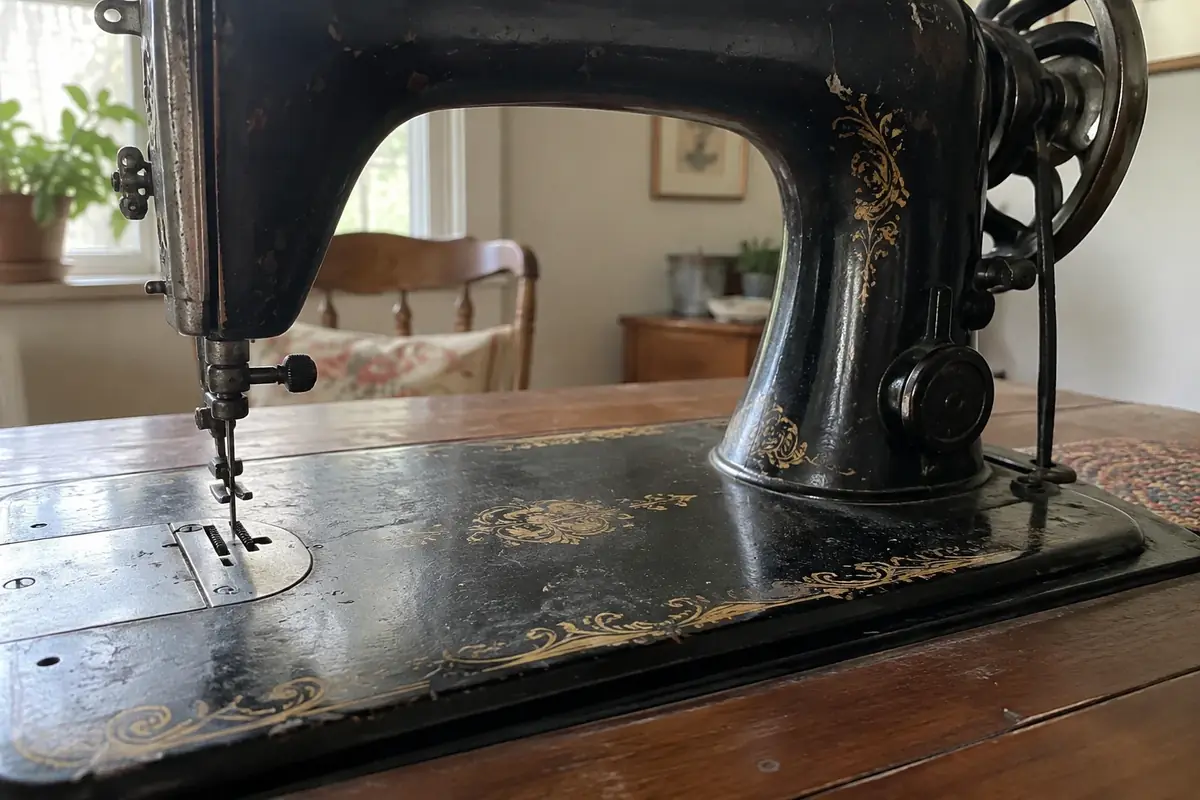
- Look at the decals. Sharp, intact decals add value, and flaking or worn ones cut it.
- Check trim and motor. Rust on chrome and nickel, a seized motor or a bent needle bar all pull the price down.
- Count what came with it. Original case, manual, attachments and cabinet drawers all count.
What makes one Singer worth more than another
- The model
- Model matters more than age. Common models such as the Model 15 and Model 66 are plentiful, while the Featherweight 221 has a following of its own.
- Case and cabinet
- A machine with its original case, manual and attachments is worth roughly 30 to 50 percent more than the head alone in one guide. A Model 27 head is $100 to $400, and $300 to $700 with its cabinet. Machines separated from their original cabinets lose value.
- Condition
- Working machines with crisp decals command three to four times the value of rusted, faded ones. Faded or flaking decals, pitted chrome and a seized motor all pull the price down.
- Finish and color
- Unusual factory finishes draw collectors, and white, beige and tan Featherweights are rarer than black ones. A working white or beige 221 from 1964 to 1968 with its case is $800 to $1,500.
- Local supply
- Where a model is everywhere, buyers pay little for it, and auction results show that. The Model 66 is 'one of the most common of all Singer treadles'.
Real Singer or reproduction?
Not everything with the Singer name is old. Modern reproductions were made to look like Model 15 treadle machines and sold through catalogs. A quilting blogger lists the signs of one:
- It reads 'The Singer Sewing Company' where a genuine antique reads 'The Singer Manufacturing Company'.
- 'Made in China' is stamped on the bed.
- Plastic knobs sit on the bed where a genuine machine has metal ones.
- The cabinet is cheap veneer, with laminate-lined drawers, press-board bottoms and no screw holes underneath.
- The decals are garish.
Price a reproduction as a modern machine, not an antique.
Where to sell a Singer
Local auctions and estate sales suit common treadles, but expect modest results. Keep a cabinet with its machine, because machines separated from their cabinets lose value. Featherweights and colored variants deserve a different route, since crafters look for the 221 and 222. Keep the case, manual and attachments with the machine, and compare similar machines of the same model and configuration before you set a price.
Common Singer questions
How do I find out how old my Singer sewing machine is?
Look the serial number up in the ISMACS database. For a Featherweight 221, the two-letter prefix narrows it to a batch spanning a few years at most.
Are old Singer sewing machines worth anything?
Some are: mostly the Featherweight 221, which crafters and collectors keep looking for, and early hand-crank machines. The rest bring modest money at auction.
What is a Singer treadle sewing machine worth?
It depends mostly on the cabinet and the decals. A clean stand and a finished wood cabinet are typically worth more than the head alone.
Does the serial number tell me the model?
Not reliably. Singer's own page says the serial number is not the model number, so check the model separately.
How can I tell if a Singer is a reproduction?
Read the company name on the machine and look for 'Made in China' on the bed. Then check the cabinet, since reproduction cabinets use cheap veneer and press-board bottoms.